

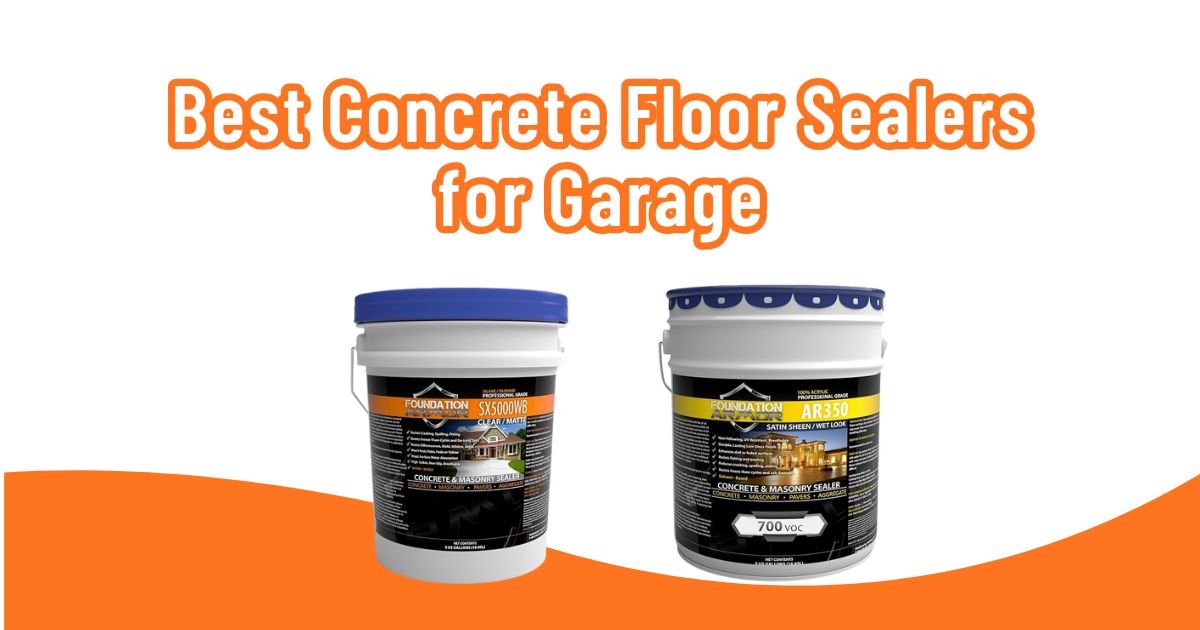
A garage floor takes more abuse than any other slab on your property. It holds a car, it catches road salt and oil drips, and it sees freeze-thaw cycles year after year. That’s why the best concrete floor sealer for garage use has to do more than sit on the surface and look nice.
The part where a wrong choice shows up is usually the same story. You pick a film-forming coating, it looks great for two seasons, then hot tires lift it or moisture trapped underneath pushes it off in sheets. Or you pick a sealer that’s too thin for a working garage and you’re back to bare concrete in a year.
These ten picks differ on three real things: whether they sit on top of the slab or soak into it, what finish they leave behind, and how long the seller says the protection lasts.
As an Amazon Associate, we earn from qualifying purchases. This post contains affiliate links – if you buy through them, we may earn a commission at no extra cost to you.
1. Armor SX5000 WB Natural-Look Penetrating Water-Based Silane Siloxane Concrete Sealer

Best for: The garage owner who wants protection without a finish change
The Armor SX5000 WB is a water-based silane siloxane sealer that soaks into unsealed concrete and reacts below the surface. The listing says it reduces water absorption by up to 95% and that it won’t change the look, color, or feel of the slab.
Because it works entirely below the surface, there’s no film to peel or scuff. The listing puts the protection window at up to 7-10 years.
Strengths:
- Water-based formula with 0 VOC and no odor
- Won’t change the look, color, or feel
- Listing claims up to 7-10 years of protection
- Works below the surface, so no film to maintain
- Covers up to 175-225 square feet per gallon
Trade-offs:
- Needs a pump sprayer, sold separately per the listing
- Only for unsealed concrete, not previously coated slabs
- Resealing calls for a clean, dry, absorbent surface
Living with this one asks very little of you week to week. If you want your garage floor to look different after the job, this isn’t the pick for you.
| Best for | Why |
|---|---|
| A working garage floor | Protects without changing the slab |
| Cold-climate owners | Listing cites ice and salt damage resistance |
| Anyone avoiding coatings | No film means nothing to peel |
2. Armor AR350 Low Gloss Wet Look Concrete Sealer 5 Gallon

Best for: The owner who wants a subtle wet-look upgrade
The Armor AR350 is a solvent-based acrylic sealer that darkens and enhances concrete. The listing describes a low gloss wet look, and it says that if you like what your concrete looks like when wet, you’ll like this finish. That’s the honest way to think about it — the color change is the point, not a side effect.
Strengths:
- Low gloss wet look that deepens color
- Non-yellowing finish per the listing
- Self-priming, applies with roller or sprayer
- Listing cites resistance to road salts and UV
- Covers up to 175-225 square feet per gallon
Trade-offs:
- Solvent-based, so it needs the VOC variation that matches your state
- Available in three VOC formulations for different states
- A cleaner is sold separately if you need one
Living with a wet-look sealer means you’ve signed up for a surface you notice. Resealing is a single coat on a clean, dry surface, which the listing says refreshes the floor within seconds. This isn’t the pick for someone who wants the slab to look untouched, or for a garage where fumes during application would be a problem.
| Best for | Why |
|---|---|
| Show garages | Wet look deepens the slab’s color |
| Paver driveways too | Listing covers concrete and pavers |
| Resealing an acrylic coat | Built for solvent-acrylic surfaces |
3. Armor AR500 High Gloss Wet Look Concrete Sealer 5 Gallon

Best for: The owner who wants a glossy show-floor finish
The Armor AR500 is the high gloss version of the AR350. Same solvent-based acrylic chemistry, same color enhancement, same coverage range of up to 175-225 square feet per gallon. The difference is the finish level.
Strengths:
- High gloss wet look with dramatic color enhancement
- Non-yellowing finish per the listing
- Self-priming and ready to use
- Listing cites UV, salt, and abrasion resistance
- Available in three VOC formulations
Trade-offs:
- Solvent-based, so check the VOC variation for your state before ordering
- High gloss shows dust and tire marks more readily
- Check the VOC variation for your state before ordering
The week-to-week reality of a high gloss floor is that it’s a surface you maintain, not one you ignore. In exchange, the slab reads as a finished room rather than a utility slab, which is exactly what some garage owners want. This isn’t for the reader who parks a leaking project car — the gloss will make every drip visible.
| Best for | Why |
|---|---|
| Finished garage spaces | High gloss reads as a room |
| Stamped concrete | Listing covers stamped surfaces |
| Color enhancement fans | Wet look darkens the slab |
4. Lithi-Tek 9500 Sealer

Best for: The owner sealing a large, heavily used slab
The Lithi-Tek 9500 is an ultra concentrate — one gallon makes five gallons. The listing describes it as a penetrating concrete sealer and waterproofer plus densifier, which means it does two jobs: it repels water and it hardens the surface itself. That densifier part is what separates it from a plain water repellent.
Strengths:
- Concentrate format, one gallon makes five
- Penetrating rather than film-forming
- Listing describes it as a waterproofer plus densifier
- Suits large slabs given the mixed volume
Trade-offs:
- Mixing is part of the job, unlike a ready-to-use jug
Living with a densifier means the floor gets harder as well as more water-resistant, which is the appeal for a garage that sees jacks, stands, and heavy rolling loads. If your slab is large, that’s a real unknown to resolve before you start. This isn’t the pick for someone who wants a ready-to-use jug and a stated coverage number.
| Best for | Why |
|---|---|
| Big slabs | Concentrate makes five gallons |
| Heavy rolling loads | Listing cites densifying |
| Penetrating-sealer fans | No film to maintain |
5. Siloxa-Tek 8500 Sealer

Best for: The owner fighting road salt and deicers
The Siloxa-Tek 8500 is a water-based silane siloxane from Ghostshield built around salt and freeze-thaw resistance. For a garage floor in a snow state, that’s the claim that matters most.
Strengths:
- D.O.T. approved per the listing
- Resists chlorides and deicing salts
- 100% breathable and non-film-forming
- Coverage up to 250 square feet per gallon
- UV stable and won’t break down in sunlight
Trade-offs:
- The 10-year figure applies to certified applicators on vertical surfaces
- Low VOC formula, but not described as zero VOC
- No change to surface profile means no finish upgrade
The thing to hold onto here is the fine print on longevity. The listing’s 10-year claim is tied to certified applicators doing vertical work. Week to week, a breathable sealer like this asks almost nothing — no film, no peeling edges, no gloss to keep up. It’s not for the reader who wants the floor to look different afterward, since the listing is explicit that the surface profile doesn’t change.
| Best for | Why |
|---|---|
| Snow-belt garages | Listing targets deicing salt damage |
| Slabs with freeze-thaw | Cites spalling and pitting resistance |
| Large pours | Highest stated coverage per gallon |
6. Rain Guard Concrete Sealer 1 Gallon

Best for: The first-timer who wants the simplest possible job
The Rain Guard sealer is a ready-to-use water-based silane siloxane with a no-gloss finish. The listing says it forms an invisible, filmless, hydrophobic barrier against water, salt, oil, stains, and efflorescence. It’s the simplest product in this group to actually put down.
The application instructions are the reason it earns a spot. Cleanup is soap and water.
Strengths:
- Ready to use, no mixing
- Dries within 1 hour at 75°F per the listing
- Applies with a handheld pump sprayer
- Water-based, no strong odors or VOCs
Trade-offs:
- Up to 5 years of protection
- Coverage varies with surface porosity
- Two flood coats are required, not one
What the shorter protection window means in practice is that you’ll be back out there sooner than with a longer-life product. For a homeowner sealing a two-car garage for the first time, doing it again in a few years is a reasonable deal. This isn’t the pick for someone sealing a large commercial slab who wants to do the job once.
| Best for | Why |
|---|---|
| First-time sealers | Handheld sprayer, no mixing |
| Indoor-adjacent spaces | Low odor, safe for pets |
| Quick turnarounds | Listing says dry in 1 hour |
7. MasonryDefender Concrete Sealer

Best for: The owner who wants visible water beading
The MasonryDefender is a clear penetrating silane siloxane sealer. The listing says it bonds with the surface to repel water while letting the concrete breathe.
A single container covers a modest single-car slab.
Strengths:
- Clear, non-glossy, invisible protection
- Breathable formula allows concrete to breathe
- Listing cites ice melt salts and chloride ions
- Applies with a low-pressure garden sprayer
- Targets pitting, cracking, and efflorescence
Trade-offs:
- Lowest stated coverage here at 90-150 square feet per gallon
- Requires thorough cleaning before application
- No color or finish change for owners wanting one
The coverage rate is the real story. Week to week, this behaves like the other penetrating sealers — nothing to maintain, nothing to peel. It’s not for the reader who wants a wet look or a gloss, and it’s not for someone who’d rather buy one large container than several small ones.
| Best for | Why |
|---|---|
| Small slabs | Lower coverage suits tight areas |
| Driveways and walks | Listing covers outdoor flatwork |
| Natural-look fans | Invisible, non-glossy finish |
8. McKinnon Concrete & Paver Sealer 5 Gallon

Best for: The owner who wants a semi-gloss without a heavy film
The McKinnon sealer is a bulk-size semi-gloss wet-look product.
The finish is the middle ground here — a semi-gloss wet look that enhances color without what the listing calls a heavy topical film.
Strengths:
- Semi-gloss wet look, between matte and high gloss
- UV-resistant for outdoor and indoor use
- Applies with roller, brush, or pump sprayer
- Listing cites freeze-thaw and foot traffic resistance
- Made in the USA by a family-owned supplier
Trade-offs:
- Tools need cleaning before the product cures
- Semi-gloss still shows marks more than a matte finish
A semi-gloss gives most of the color depth of a wet look without the mirror finish that shows every footprint. That’s a genuine middle path for a used but cared-for garage. The listing doesn’t state a coverage rate, so you’ll want to confirm how far a container goes on your slab before you commit.
| Best for | Why |
|---|---|
| Garages and patios both | Listing covers indoor and outdoor |
| Paver aprons | Built for concrete and pavers |
| Middle-ground finishes | Semi-gloss without heavy film |
9. Daich Coatings DAIHARD Garage & Driveway Concrete Sealer

Best for: The owner who parks inside and worries about hot tires
The Daich DAIHARD is a water-based sealer with a satin sheen built around one garage problem: hot tire pickup. It says the formula is designed to handle heat and pressure from vehicle tires, reducing the peeling, lifting, and marks that show up on untreated concrete. If you’ve watched a coating come up in tire-shaped patches, that’s the claim you care about.
Strengths:
- Designed to resist hot tire pickup
- Repels water, oil, and common chemicals
- Low VOC water-based formula, minimal odor
- Satin sheen finish
- Listing covers garage floors and light industrial use
Trade-offs:
- Satin sheen is a visible finish, not a natural look
Living with a satin-sealed garage floor means accepting a finish you can see and a surface you’ll want to keep reasonably clean, since the point is stain resistance. The payoff is that oil drips and road grime wipe up instead of soaking in, and the hot tire problem the listing targets is the single most common failure for garage floor coatings. It’s not for someone who wants the slab to look exactly as it did before.
| Best for | Why |
|---|---|
| Parked vehicles | Listing targets hot tire pickup |
| Oil-prone garages | Cites oil and chemical resistance |
| Indoor application | Low VOC, minimal odor |
10. Zep Stain Resistant Floor Sealer

Best for: The owner sealing a garage floor and VCT in one job
Strengths:
- Works on both concrete and VCT
- Dries in 30 minutes per the listing
- Enhances the gloss of top coatings
- Resists food, drink, and tracked-in dirt stains
- Clear finish, part of a known floor care system
Trade-offs:
- A surface coating, not a penetrating sealer
- No freeze-thaw or deicing salt claims, unlike the silane siloxanes
This is the pick for a garage that doubles as a workspace and shares a floor type with other rooms. The trade is that you’re putting down a film, so the freeze-thaw and salt protection that the penetrating picks describe isn’t part of this listing’s claims. It’s not for an unheated garage in a snow state where deicing salt is the main enemy.
| Best for | Why |
|---|---|
| Mixed-floor garages | Listing covers concrete and VCT |
| Quick jobs | Dries in 30 minutes |
| Stain-prone workshops | Cites spill and dirt resistance |
Side by Side
This table lines up the ten picks on whether they soak in or sit on top, what finish they leave, coverage, and claimed protection life. Use it to narrow the field before you read the detail above.
1Best Overall
Armor SX5000 WB Sealer
2Best Wet-Look Finish
Armor AR350 Sealer
3Best High-Gloss Finish
Armor AR500 Sealer
4Best for Heavy Wear
Lithi-Tek 9500 Sealer
5Best for Salt and Deicing
Siloxa-Tek 8500 Sealer
6Simplest to Apply
Rain Guard Concrete Sealer
7Best Water Repellent
MasonryDefender Concrete Sealer
8Best Semi-Gloss Wet Look
McKinnon Concrete Paver Sealer
9Best Stain Resistant
Daich DAIHARD Concrete Sealer
10Best for VCT and Concrete
Zep Stain Resistant Sealer
How to Judge One of These
Penetrating or Film-Forming
This is the first fork in the road. A penetrating sealer soaks into the concrete and reacts below the surface.
The Armor SX5000 WB, the Siloxa-Tek 8500, the Rain Guard, and the MasonryDefender are all described as penetrating and non-film-forming in their listings.
What this changes for you is maintenance. A film can peel, scuff, and lift, especially under hot tires. Before ordering, confirm your slab is unsealed. Every listing here that describes a penetrating product specifies unsealed concrete, and the acrylic ones specify unsealed or previously solvent-acrylic-sealed surfaces.
The Coverage Figure
Every listing that states a coverage rate states it per gallon, and those rates vary widely. The Siloxa-Tek 8500 claims up to 250 square feet per gallon per coat. The MasonryDefender states 90-150.
That spread is the difference between one container and three. A rough broom-finished slab will drink more product than a troweled one.
Also count your coats. A coverage figure is usually per coat, not per job, so double it if the instructions call for two passes.
What the Finish Costs You
A finish isn’t free. A high gloss floor shows dust, tire marks, and every scuff, so you’ll sweep and wipe more often.
The listings are fairly honest about this.
Pick the finish you can live with for years, not the one that looks best in a photo on day one. If your garage is a working shop, a natural or matte finish hides more. If it’s a show space, the gloss is the point.
The Feature That Rarely Earns Its Place
Long-life claims rarely earn their place in a garage. The Armor SX5000 WB says up to 7-10 years. The Rain Guard states up to 5 years.
The one thing you can confirm yourself is the prep requirement. For deeper guidance on surface preparation and sealant performance, the American Concrete Institute publishes technical resources on concrete sealing and protection. Get the prep right and any of these will outperform a rushed job with a longer-life product.
Frequently Asked Questions
Will a penetrating sealer work on my garage floor if it’s already been coated?
No. Every penetrating product here specifies unsealed concrete, so a penetrating sealer will sit on top and do nothing useful if your slab already has a coating. Your options are the film-forming products instead — the Armor AR350 and AR500 both say they work on concrete previously sealed with a solvent-based acrylic.
What does the first week with a sealed garage floor look like?
The first day is the most restrictive. The Rain Guard listing says it dries within one hour at 75°F, and the Zep product says 30 minutes, but those are dry-to-touch times, not cure times. You’ll want to keep traffic off longer than that, and vehicles longer still.
What has to be renewed, and how often?
That depends entirely on which type you pick. A penetrating sealer gets reapplied when water stops beading on the surface.
What will a garage floor sealer not do?
It won’t fix a damaged slab. None of these listings claim to repair cracks, fill spalls, or level a floor. It also won’t stop moisture coming up from underneath if your slab has no vapor barrier — a sealer works on water arriving from above.
Is the simplest pick here enough for my garage?
For many garages, yes. The Rain Guard sealer is ready to use, applies with a handheld pump sprayer, and needs no mixing. Its listing states up to 5 years of protection, so if your car drags in road salt all winter, the Siloxa-Tek 8500 is the better match.
Closing
For most garage owners, the Armor SX5000 WB Sealer covers the common case best — it protects the slab without changing how it looks, and its listing states the longest protection window here. If your situation is unusual, say a garage floor that takes heavy deicing salt every winter, the Siloxa-Tek 8500 Sealer is the pick built around that specific problem. Before you order anything, do two things: confirm your slab is unsealed, and measure it so you can work out how many containers the stated coverage rate actually requires. Then read the application instructions on the listing in full, because prep is where most sealing jobs succeed or fail.


