

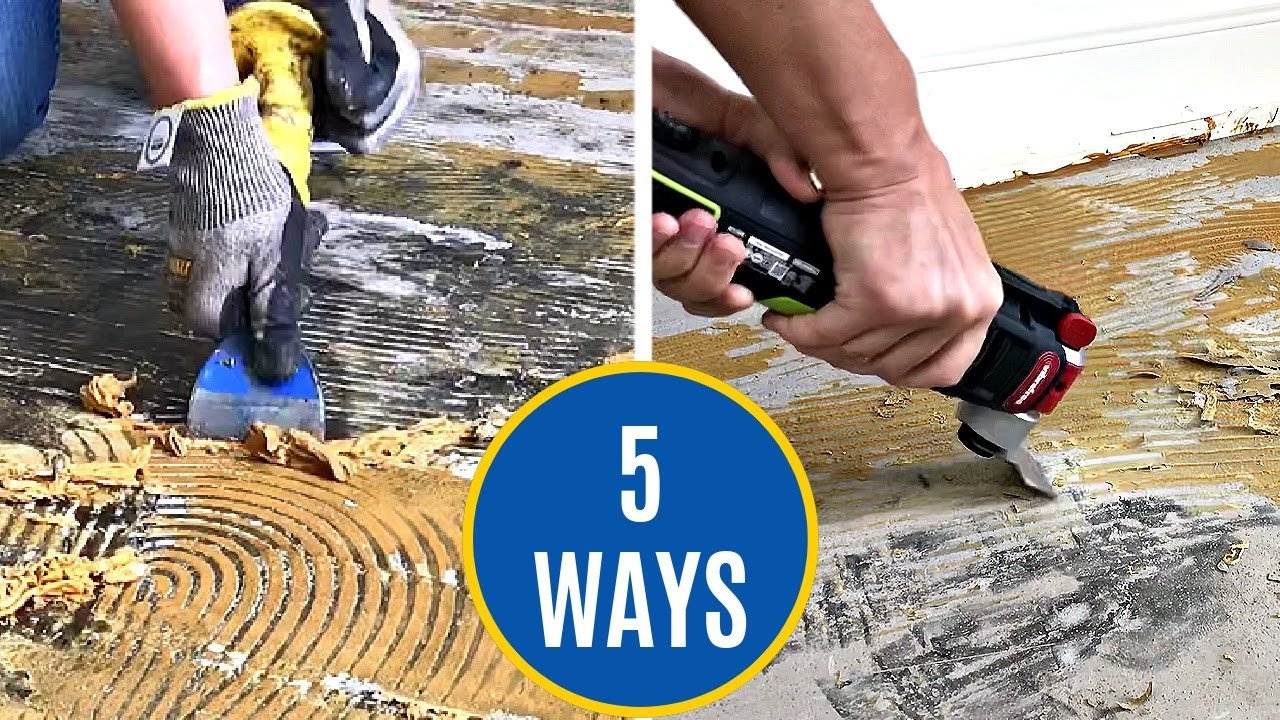
Removing adhesive residue from concrete before epoxy comes down to two things — how old the glue is, and whether it’s a soft mastic or a hard, cured adhesive.
Old, gummy mastic usually comes off with a scraper and a solvent. Hard, dried adhesive needs mechanical work. If you’re not sure which one you have, press a screwdriver into it. If it dents, it’s soft. If it chips, it’s hard.
Scrape, grind, or dissolve: which method fits
Adhesive on concrete falls into two families, each with a method that works better than the others. Soft mastic lifts with heat and a scraper. Hard, brittle glue gives up to a grinder or a floor sander. Water-based glue often softens with hot water alone.
| If this is true | Repair | Replace |
|---|---|---|
| Soft mastic, still tacky | Scrape with heat, then solvent | Not needed |
| Hard, brittle adhesive | Grind or sand it flat | Not needed |
| Glue sits in a thin, even film | Chemical stripper, then rinse | Not needed |
| Adhesive soaked deep into pores | Grind until bare gray shows | Not needed |
| Old carpet glue, 10+ years | Grind, then patch | Not needed |
| Glue only in a few small spots | Hand scrape and spot-prime | Not needed |
| Whole slab covered, thick and uneven | Grind everything, then self-leveler | Sometimes cheaper |
How to remove adhesive residue step by step
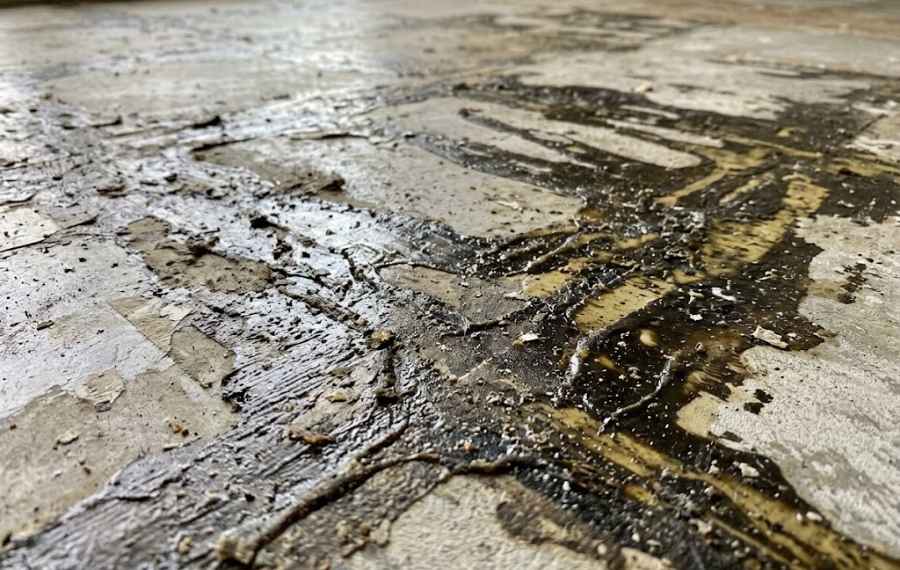
Work in this order and you’ll save yourself hours. The steps go from gentle to aggressive, so you only use the heavy tools when the light ones fail.
- Test a small area first. Pick a 1-foot square in a corner. Try a scraper. If the glue comes up in ribbons, keep going. If it crumbles, move to step 4.
- Scrape the bulk off. Hold a 4-inch floor scraper at about a 30-degree angle and push away from your body. Get the top layer off before you touch any liquid.
- Soften what’s left with heat or water. For mastic, warm it with a heat gun on low, about 6 inches away, for 20-30 seconds. For water-based glue, soak a rag in hot water and lay it down for 10 minutes.
- Grind or sand the residue. Use a walk-behind grinder with a diamond cup wheel, or a floor sander with 36-grit paper. Keep the machine moving. Don’t park it in one spot or you’ll gouge the slab.
- Vacuum with a HEPA filter. Adhesive dust is fine and sticky. A shop vac with a HEPA filter catches it instead of spreading it around the room.
- Wipe with a solvent if a film remains. Mineral spirits or a concrete-safe adhesive remover on a rag. Let it sit a minute, then wipe. Don’t flood the slab.
- Rinse and let it dry fully. Wet the area, scrub with a stiff brush, and pull the water up with a wet vac. Wait 24-48 hours in normal indoor conditions — longer if it’s humid or cool.
- Test for moisture and adhesion. Tape a 2-foot square of plastic sheet to the floor and leave it overnight. If condensation forms under it, wait longer. Then drip water on the surface — if it beads up, residue is still there.
That water test is the one that matters most. If water soaks in and darkens the concrete, you’re ready.
When grinding is the right call
Grinding wins when the adhesive has cured hard or soaked into the pores. A thin film that feels dry and chalky won’t come off with a scraper, and solvent just smears it deeper. Diamond grinding cuts through both the glue and the top layer of concrete, which opens the surface for the epoxy at the same time.
When replacing the slab isn’t worth it
Replacing concrete is almost never right for adhesive residue alone.
The exception is a slab that’s already failing. If you see wide cracks, a hollow sound when you tap it with a hammer, or concrete that crumbles when you scrape it, the adhesive is the least of your problems. In that case, a new pour or a self-leveling overlay makes more sense than coating a floor that’s coming apart.
There’s a middle path too. If the glue is thick and uneven across the whole room, a self-leveling compound poured over the top can bury it. That’s cheaper than a new slab but more expensive than grinding. It only works if the residue is fully dry and firmly stuck.
What it costs you beyond the tools
The sticker price of a scraper or a grinder rental isn’t the whole bill. These are the costs that show up later.
- The inspection fee. Some contractors charge just to come look and give you a quote, and that money doesn’t come off the job.
- Time without the room. A garage or basement is out of use for days while you scrape, grind, rinse, and wait for the slab to dry.
- The second attempt. If the first cleaning leaves a film, you’ll buy more solvent, rent the grinder again, and lose another weekend.
- Disposal. Old adhesive, solvent rags, and grinding dust have to go somewhere. Check your local waste facility’s rules — some solvents count as hazardous waste.
- Setup for the new floor. Primer, patch, and mixing tools add to the total before a single drop of epoxy goes down.
Add those up before you decide between doing it yourself and hiring it out.
Questions to ask before you hire someone
Ask these before you hire someone to prep the floor.
- “How will you test the surface before coating?” A pro should mention a water test or a moisture test. If they skip it, the epoxy may peel.
- “Will you grind, or just clean?” Grinding is the standard prep. Cleaning alone often isn’t enough.
- “What’s your moisture reading, and how did you take it?” Epoxy fails fast on a damp slab. The test method matters.
- “Is the price for prep only, or prep plus coating?” Mixing these up is how budgets blow past the quote.
- “What happens if the coating fails?” Get the warranty terms in writing, including what voids it.
One safety note: solvent fumes, silica dust from grinding, and epoxy hardeners all carry real health risks. Wear a respirator rated for the dust and vapor you’re making, plus eye protection and gloves. If you have lung or heart conditions, or you’re working in a space with poor airflow, hire a professional instead of doing this yourself.
What to look for in the new floor
Photo: mckinnonmaterials.com on Google
Pick a coating system that tolerates a slightly imperfect surface.
First, a primer made for your slab’s moisture level. Epoxy makers publish moisture limits for their primers, and you can find them on the product’s technical data sheet. Second, a coating rated for the traffic the room gets — a garage floor and a workshop floor aren’t the same job. Third, a system with a written prep spec, so you know exactly what surface profile the maker expects.
You can also check the EPA’s guide to lead-safe renovation if your home was built before 1978. Old floor adhesive in pre-1978 buildings can contain asbestos, and lead paint may also be present, and that changes the whole job. In that case, stop and call a certified abatement contractor. Don’t grind it yourself.
Frequently asked questions
Can you epoxy over adhesive residue?
No, not safely. Epoxy needs bare, absorbent concrete to bond. Adhesive left on the surface acts as a release layer, and the coating peels within months. Always remove the residue and pass a water test first.
How long does it take to remove adhesive from concrete?
For a 2-car garage, plan 1-2 days if you’re scraping and grinding yourself. A single small room takes 3-5 hours. Add 24-48 hours of drying time before you coat, longer in humid weather.
Is it safe to grind old adhesive off a floor?
Adhesive made before 1978 may contain asbestos. Grinding releases those fibers into the air. Test the adhesive first, and if it’s positive, hire a licensed abatement contractor.
What happens if you don’t remove all the residue?
The epoxy lifts, bubbles, or peels, usually within the first year. You’ll have to strip the coating, clean the slab again, and start over. That’s double the work and double the material cost.
Does vinegar or hot water really remove floor adhesive?
Hot water softens water-based glue, and vinegar helps with light residue. Neither touches cured, solvent-based mastic. Use them for cleanup, not as your main method on a hard adhesive.
How do you know the concrete is clean enough for epoxy?
Drip water on it. If the water soaks in and darkens the concrete within a minute, it’s clean. If it beads up or sits on top, residue is still there. A plastic sheet taped down overnight also shows trapped moisture.
Can you use a pressure washer on indoor concrete?
No. Indoor pressure washing pushes water into the slab and the walls, and it can take weeks to dry. Use a wet vac and rags instead, and save the pressure washer for outdoor slabs.
Does adhesive remover leave its own residue?
Yes, most do. Solvent-based removers leave an oily film that blocks epoxy bonding. After using one, rinse the slab with water and scrub it, then let it dry and re-test with the water drip.
Conclusion
Get the surface clean, dry, and absorbent, and the epoxy will do the rest. Skip a step, and you’ll be scraping again next year.


