

Garage epoxy yellows from UV light and heat, while haze is usually amine blush or moisture. Wash off haze, and topcoat with UV-stable polyaspartic.
That’s the short answer. The longer one matters, because “yellow” and “hazy” are two different problems with different causes, and the fix for one won’t help the other. This guide explains why a garage floor coating changes color or loses its clarity, how to tell which problem you have, what you can repair, and which UV-stable coatings stay clear for years.
Yellow vs. Hazy: Which Problem Do You Have?
Look at your floor in daylight and compare it to a spot that’s been covered, such as under a toolbox or a mat.
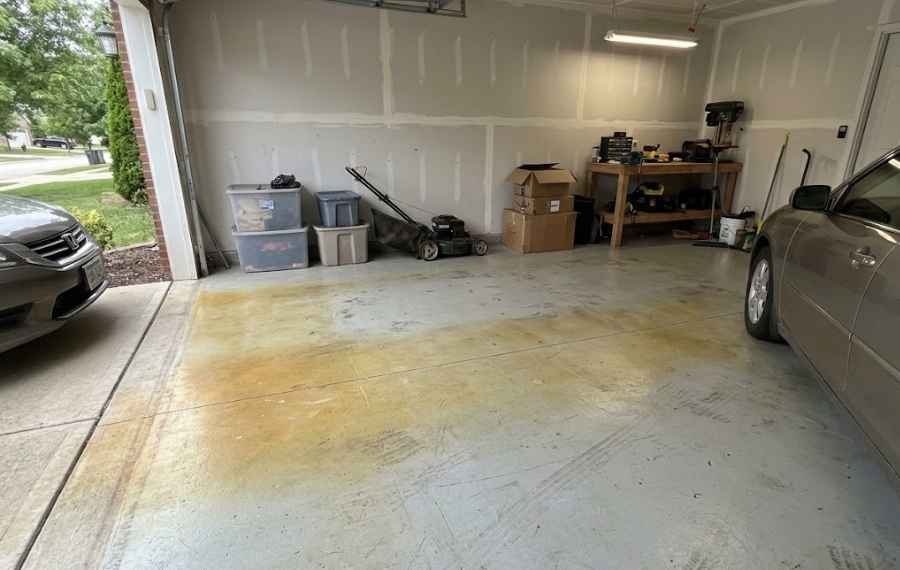
- Yellowing or amber tint: the whole coating, or the sunniest parts of it, have shifted toward yellow or orange. Clear coats and light colors such as white, gray and tan show it most. This is a chemical change in the epoxy and it does not wash off.
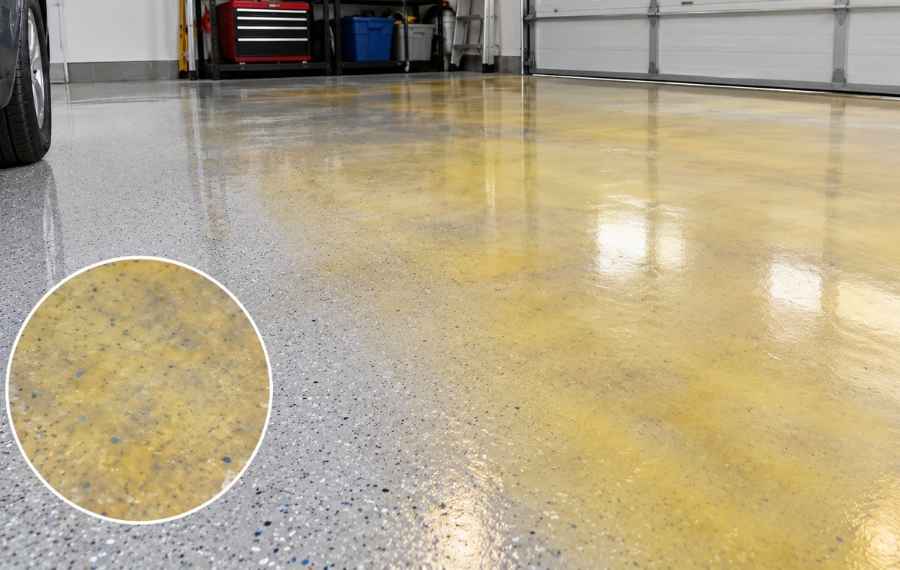
- Haze or cloudiness: the surface looks milky, dull or greasy, as if a fog sits on top of the color. This is usually a surface film or moisture problem, and it often can be cleaned off.
Some floors have both. A yellowed coating can also turn cloudy as it ages, so check one problem at a time.
Why Epoxy Turns Yellow
1. UV exposure
This is the main cause. Standard epoxy resins are aromatic, which means their chemical structure absorbs ultraviolet light. Over time that light breaks down parts of the polymer and produces a yellow to amber tint. The process is called photo-oxidation, and it happens even when the coating is perfectly applied.
Garages get more UV than people expect. Sunlight comes in through the garage door, side windows and open doors. Glass doesn’t block it all, and a floor that sits in a bright patch for hours each day will change color faster than the shaded half.
2. Heat
Heat speeds up oxidation. Floors near a south or west-facing door, in hot climates, or in garages without ventilation tend to yellow sooner. Heat also makes the effect from UV stronger, so the two usually work together.
3. The hardener, not just the resin
Many epoxy hardeners contain amines that darken as they age. Some systems use cycloaliphatic or modified hardeners that resist yellowing better than basic ones, but they are not UV-proof. If your coating was a budget kit with a clear or light finish, it was likely to yellow within a year or two of sun exposure.
4. Cure conditions and thick coats
A coating that cured in cold or humid conditions, or that was applied too thick, can discolor faster. Poor mixing can also cause uneven color, with patches that yellow differently from the rest.
5. Chemicals and cleaning products
Harsh cleaners, solvents and some tire dressings can stain the surface or speed up discoloration. Oil and grease that stay on the floor can leave dark or yellow marks.
Why a Garage Floor Looks Hazy or Cloudy
Amine blush
This is the most common cause of a cloudy, waxy film on new epoxy. It forms during cure when amines react with moisture and carbon dioxide in the air. It’s most likely in cool, damp conditions. The film is water-soluble and can be washed off. We cover this in detail in our guide to amine blush: how to identify and remove it.
Moisture during cure
If condensation formed on the floor, or moisture vapor was rising from the slab, the coating can turn milky or develop a whitish cast. Check the slab before coating with a proper test. Our guide to the best concrete moisture test kits can help you choose one.
Worn or scratched topcoat
A floor that is cloudy mostly in the driving lanes may simply be scratched. Thousands of tiny scuffs from tires, shoes and grit scatter light and make a gloss finish look dull and hazy. That is wear, not a chemical problem.
Water spots and mineral residue
Meltwater from cars in winter leaves salt and mineral deposits that dry as white haze. These usually wipe away with warm water and a mild cleaner.
Delamination starting to form
A hazy or whitish area that looks like it’s lifting may be the first sign of failed adhesion. If the coating can be picked up with a fingernail, read our guide on why garage floor coatings delaminate.
Can You Fix a Yellowed or Hazy Floor?
If the problem is haze or blush
- Wash the floor with warm water, a mild detergent and a non-woven scrub pad.
- Rinse and squeegee the water away so it doesn’t dry back onto the surface.
- Repeat until the greasy or cloudy feeling is gone.
- Let the floor dry fully. If the haze is gone, you’re done.
- If the surface is dull from wear, scuff-sand and apply a fresh topcoat.
If the problem is yellowing
Yellowing is inside the coating, so cleaning won’t remove it. You have three practical options:
- Accept it. If the floor is solid and the color is tolerable, many owners leave it alone.
- Sand and add a UV-stable topcoat. This is the most common repair. Sand or grind the surface to remove gloss and create a profile, clean it, then apply a polyaspartic or aliphatic polyurethane topcoat. If the yellowing is only on the surface, a fresh topcoat will reset the look. A dark or tinted topcoat can also hide the color change.
- Strip and recoat. If the epoxy is yellow all the way through, damaged or poorly bonded, grinding it off and starting over is the cleanest solution.
- Use a UV-stable topcoat over any epoxy, especially in garages with windows or a lot of daylight.
- Test your moisture levels before coating to avoid cloudiness and bubbling.
- Coat in the right conditions. Stay within the temperature and humidity range on your product’s data sheet, and keep the slab above the dew point.
- Avoid unvented fuel heaters during cure, because they add moisture and carbon dioxide.
- Apply to the recommended thickness. Thicker is not always better.
- Add window film or shades to reduce direct sun on the floor.
- Clean with mild products. Avoid harsh solvents and acidic cleaners.
- Use mats in parking spots to reduce scuffing and chemical contact.
- Avoid cheap clear epoxy as a final coat in a sunny garage.


