

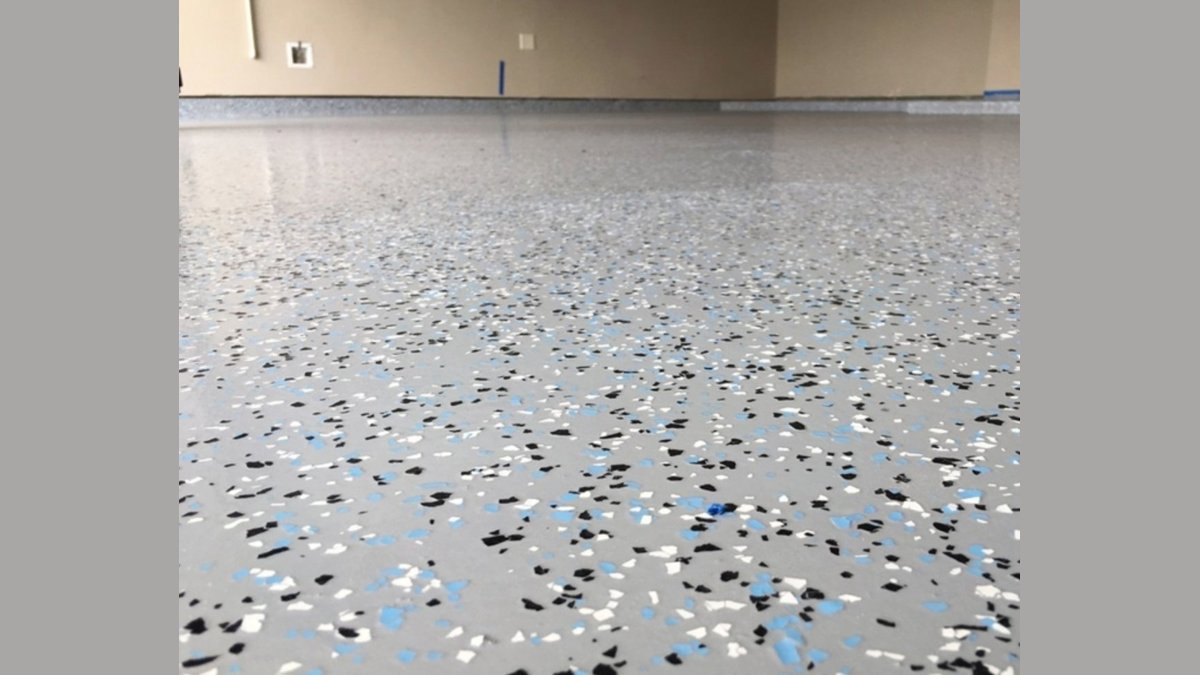
You can paint a garage floor with flakes in about 3 days of working time spread over a week: 1 day to clean and etch, 1 day to crack-fill and prime, 1 day to coat and broadcast flakes, then a clear topcoat after 12–24 hours. The flakes go on while the base coat is still wet. This guide covers prep, timing, and the mistakes that make flakes peel.
What Flake Coating Really Is
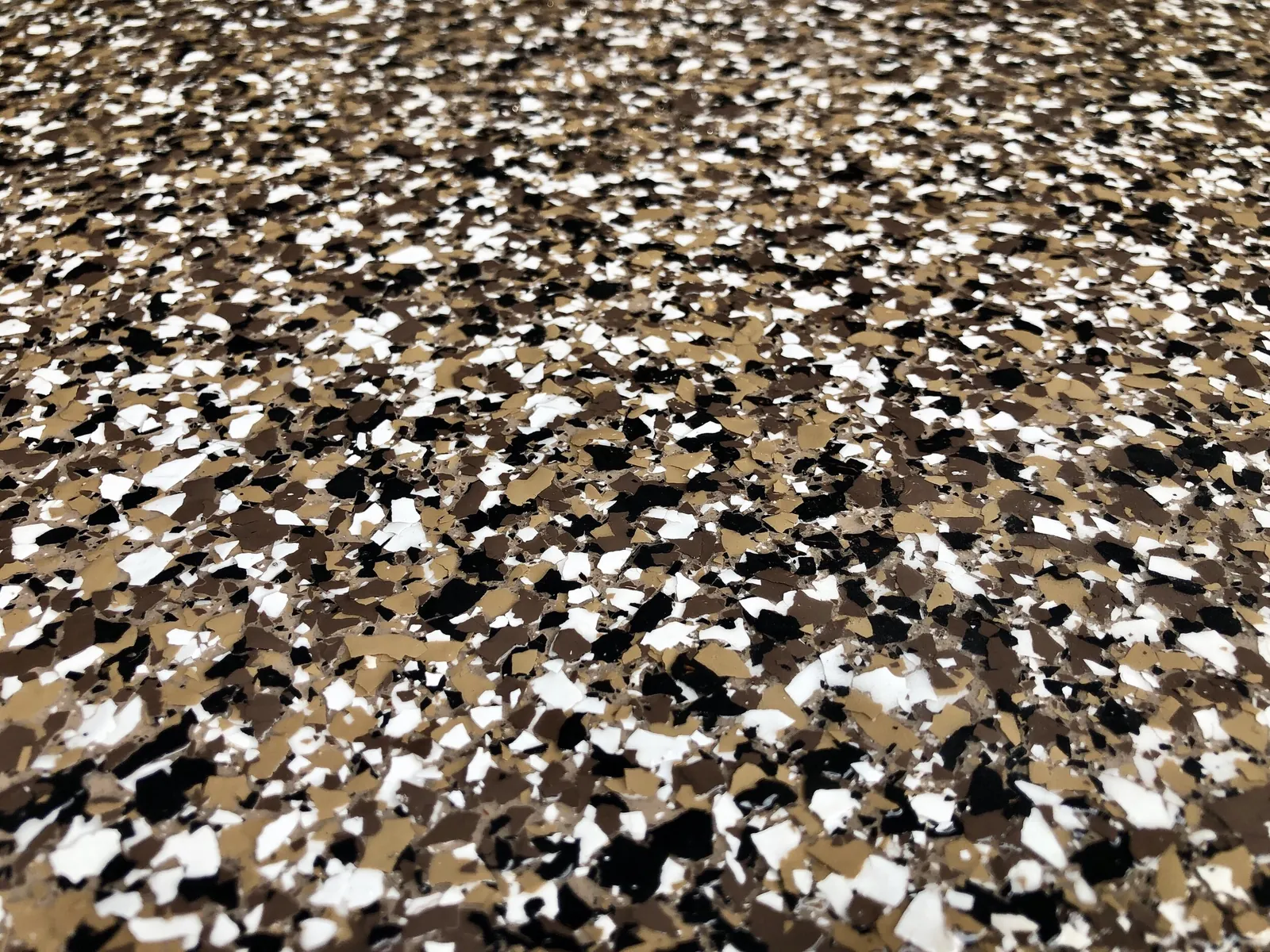
Flake coating is a two-part epoxy or polyurea base coat with decorative vinyl chips scattered into it while it’s wet, then sealed under a clear topcoat. The flakes aren’t just for looks — they add texture, which gives you grip when the floor is wet.
It’s for garage floors, workshops, and basements where you want a hard, cleanable surface that hides dust and tire marks. The flakes also hide small imperfections in the concrete.
Here’s the misconception: people think flakes are a finish on their own. They’re not. The flakes are decoration sitting inside the coating. The epoxy holds them, and the clear topcoat protects both. Skip the topcoat and the flakes will scuff off under tires within months.
One rule you need to know: epoxy bonds by mechanical grip, not glue. The concrete must be clean, dry, and slightly roughened — usually by acid etching or diamond grinding — or the whole system lifts. The American Concrete Institute publishes guidance on surface preparation if you want the technical detail.
Step-by-Step: Coating Your Garage Floor
- Clear and clean (2–3 hours). Empty the garage. Scrape off oil spots with a degreaser, then scrub the whole floor with a stiff brush and warm water. Let it dry 24 hours.
- Test for moisture (10 minutes). Tape a 2 ft × 2 ft square of plastic sheeting to the floor. If condensation forms under it after 24 hours, stop — you need a moisture-barrier primer, not standard epoxy.
- Etch or grind (2–4 hours). Acid etch with a muriatic acid solution mixed to the label ratio, or rent a diamond grinder. Rinse 3 times and let it dry fully.
- Repair cracks (1 hour, plus cure). Fill cracks and holes with an epoxy patching compound. Let it cure per the package — usually 4–12 hours.
- Prime (1–2 hours). Roll on a compatible epoxy primer at the coverage the can states, usually around 300 sq ft per gallon.
- Base coat and flakes (1–2 hours). Roll the colored epoxy at about 250 sq ft per gallon, working in 10 ft × 10 ft sections. While each section is still wet, broadcast flakes by hand or with a shaker — a light coat is about 1 lb per 100 sq ft, a heavy full-flake look is 3–5 lbs per 100 sq ft.
- Topcoat (1–2 hours). After 12–24 hours, scrape off excess flakes, vacuum, then roll a clear polyurethane or epoxy topcoat at the same coverage as the base.
The judgement call is timing. Flakes must go into wet epoxy — too early and they sink, too late and they sit on top and flake off later. Work in small sections and don’t chase the whole floor at once.
If your slab has no vapor barrier and shows moisture, or you’re coating a commercial space with chemical exposure, that’s a job for a licensed concrete coating contractor, not a DIY kit.
Numbers and Settings at a Glance
Coverage and timing shift with your slab size, the product you pick, and how heavy you want the flake look. The table below covers the main variations.
| Situation | What to use | How long | What to watch for |
|---|---|---|---|
| Standard 2-car garage (400–500 sq ft) | 2 gallons epoxy base, 10–15 lbs flakes, 2 gallons topcoat | 3 working days | Buy 10% extra for touch-ups |
| Light flake look | 1 lb flakes per 100 sq ft | Same as base coat | Thin coverage shows every floor flaw |
| Full-flake look | 3–5 lbs per 100 sq ft | Same as base coat | Excess flakes must be scraped before topcoat |
| Hot day (above 85°F) | Same products, smaller sections | Pot life drops to 15–20 minutes | Epoxy sets fast — mix only what you can roll in 20 minutes |
| Cold day (below 60°F) | Same products, warmed garage | Cure stretches to 48–72 hours | Cold slows cure and can leave a sticky finish |
| Damp slab | Moisture-barrier primer first | Add 1 day | Standard epoxy will blister without it |
| Old painted floor | Grind off old coating first | Add 1–2 days | Epoxy won’t bond to loose paint |
What Separates a Good Floor From a Bad One
Prep eats most of the job, and that’s where results split. A floor that gets ground or etched properly, rinsed until the water runs clear, and dried for a full day will hold for years. A floor that gets a quick sweep and a mop will start peeling at the tires within one season.
Order of work
Experienced installers work back-to-front and in small sections, so they’re never standing on wet epoxy. They cut in edges with a brush first, then roll the field, then broadcast flakes immediately behind the roller. The whole base coat goes down in one continuous session — a cold joint between two pours shows as a visible line forever.
What to leave alone
Don’t overwork the roller. Epoxy self-levels; going back over a section that’s already starting to set leaves roller marks and bubbles. Don’t add flakes to a section you’ve already moved past, either. And don’t touch the floor for the full cure window — usually 7 days before parking on it, per most manufacturers’ data sheets.
Common Problems and Quick Fixes

| What you notice | What it usually means | What to do first |
|---|---|---|
| Flakes peeling off in patches | Topcoat went on too thin, or flakes weren’t sealed | Vacuum, scuff, and re-topcoat the area |
| Bubbles or pinholes in the finish | Concrete outgassing, or rolling too fast | Sand smooth and recoat that section |
| Coating lifting at the tires | Moisture coming up through the slab | Test with plastic sheeting; may need full removal and a moisture-barrier primer |
| Sticky floor after 48 hours | Cold garage or wrong mix ratio | Warm the space and give it another 24 hours |
| Visible seams between sections | Cold joint from stopping mid-pour | Sand the seam and blend a fresh batch over it |
| Flakes look uneven | Broadcast by hand too slowly | Add a second light broadcast before the base sets |
The Rules That Apply
Vapor barriers, ventilation, and disposal are the three rules people skip. Acid etch residue and solvent-based coatings are usually treated as household hazardous waste — check your state or local environmental agency’s page before you pour anything down a drain.
Ventilation matters. Epoxy and polyurea release fumes while curing, and OSHA requires adequate ventilation for workers using these products. In a closed garage, that means fans and an open door for the full cure window.
If your home was built before 1978, painted surfaces may contain lead-based paint, and disturbing them triggers EPA Renovation, Repair and Painting rules. Test before you grind. For anything involving structural cracks, active water intrusion, or a slab over 20 years old, call a licensed concrete contractor — this stops being a DIY job.
Keeping the Floor Looking New
Once it’s cured, sweep or dust-mop weekly and wash with a pH-neutral cleaner and a soft brush. Avoid citrus or vinegar cleaners — the acid dulls the topcoat over time. Use a mat under jacks and stands, and put felt pads on anything you drag across the floor.
The clear topcoat is the wear layer, so watch for dull patches near the parking spot. When the gloss fades or you can see the flakes wearing through, it’s time for a recoat — usually every 5–10 years in a daily-driver garage, sooner if you park hot tires on it. Scuff with 120-grit, wipe clean, and roll a fresh topcoat. You don’t need to redo the flakes.
When Flakes Aren’t the Right Choice

Flakes are the wrong pick if your slab takes on standing water. Coating traps moisture underneath, and the whole system blisters. Fix the drainage first, or use a breathable sealer instead.
Skip flakes if you want a smooth, glossy showroom look. The texture that gives grip also breaks up reflections, and you can’t get a mirror finish with chips in it. A solid-color epoxy or polished concrete suits that better.
And if this is a commercial shop with chemical spills, hot metal, or forklift traffic, a flake epoxy system won’t hold up. You need a high-build industrial coating, and that’s a contractor’s call.
Frequently asked questions
How long does it take to paint a garage floor with flakes?
Plan 3 working days spread over about a week. Day 1 is cleaning and etching, day 2 is repairs and primer, day 3 is base coat plus flakes and topcoat. Full cure before parking is typically 7 days, per most manufacturer data sheets.
Can you paint a garage floor with flakes in cold weather?
Yes, but only if the garage stays above 60°F for the whole cure. Below that, epoxy gets thick, cures slowly, and can stay tacky for days. Warm the space with a heater and add 24–48 hours to every cure step.
Is flake epoxy flooring safe for a garage?
Yes, once fully cured. During application, the fumes need ventilation — OSHA requires it for workers. Keep kids and pets out until the floor is dry and the smell is gone, usually 24–72 hours depending on temperature.
What happens if you don’t use a topcoat over the flakes?
The flakes scuff off under tires within months and the epoxy dulls fast. The topcoat is the wear layer — without it, you’re parking on bare chips. Always seal the flakes with a clear polyurethane or epoxy topcoat.
How many flakes do you need per square foot?
A light look takes about 1 lb per 100 sq ft. A full-flake look takes 3–5 lbs per 100 sq ft. For a 500 sq ft garage, that’s 5 lbs for light coverage or 15–25 lbs for full coverage. Buy extra for touch-ups.
Why are my flakes peeling off?
Usually the topcoat went on too thin, or the flakes weren’t fully sealed into it. It can also mean the base coat was already too dry when you broadcast. Vacuum the loose chips, scuff the area, and re-topcoat.
Do you have to etch the concrete before flaking?
Yes, unless you grind it. Epoxy needs a rough, clean surface to grip. Acid etching or diamond grinding opens the concrete pores. Skip this step and the coating peels at the edges and under tires.
Conclusion
Flake epoxy is a weekend-plus project that rewards patience far more than skill. Most of the work is cleaning, etching, and waiting — the coating itself goes down in an afternoon. Get the prep right, broadcast into wet epoxy, seal it with a proper topcoat, and you’ll have a garage floor that looks sharp and survives years of tires, jacks, and road salt.


