

Heads up: this article includes Amazon affiliate links. We are an Amazon Associate and earn from qualifying purchases, which never changes what you pay.
A Fine-Grit Additive That Turns Sealer Into a Grip Surface
Buy the MasonryDefender Paint Additive Fine Grit 300595 if you already own an acrylic, epoxy, or oil-based sealer and you want to add traction to a patio, walkway, stair, ramp, or garage floor without changing its color. Skip it if you want a ready-mixed non-slip coating, because this is a 4 oz. container of grit that you stir into a liquid you buy separately.
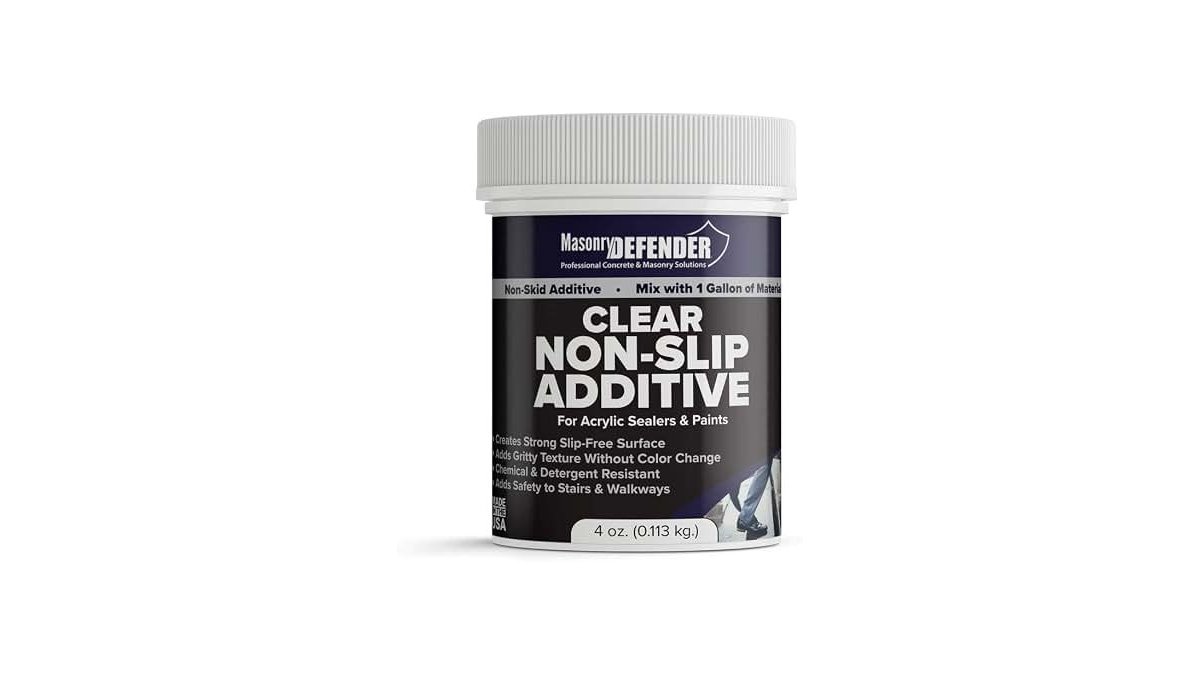
That’s the honest shape of it. The listing describes one small tub of clear fine grit, and the whole product is that grit. It doesn’t seal anything on its own, it doesn’t clean anything, and it doesn’t fill cracks. What it does is sit inside a coating you already have and give that coating a gritty surface. One container mixes with 1 gal. of material according to the listing, so your first job is to work out how much liquid you’re actually applying and whether one tub covers it.
The listing leads with three things: a non-slip surface for patios, walkways, and floors; a clear grit texture that keeps a low gloss finish without altering your paint or sealer color; and chemical resistance against detergents and chemicals in high-traffic areas. Those three claims are the whole pitch, and they’re worth taking one at a time.
The owner this is built around is someone mid-project. They’ve picked a sealer, they’ve prepped the slab, and they’ve decided the surface is too slick when wet. They’re adding traction as a step in a job that’s already underway, not shopping for a standalone product. The trade-off they’ll weigh is texture against ease: a gritty surface grips better, but it also holds dirt and it changes how the surface feels underfoot and under a broom. That’s the question the rest of this review settles.

Who Should Add Grit to Their Sealer, and Who Shouldn’t
The first buyer this suits is someone sealing a hard outdoor surface that gets wet. If you’re coating a patio, a walkway, a pool surround, or a set of concrete steps, the listing specifically names those surfaces, and it names stairs, ramps, and entryways too. You’d mix the grit into your sealer before you roll or brush it on, and the result is a surface that grips when rain or a hose leaves it slick. You’d use it once per coating job, not repeatedly, so a single container goes a long way if your area is small.
The second buyer is someone who likes the look of their surface as it is. The listing says the grit is clear and low gloss and won’t alter the color of your paint or your clear concrete sealer. That matters if you’ve chosen a tinted sealer on purpose, or if you’re sealing plain concrete and want it to stay plain.
The third buyer is someone maintaining a space that sees traffic and cleaning. The listing claims chemical resistance against chemicals and detergents, which points at garages, workshops, commercial entryways, and any floor that gets mopped or hosed rather than gently wiped. If your surface is scrubbed regularly, the grit is meant to survive that.
Now the people who should walk away. If you don’t already own a sealer, paint, or epoxy to mix this into, this isn’t your product — the listing describes it purely as an additive, so you’d need to buy the coating separately and pick one that’s compatible. Look for a complete non-slip coating instead, one that arrives ready to apply.
The second group to skip: anyone who wants a smooth, easily swept finish. The listing’s whole purpose is a gritty texture, and a gritty surface is not a smooth, easily swept finish. If a polished look matters more to you than traction, a clear sealer without additive is the thing to look for.
What the Additive Actually Does for Your Floor
The listing makes four promises, and each one answers a different worry a buyer has before they open the tub. Here’s what each one changes once the coating is down.
It gives a slick surface something to grip
The core job is traction. The listing says you mix this anti-slip additive into acrylic, epoxy, or oil-based paints and sealers to get a textured, slip-resistant finish, and it names patios, walkways, and floors as the surfaces. It also points at stairs, ramps, and entryways, and says it works indoors and outdoors.
What that changes in daily use is where you’re willing to walk. A sealed concrete patio or a painted garage floor is slickest when it’s wet, and the listing says this additive gives that coating a textured, slip-resistant finish. The grit creates a textured, slip-resistant finish on patios, walkways, and floors. The limit the listing puts on this is that the grit only exists where the coating exists — it’s mixed in, so any part of the surface you don’t coat stays as slick as it was. The listing also doesn’t state a slip-resistance rating or a tested standard, so treat the claim as the manufacturer’s description rather than a certified measurement.
It keeps your color and finish intact
The second job is doing all of the above without ruining the look you paid for. The listing describes a clear grit that creates a low gloss, gritty texture without altering the color of your paint or clear concrete sealer, and says it maintains the original look of your surface.
The condition attached is gloss: the listing says low gloss, so if you’re chasing a high-shine wet-look finish, adding grit works against that goal by design. You’re trading some sheen for grip, and the listing is upfront that the texture is gritty.
It stands up to cleaning and traffic
The third job is longevity under use. The listing says the additive is designed to withstand exposure to chemicals and detergents, and that this helps maintain floor grip and durability in high-traffic areas.
That matters most in spaces that get cleaned aggressively — a workshop floor with oil and solvent spills, a garage that gets hosed out, a commercial entryway that’s mopped daily.
It mixes in one simple ratio
The fourth job is that the whole thing is a stirring step, not a second project. The listing says one 4 oz. container mixes with 1 gal. of material, and describes it as ideal for use as a non-slip concrete sealer additive or with low gloss patio paver sealers.
In practice the mixing ratio is what you plan around. You work out how many gallons of sealer your surface needs, and that tells you how many containers to add to the cart. If your job needs more than a gallon, you’re buying more than one tub.
The full set of listed details is in the table below.
| # | What Amazon lists |
|---|---|
| 1 | NON SLIP SURFACE: Mix this anti slip paint additive with acrylic, epoxy, or oil-based paints and sealers for a textured, slip-resistant finish on patios, walkways, and floors. |
| 2 | CLEAR GRIT TEXTURE: Creates a low gloss, gritty texture without altering the color of your paint or clear concrete sealer, maintaining the original look of your surface. |
| 3 | CHEMICAL RESISTANCE: Designed to withstand exposure to chemicals and detergents, this non slip additive helps maintain floor grip and durability in high-traffic areas. |
| 4 | ENHANCED SAFETY: Add this anti slip additive for concrete sealer to stairs, ramps, and entryways to help reduce the risk of slips and falls in both indoor and outdoor spaces. |
| 5 | EASY TO USE: One 4 oz. container mixes with 1 gal. of material. Ideal for use as a non slip concrete sealer additive or with low gloss patio paver sealers for added traction. |
What’s Good Here and What Isn’t
Pros
- Mixes into acrylic, epoxy, or oil-based coatings you already own
- Clear grit keeps paint and sealer color unchanged
- One 4 oz. container covers 1 gal. of material
- Listed for patios, walkways, stairs, ramps, and entryways
- Chemical resistance claimed for detergent and chemical exposure
Cons
- Sold as an additive only; the sealer is not included
- Low gloss finish by design, so it works against a high-shine look

The Verdict on MasonryDefender Fine Grit
Buy it if you’re mid-project with a sealer already chosen and a surface that gets wet. That’s the condition, and it’s a real one. This product is a modifier, not a coating, so its value depends entirely on the liquid you put it in. Get that pairing right and you’ve solved a slick-floor problem with one extra step in a job you were doing anyway. Get it wrong — no sealer on hand, or a coating that won’t accept grit — and you’ve bought a tub you can’t use.
For the homeowner sealing a patio or a set of steps, the case is straightforward. The listing names those exact surfaces, the clear grit protects whatever color you’ve chosen, and the mixing ratio is simple enough to plan before you order. You’re trading a little sheen and some sweeping effort for traction where water collects, and for most people with a wet patio, that’s the right trade.
For the person maintaining a garage, workshop, or commercial entryway, the chemical-resistance claim is the part that matters, because a floor that gets mopped or hosed is where grit either holds on or washes out. The listing supports that claim in words, not in test data, so weigh it as a manufacturer’s description.
If you want a finished non-slip surface with nothing to mix, this isn’t it — look for a coating that arrives ready to apply. And if you want to keep a glass-smooth finish, grit is the wrong direction entirely. The trade-off is texture for traction, and the listing never pretends otherwise.
Frequently Asked Questions
Do I need to buy a sealer separately?
Yes. The listing describes this as an additive for acrylic, epoxy, or oil-based paints and sealers, so the liquid coating is something you supply. Nothing in the listing suggests a sealer is included with the container. Before you order, confirm you have enough of a compatible coating to finish the surface, because the grit has to go into that material — you can’t apply it on its own afterward.
How much area does one container cover?
The listing gives the ratio, not the area. It says one 4 oz. container mixes with 1 gal. of material, so coverage depends on how far a gallon of your chosen sealer spreads, which varies by product and surface. Work backward: find your sealer’s stated coverage, calculate the gallons your job needs, and buy one container per gallon. The listing doesn’t state a square-foot figure for the additive itself.
Will it change the color of my concrete or paint?
No, according to the listing. It describes the grit as clear and says it creates texture without altering the color of your paint or clear concrete sealer, maintaining the original look of the surface. What it does change is the finish — the listing calls it low gloss, so expect less shine than an unmodified coating. Color stays; sheen shifts.
Is it slippery when wet, or does it actually grip?
The listing claims a slip-resistant, textured finish and names wet-prone spots like patios, walkways, stairs, ramps, and entryways. Treat the grip as the manufacturer’s description. If your surface has a specific safety requirement, check whether your sealer maker publishes test data for grit-modified coatings. For general guidance on walking-surface slip resistance, the CDC’s falls prevention resources cover why wet hard surfaces matter.
Is a paint additive like this worth owning at all?
Yes, if you’re recoating a slick sealed surface anyway. The grit adds one mixing step and gives traction where water sits. Skip it if your surface is already textured or you’d rather buy a ready-mixed non-slip product.


