

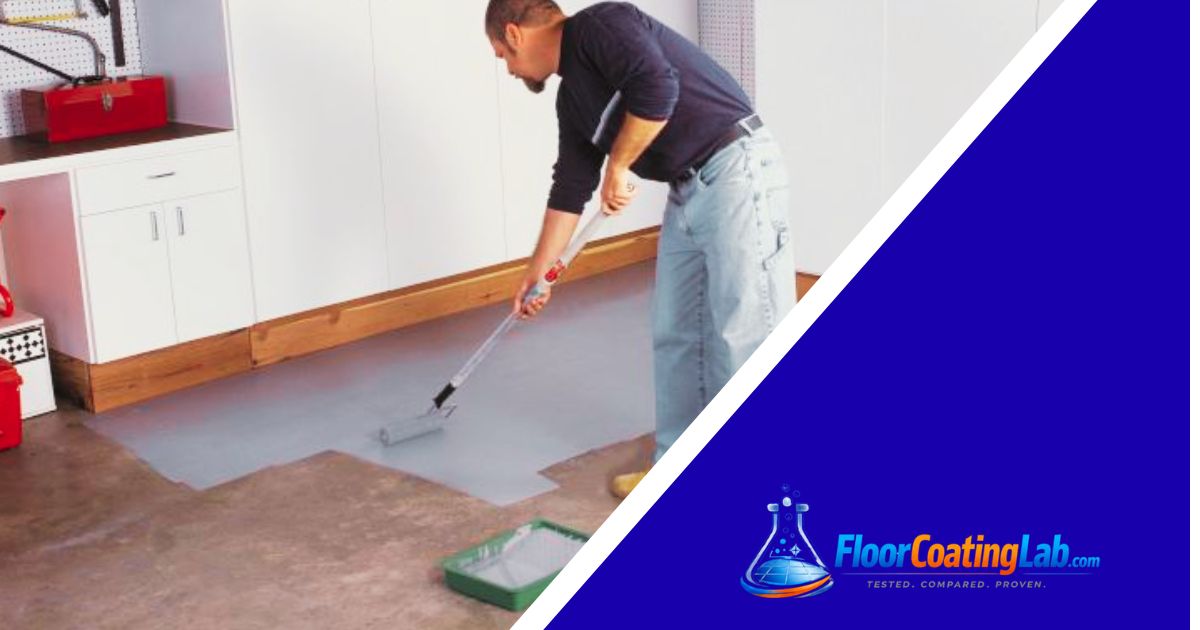
You are looking at your old, dusty garage floor. It has a faded, peeling coat of paint on it. You really want to upgrade to a shiny, tough new finish. You want to save time and skip the hard work. So, you are probably asking yourself: can you epoxy over painted concrete?
The short answer is yes. You can. But in my honest opinion? It is usually a bad idea.
Why? Because your shiny new floor will only be as strong as that old paint underneath it. If the old paint peels, the new layer peels right off with it. According to home improvement industry data, DIY projects are booming, but many of them fail simply because people skip good surface preparation (Statista: DIY Home Improvement Market).
Don’t become a bad statistic!
Let’s dive into the reality of mixing these two materials.
The Reality of Epoxy Floor Coating Over Painted Concrete
Think of epoxy resin like super glue. For super glue to work, it needs a strong, hard surface to hold onto.
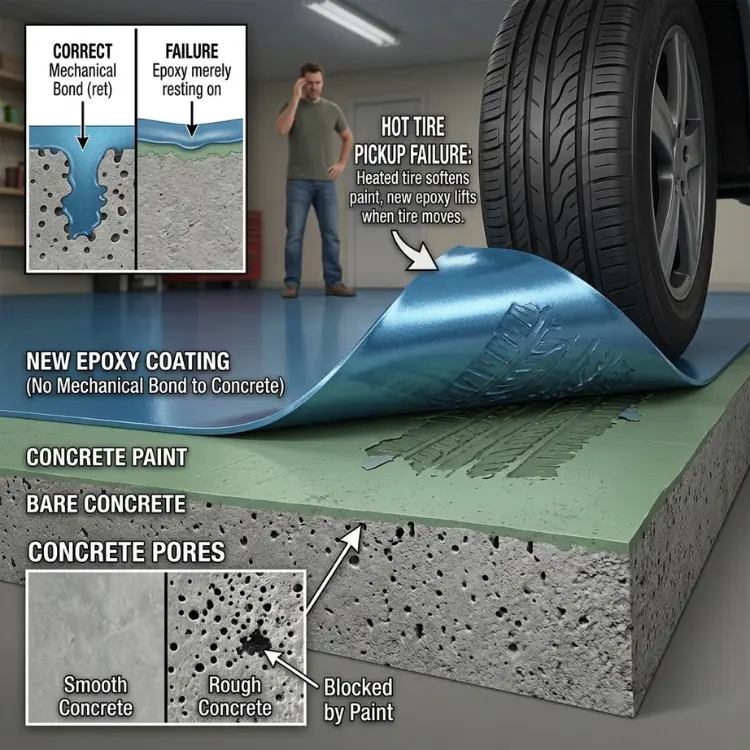
Bare concrete is actually full of tiny microscopic holes. We call these concrete pores. When you pour an industrial coating onto bare concrete, it sinks deep into those holes. It locks in tight. This is called a mechanical bond.
But what happens when you already have paint on the floor? The paint blocks the holes. The new coating cannot reach the concrete surface at all. It just sticks to the top of the paint.
Have you ever heard of hot tire pickup? It is a nightmare. You drive your car on a hot summer day. Your tires get very hot. You park in the garage. The hot rubber sticks to the floor. When you back out the next morning, the tires rip the coating right off the floor! This happens a lot with peeling paint under epoxy coating. If the old paint is weak, hot tires will destroy your brand new floor in seconds.
Testing Concrete Paint Adhesion Before Epoxy
Okay, maybe you still want to try it. Maybe your current paint looks really strong and you want to take the gamble. Before you spend hundreds of dollars on a new kit, you must test the old paint.
The Cross-Hatch Adhesion Test
This is a cool trick professionals use. It tells you if your current paint is stuck tight to the floor.
- Take a sharp utility knife.
- Cut a tic-tac-toe pattern into the painted floor. Press hard enough to scratch the concrete below.
- Take a piece of strong duct tape. Stick it firmly over the tic-tac-toe grid.
- Rub it down hard with your thumb.
- Now, rip the tape off really fast!
Look at the tape. Did large flakes of paint come off? If yes, your paint failed the test. Do not put anything over it. You must remove the paint first.
Moisture Testing Painted Concrete Before Sealing
Water is the enemy of any floor covering. If moisture comes up through the ground, it will push your paint right off.
Tape a 2-foot by 2-foot piece of clear plastic to your floor. Tape all four edges tight with duct tape. Leave it there for 24 hours. Check under the plastic the next day. Is it wet? Is there condensation? If you see water, you have a moisture problem. Trapping that water under a new, thick layer will cause huge bubbles.
Related Article: The 7 Best Floor Coating Removers You Can Trust
Will Epoxy Stick to Acrylic Concrete Paint?
Not all paint is the same. The type of paint you have changes everything. New coatings hate some paints and tolerate others.
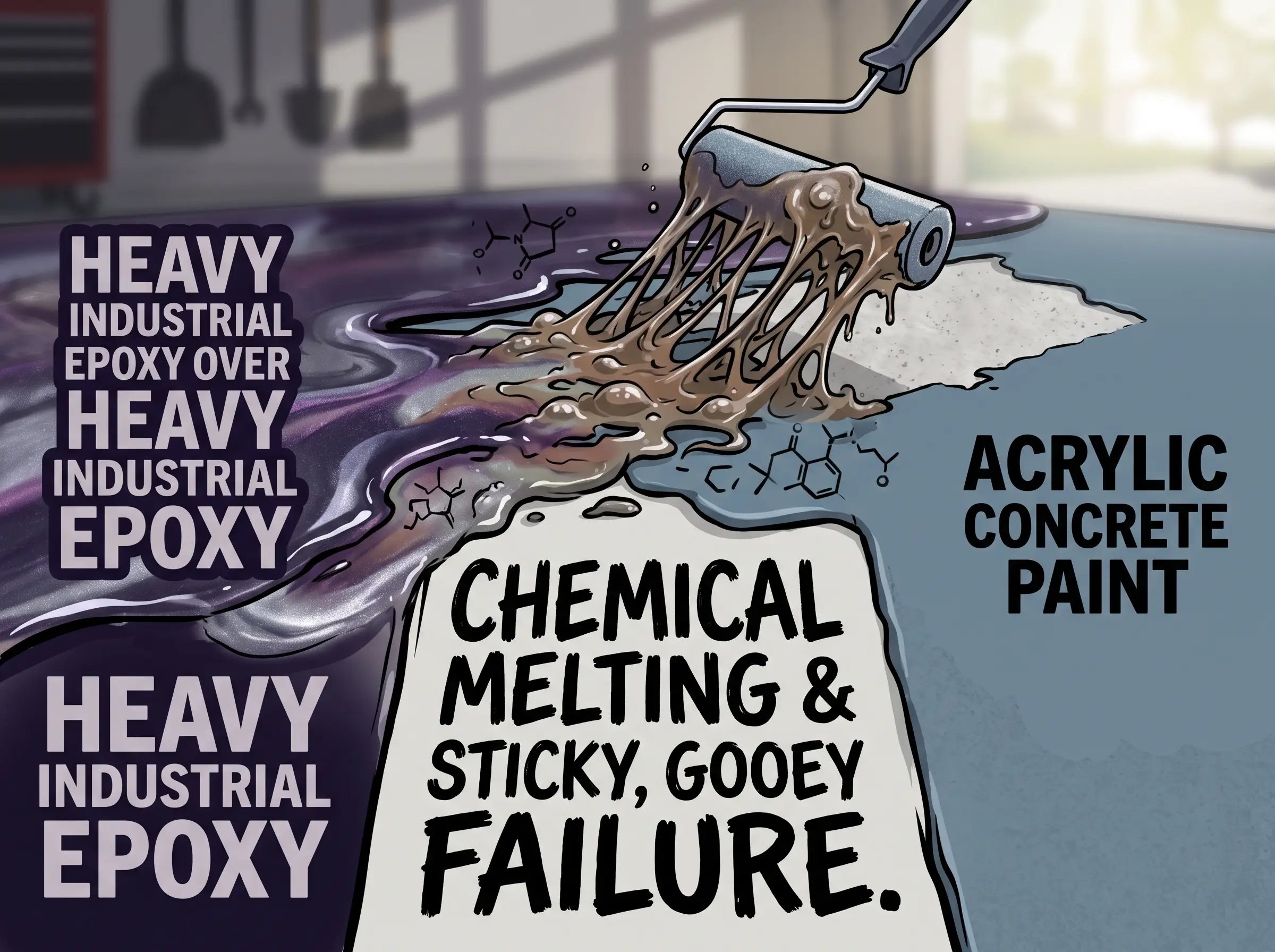
Will it stick to acrylic concrete paint? No. Never put heavy industrial coatings over acrylic or latex water-based paints. The harsh chemicals will melt the acrylic. It turns into a sticky, gooey mess.
Here is a quick table to help you figure out what kind of paint you have on your floor right now:
| Paint Type | How to Test It | Can I Coat Over It? |
| Acrylic / Latex Paint | Rub with an acetone-soaked rag. The paint will soften and wipe off easily. | NO. The new chemicals will melt it. |
| Oil-Based Paint | Rub with acetone. It gets a little dull but does not wipe off easily. | Maybe. But it is highly risky. |
| Old Epoxy | Acetone does nothing to it. It stays hard and shiny. | Yes. If you scuff it with sandpaper first. |
I always tell my friends: when in doubt, grind it out!
Concrete Floor Preparation for Epoxy (If Your Paint Passes the Test)
Did your floor pass the tape test? That is awesome news! But wait, do not just open your kit and start rolling.
Proper concrete floor preparation for epoxy is the absolute most important step. You cannot skip it. If you are applying epoxy over painted garage floor surfaces, you have to make that old paint rough.
Why? Because thick coatings cannot stick to smooth, shiny surfaces. They need scratches and grooves to grab onto. We call this surface profiling.
Here is exactly what you need to do:
- Scuff the floor: Get a pole sander. Put 60-grit sandpaper on it. Rub the whole floor until the old paint looks dull and scratched.
- Clean the oil: Sweep up all the dust. Next, scrub the floor with a strong concrete degreaser. I really like using TSP (Trisodium Phosphate) for this part. It cuts right through grease and tire marks.
- Rinse and dry: Wash all the soap away with a hose. Let the floor dry for two whole days. Do not rush this!
- Prime it: You must use a good epoxy primer. Think of a primer like double-sided tape. It grabs the old paint on the bottom and holds the new coating on top.
How to Remove Paint From Concrete Before Epoxy (If Your Paint Fails)

What if your paint came off on the duct tape? I am sorry, but you have to strip the floor. I know it sounds like a lot of work. But at FloorCoatingLab, we always say bare concrete is the best concrete.
Starting fresh gives you peace of mind. So, how to remove paint from concrete before epoxy? You really only have two choices.
Mechanical Grinding vs Chemical Stripping Concrete Paint
Do you enjoy working with messy, smelly chemicals? I sure don’t! But let’s look at both options so you can pick what works for you.
Chemical stripping uses thick, harsh liquids to melt the old paint. Mechanical grinding uses a heavy machine with diamond blades to scrape the paint away.
Here is a quick table to show you the differences:
| Feature | Mechanical Grinding | Chemical Stripping |
| Speed | Very fast. Done in a few hours. | Very slow. Takes a whole day or more. |
| The Mess | Creates a lot of dry concrete dust. | Creates a toxic, sticky, wet sludge. |
| My Opinion | The absolute best choice for a lasting floor. | Too messy and frustrating for most people. |
I always tell people to rent a concrete floor grinder from the local hardware store. Yes, it makes a lot of dust. You will need to wear a good mask. But a grinder easily rips right through the old paint.
More importantly, the diamond blades open up the concrete pores. This gives your new coating the perfect rough surface to lock into. If you use a paint stripper, the bare concrete underneath will be too smooth. You will have to do an extra step called acid etching just to make it rough again. Why do extra work if you do not have to?
More Amazing Ideas
- 12 Breathtaking Garage Epoxy Floor Ideas
- Concrete Sealer vs Epoxy: Pros, Cons
- How to Clean Epoxy Coated Garage Floors?
- 11 Inspiring Garage Floor Ideas
Applying Polyaspartic Over Painted Concrete (A Better Alternative?)
You might be wondering about newer technology. What about a polyaspartic coating? It is stronger than traditional kits. It dries way faster, too. So, can you put polyaspartic over your old paint instead?
Absolutely not. It is actually much worse!
Because polyaspartic is a fast-curing resin, it shrinks just a tiny bit as it dries quickly. When it shrinks, it pulls upward on the floor with incredible force. If there is old paint underneath, the polyaspartic will literally rip the old paint right off the concrete. This causes massive adhesion failure. Polyaspartic is an amazing product, but it demands 100% bare, ground concrete to work correctly.
Frequently Asked Questions (FAQ)
Can I just use acid etching over my painted floor?
No, you cannot. Muriatic acid needs to react with the minerals in bare concrete to make it rough. If there is paint on the floor, the acid will just sit on top of the paint and do absolutely nothing. You must remove the paint first before acid etching.
How long should concrete paint cure before I coat over it?
If you just painted your floor and changed your mind, you have to wait. Paint needs to release gases as it dries. You should wait at least 30 days for the paint to fully cure before putting any heavy coating over it. Otherwise, trapped gases will cause bubbles.
How do I know if my concrete paint is oil-based or water-based?
Take a rag and soak it in some acetone or rubbing alcohol. Rub it hard on a small spot on your floor. If the paint gets soft and rubs off onto the rag, it is water-based (acrylic/latex). If it stays hard, it is oil-based or an older industrial coating.
Doing the Job Right the First Time
Putting a fresh coating over an old painted floor seems like a great shortcut. It saves time today, but it usually causes headaches tomorrow. Your new floor is only as strong as the weakest layer. If that old paint decides to let go, your expensive new finish goes with it.
Take the extra time to rent a grinder and get down to bare concrete. The peace of mind is totally worth the weekend of hard work.


One response to “Can You Epoxy Over Painted Concrete? (Tests & Prep Guide)”
[…] enough. If it beads up, there is sealer or contamination that will block the bond. Our guide to epoxy over painted concrete covers how to test for existing coatings, and the Surface Science section explains prep in more […]