Remove efflorescence by brushing, cleaning, and drying the concrete. If it returns, find and fix the moisture source before sealing or coating.
You clean your concrete floor, driveway, patio, or basement wall and it looks great. Then, a few days later, a white, dusty film appears on the surface.
You wipe it away, but it comes back.
That white buildup is usually efflorescence. It is common on concrete, especially where moisture can move through the slab or wall. The good news is that you can usually remove it without replacing the concrete.
The bigger question is why it keeps returning.
In this guide, you’ll learn how to get rid of efflorescence on concrete, how to remove the white residue safely, and what you need to do if it keeps coming back.
What Is Efflorescence on Concrete?
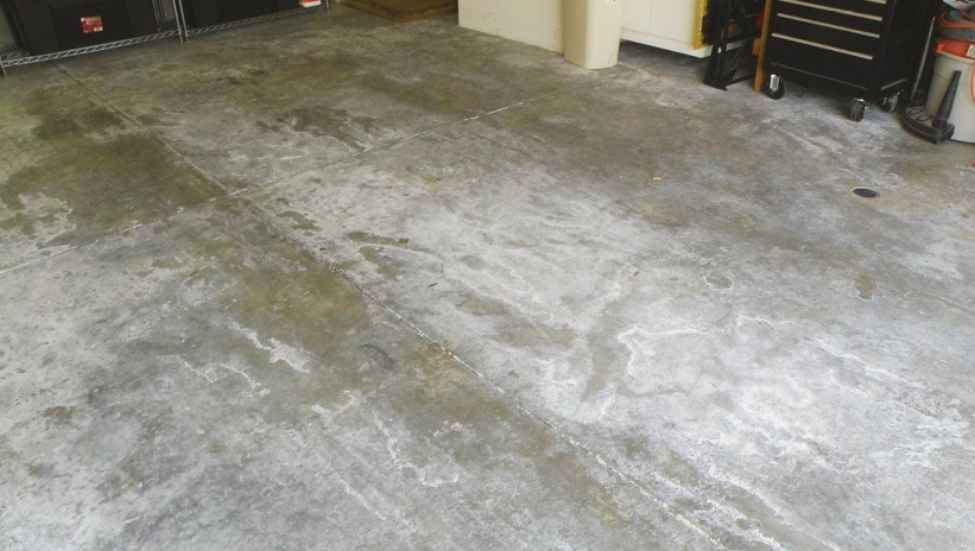
Efflorescence is a white or light-colored powder that appears when water moves through concrete and carries dissolved mineral salts with it.
As the water reaches the surface and evaporates, the salts are left behind. You see them as a white, chalky deposit.
It can look like dust, but it is not ordinary dirt.
You may notice efflorescence on a concrete basement floor, garage floor, foundation wall, driveway, patio, or masonry surface. Sometimes it appears as a thin powder. In other cases, it forms harder, crusty patches.
The important thing to understand is that efflorescence is usually a sign that moisture is moving through the concrete.
That is why simply cleaning the surface may not solve the problem.
What Does Efflorescence Look Like?
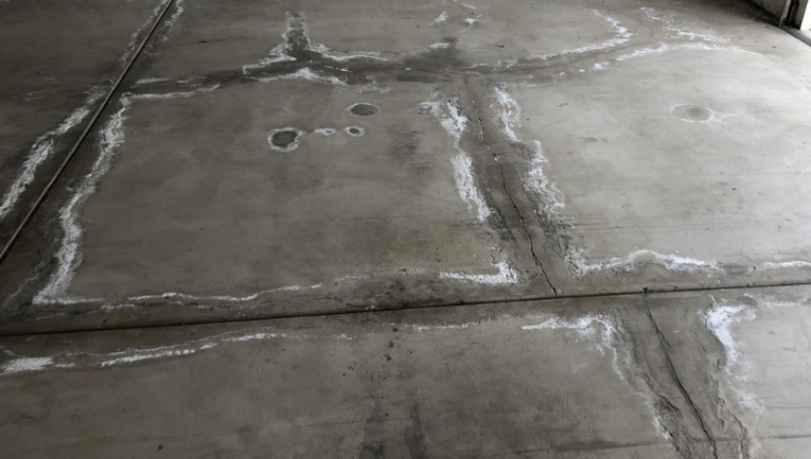
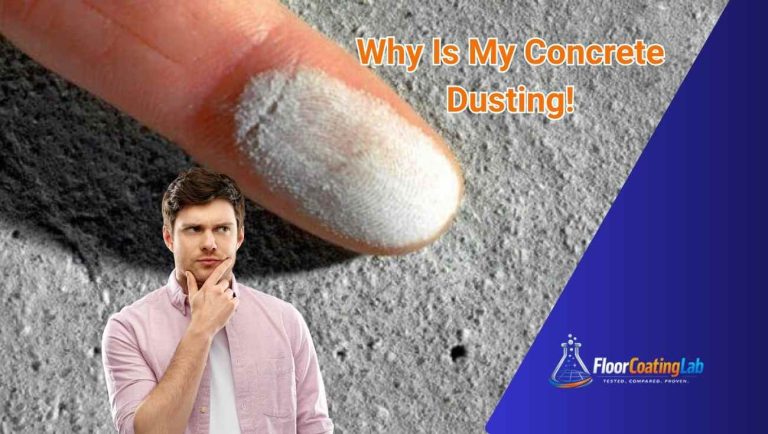
Efflorescence usually appears as a white, grayish-white, or slightly yellow powdery deposit.
Run your finger over it and you may notice a fine powder. If the surface is damp, the white marks may become less noticeable and then return after the concrete dries.
Why Does Efflorescence Keep Coming Back?
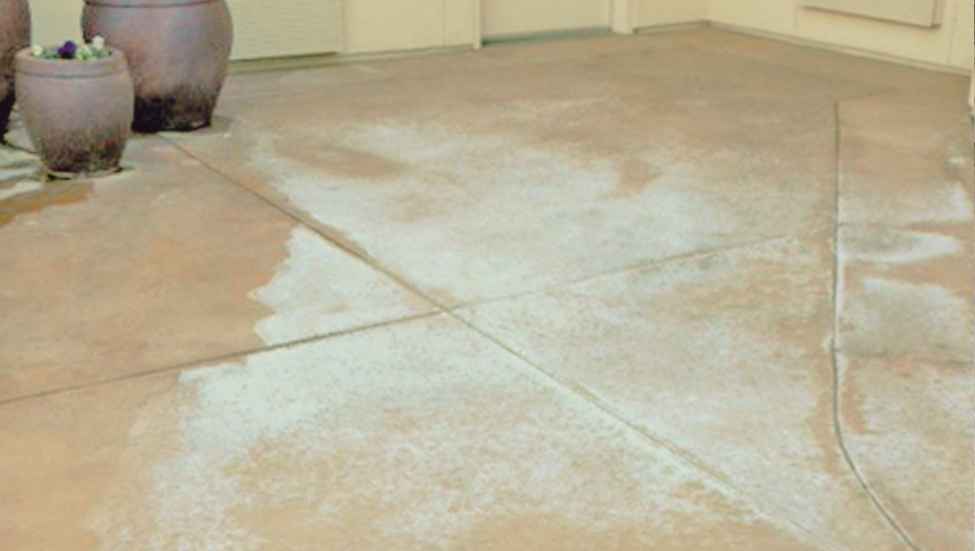
This is the part many people miss.
If you remove the white residue but moisture continues to enter the concrete, the efflorescence can return.
Think of the concrete as a path for water. Water gets into the slab or wall, dissolves minerals inside it, and carries those minerals toward the surface. When the water disappears, the minerals remain.
There are several possible sources of moisture.
A basement wall may be exposed to moisture from the soil outside. A garage slab may have moisture moving upward from below. A patio may absorb rainwater, especially if water does not drain away properly.
Leaks, poor drainage, cracks, and high moisture levels under a slab can also contribute.
So before you spend money on a coating or sealer, it is worth finding out where the moisture is coming from.
How to Remove Efflorescence From Concrete
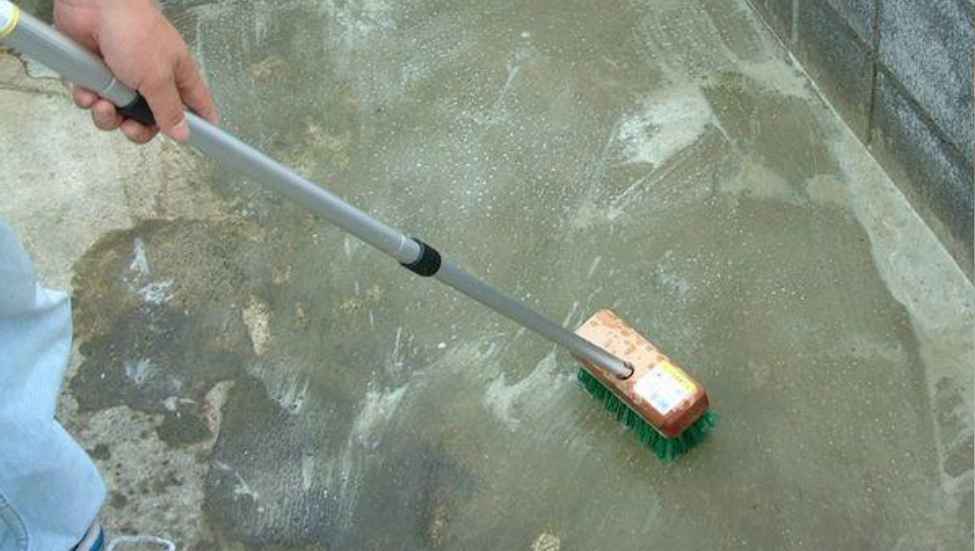
For light efflorescence, you can often clean the surface yourself.
Start with a dry surface. Sweep or vacuum away the loose white powder. A stiff nylon brush can help loosen material that has stuck to the concrete.
Avoid using a wire brush if you are trying to protect the appearance of the concrete. It can scratch softer surfaces and leave behind metal particles.
Once the loose material is removed, scrub the affected area with clean water and a stiff nylon brush. Work in small sections rather than soaking the entire floor.
The goal is to remove the salt deposits without pushing more water into the concrete than necessary.
After cleaning, allow the concrete to dry completely.
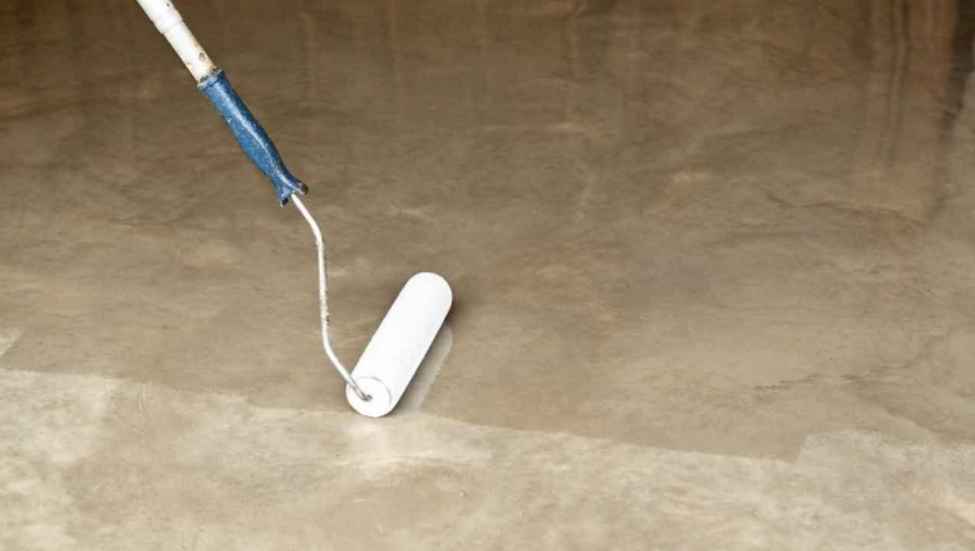
This drying step matters. If you immediately cover damp concrete with paint, epoxy, or another coating, you may end up with a much bigger problem.
What If Water Alone Does Not Remove It?
Some efflorescence comes off easily with dry brushing or water. Older deposits can be much harder.
For stubborn deposits, a concrete-safe efflorescence remover can help. Follow the product instructions carefully and test it on a small, hidden area first.
Do not assume that a stronger acid is a better solution. Harsh cleaners can damage concrete, change its appearance, or create a surface that is difficult to coat later.
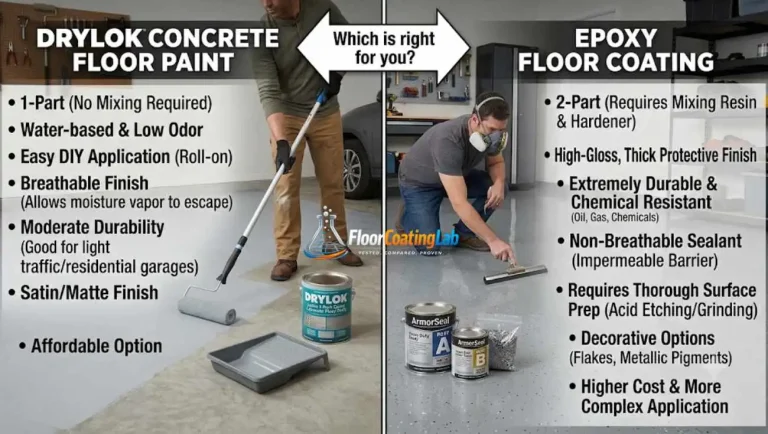
If you plan to apply epoxy, paint, or another coating afterward, make sure the cleaning method is compatible with that coating system.
A Simple Cleaning Process
If you are dealing with a small area, start by removing all loose deposits with a broom, brush, or vacuum.
Next, scrub the surface with a stiff nylon brush. Use clean water only at first. If the deposits remain, use a suitable concrete efflorescence cleaner according to its label.
Do not flood the floor.
After cleaning, remove the dirty water and let the concrete dry thoroughly.
Once it is dry, inspect the surface again. If white deposits have returned quickly, that tells you something important: the moisture problem may still be active.
Related Article: What is Self-Leveling Epoxy Floor Coating?
How to Know If the Efflorescence Is More Than a Cleaning Problem
A little white powder on an outdoor patio is not necessarily a serious problem.
But if you repeatedly clean the same area and the white deposits return within days or weeks, it is time to look beyond the surface.
Check the area around the concrete.
Is water collecting next to the foundation? Are gutters sending water toward the wall? Is a downspout emptying too close to the building? Is there a visible crack allowing water into the concrete?
For a garage or basement floor, moisture may also be coming from underneath the slab.
In these situations, cleaning only removes the evidence. It does not stop the source.
Look for Other Signs of Moisture
Efflorescence often appears alongside other signs of moisture.
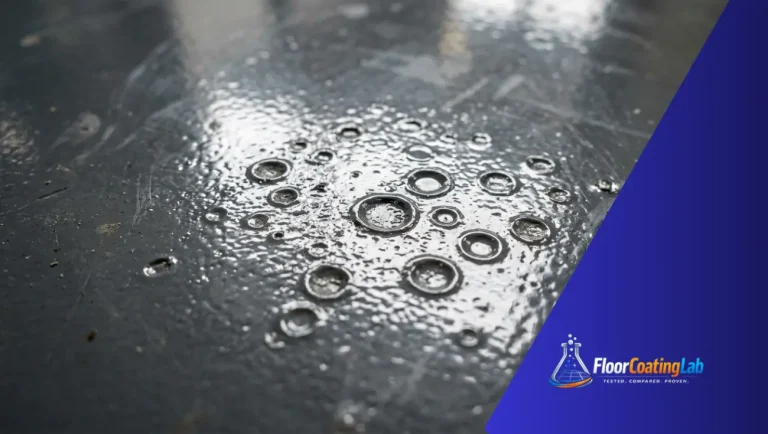
You may notice damp areas, dark patches, peeling paint, musty smells, cracks, or coating failure. On a coated concrete floor, you might see bubbles or areas where the coating has started to lift.
When several of these signs appear together, do not rush to apply another coating over the problem.
Find the moisture source first.
Can You Pressure Wash Efflorescence Off Concrete?
Pressure washing can remove surface deposits from some outdoor concrete surfaces, but it is not always the best choice.
The high-pressure water may clean the visible residue while also forcing more water into porous concrete.
For a driveway or patio, pressure washing may be reasonable when done carefully. Keep the pressure appropriate for the concrete and give the surface enough time to dry afterward.
For indoor concrete, such as a basement or garage floor, flooding the area with water is usually not a good idea.
A controlled cleaning method is safer.
Can You Use Vinegar to Remove Efflorescence?
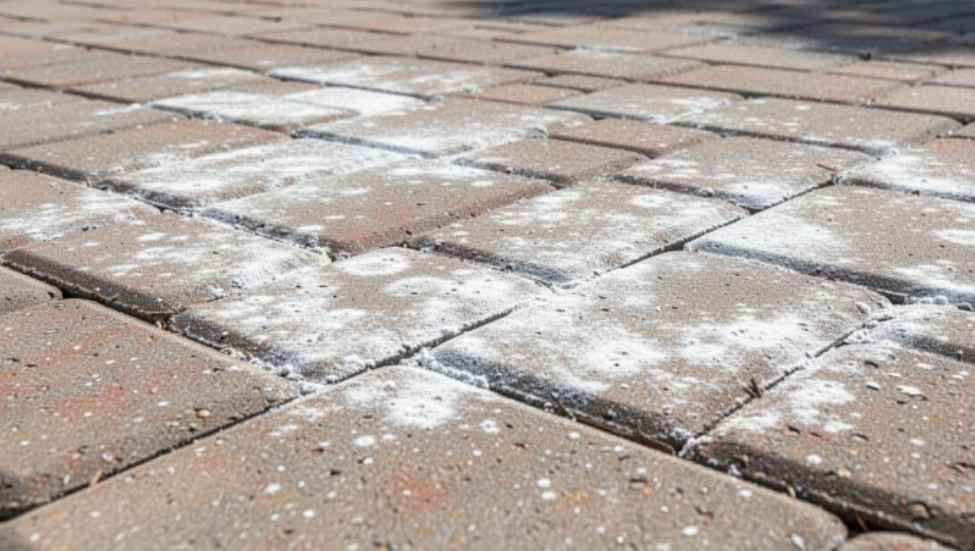
You may see vinegar recommended as a home remedy for white deposits on concrete.
It can help with some mineral deposits because it is mildly acidic. However, that does not mean it is the best choice for every concrete surface.
If the concrete will later receive paint, epoxy, or another coating, you need to be especially careful about what you put on the surface.
Any cleaner or acid residue needs to be completely removed before coating.
For a small outdoor area where appearance is not critical, a mild household solution may work. For a garage floor, basement floor, or concrete that you plan to coat, I would use a cleaner specifically intended for the surface and follow the manufacturer’s preparation requirements.
Related Article: How to Remove Polyurethane from Concrete
Should You Seal Concrete After Removing Efflorescence?
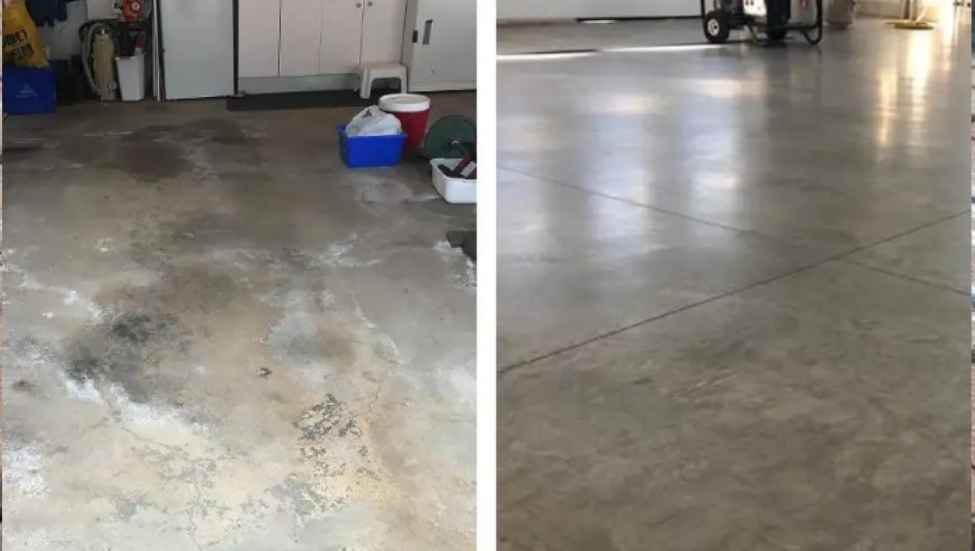
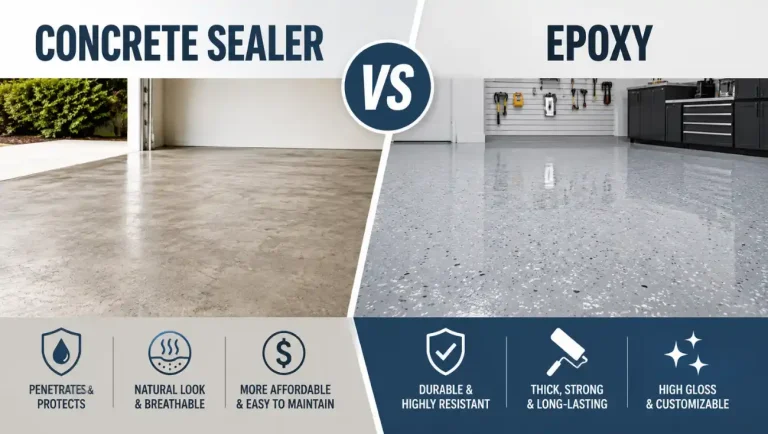
A sealer can help protect concrete, but sealing should not be the first step when moisture is actively moving through the slab.
Imagine putting a waterproof jacket over a wet shirt. The jacket may stop new water from reaching the surface, but it does not magically remove the moisture already underneath.
The same basic idea applies to concrete.
If the concrete is dry and the moisture problem has been addressed, a suitable sealer may help protect the surface.
If moisture is still coming through the slab, the sealer may blister, peel, or fail.
How to Stop Efflorescence From Coming Back
Removing efflorescence is fairly simple when the problem is only on the surface.
Stopping it from returning is harder because you have to control the moisture.
For outdoor concrete, start with drainage. Water should move away from the building instead of sitting beside the slab or foundation.
Clean gutters and make sure downspouts discharge water away from the structure.
For basement walls, look for water entering through cracks, joints, or outside drainage problems.
For garage slabs, persistent moisture may be coming from below. If you plan to install an epoxy or other floor coating, test the concrete for moisture before coating it.
This is one of the most important steps because a beautiful coating cannot hide a moisture problem for long.
What Not to Do
Do not simply paint over efflorescence.
The white deposits indicate that something is happening beneath the surface. Covering them with paint or epoxy without proper preparation can lead to poor adhesion and peeling.
Do not keep washing the same area over and over without investigating why the deposits return.
And do not use an aggressive chemical just because the efflorescence is difficult to remove. You want clean concrete, not damaged concrete.
When Should You Call a Professional?
You can handle many small efflorescence problems yourself.
However, professional help makes sense when the deposits keep returning, large areas are affected, water is entering a basement, or a concrete coating is failing.
It is especially important to investigate the problem before installing an expensive garage floor coating.
A professional can help determine whether the issue is surface contamination, moisture coming through the slab, drainage, cracking, or another underlying problem.
The Bottom Line
Learning how to get rid of efflorescence on concrete is not really about finding the strongest cleaner.
The first step is removing the white mineral deposits. The next step is figuring out why moisture is reaching the surface.
For light deposits, dry brushing followed by careful cleaning may be enough. For stubborn deposits, a concrete-safe cleaner can help. But if the white powder keeps returning, stop treating it as a simple cleaning problem.
Find the moisture source.
Once the concrete is clean, dry, and the moisture problem is under control, you can think about sealing, painting, or applying a coating.
That approach takes a little more time, but it saves you from cleaning the same white powder again and again—or paying to replace a coating that never had a chance to bond properly.