

Your garage floor feels damp when it isn’t raining because water vapor is moving up through the concrete from the ground below, not falling onto it from the sky. Concrete is porous, and the soil under your slab holds moisture all year. That vapor pushes up, hits the cooler slab, and shows as dampness, a white powder, or a musty smell.
Fixes run from a cheap dehumidifier to sealing the slab. This guide ranks the real causes, shows the checks you can do safely, and tells you when to call a pro.
Why your garage floor feels damp
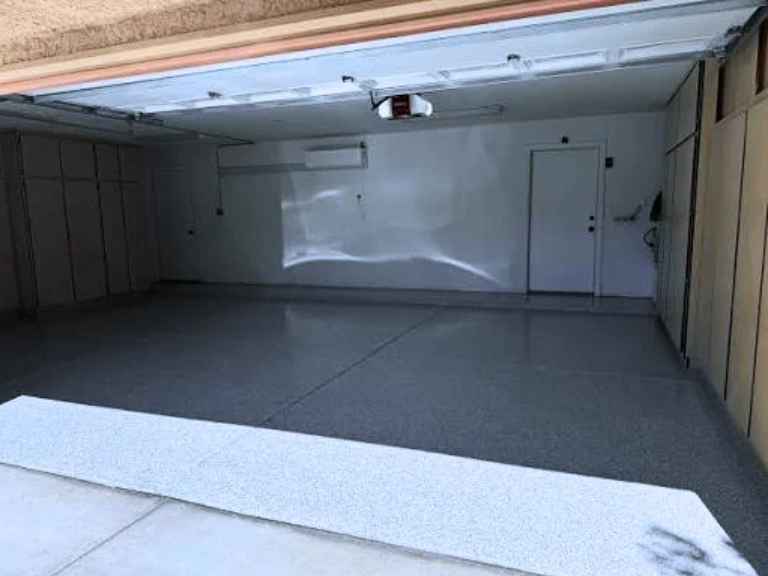
Slab damp is moisture that travels through concrete from the soil underneath. Concrete looks solid, but it’s full of tiny pores. Ground water turns into vapor, moves up through those pores, and reaches the surface. That’s why the floor can feel wet on a dry, sunny day.
People use a garage for parking, storage, a workshop, or laundry. All of that sits on the slab, so dampness matters. It rusts tools, warps cardboard boxes, lifts paint, and feeds mold.
The one misconception almost everyone brings: they think the damp comes from outside rain or a leak. Rain makes it worse, but it isn’t the cause. A slab on wet ground will pull moisture even in a drought.
Here’s the mechanism in one sentence you can trust: water vapor moves from wet soil toward drier air, and concrete’s pores let it pass, so vapor rises until it reaches the slab surface and the air above it. The American Concrete Institute publishes guidance on this movement, called vapor transmission, if you want the technical detail.
How to find the source step by step
Work from the cheapest check to the most involved. You don’t need special tools for the first four. Write down what you find at each step, because the pattern tells you which cause you have.
- Tape a 12-inch square of clear plastic to the floor. Press all four edges down with tape. Leave it for 24 hours. Water under the plastic means vapor is coming up through the slab. Water on top means it’s condensing from the air.
- Check the same spot at two times of day. Look at 7 a.m. and again at 4 p.m. If it’s wetter in the morning, you likely have condensation, not slab vapor.
- Run a dehumidifier for 48 hours. Set it to 50% relative humidity. If the floor dries and stays dry, the problem is humid air, not the ground.
- Look at the walls and the base of stored items. White chalky powder on the concrete is efflorescence, a sign of moisture moving through the slab. Rust rings under metal legs point the same way.
- Check the outside grade. Walk the perimeter. Soil should slope away from the garage at roughly 6 inches of fall over the first 10 feet. If soil piles against the wall, that’s a fix you can do yourself.
- Check the gutters and downspouts. Water dumping next to the foundation soaks the soil under the slab. Extend downspouts 4 to 6 feet away from the wall.
- Hire a concrete or waterproofing contractor for a vapor test. They use a calcium chloride test or an in-situ probe to measure the actual vapor rate. That reading decides whether a coating will hold.
The single judgement call that separates a good result from a bad one: you must know whether the moisture is vapor from below or condensation from the air. If you seal the slab when the real problem is humid air, the coating traps vapor and it blisters or peels within months. Test first, then treat.
Anything involving the slab’s structure, a sump pump, or interior drainage is a job for a licensed contractor. Don’t cut or drill the slab yourself to “let it breathe” — that can weaken it and void warranties.
Numbers and settings at a glance
The right fix depends on your climate, your soil, and what the plastic test showed. Use this table to match your situation to the tool and the timeframe. Times assume a standard two-car garage of about 400 to 500 square feet.
| Situation | What to use | How long | What to watch for |
|---|---|---|---|
| Plastic test shows water underneath | Dehumidifier set to 50% RH | Run 24/7 for 1-2 weeks | Tank fills fast; get a drain hose |
| Plastic test shows water on top | Ventilation fan or open door | 2-4 hours daily | Worse in humid months |
| White powder on concrete | Dry brush, then dehumidify | 1-2 weeks | Powder returns if vapor continues |
| Soil piled against the wall | Re-grade to 6-inch fall over 10 feet | One weekend | Don’t cover the siding or vents |
| Downspout dumps at the wall | Extend 4-6 feet away | 1 hour per spout | Check flow after heavy rain |
| Slab stays damp after drying | Vapor barrier under slab | Pro job, 1-3 days | Only a pro can confirm it’s missing |
| You want to paint or epoxy | Calcium chloride test first | Test takes 60-72 hours | Coating fails if vapor rate is too high |
A calcium chloride test kit is inexpensive relative to the alternative and takes a few days to read. Check current prices at a building supply store, since they change.
What careful owners do differently
The people who beat this problem don’t start with a coating or a sealer. They start by measuring. They run the plastic test, note the result, and only then spend money. That order saves them from peeling epoxy and wasted weekends.
They also separate the two problems. Condensation comes from warm, humid air hitting a cool slab. Vapor comes from the ground. A dehumidifier fixes the first. It only manages the second — it can’t stop vapor at the source, because the ground under the slab stays wet.
Preparation and order of work
Fix the outside first, because it’s cheap and it often cuts the problem in half. Re-grade the soil, extend the downspouts, and clear any blocked drains. Wait two weeks and check the floor again. If it’s drier, you may not need anything else.
Inside, run the dehumidifier with a hose to a drain so you’re not emptying a tank constantly. How often it needs servicing depends on use, so check the owner’s manual for the schedule. Keep cardboard and fabric off the bare floor — use plastic pallets or shelves. Air can then move under stored items.
What they leave alone
They don’t seal a damp slab without a vapor test. A sealer or epoxy traps moisture, and trapped moisture pushes the coating off. They also don’t drill weep holes in the slab or pour a new floor before fixing drainage. Both are expensive mistakes.
Common problems and quick fixes
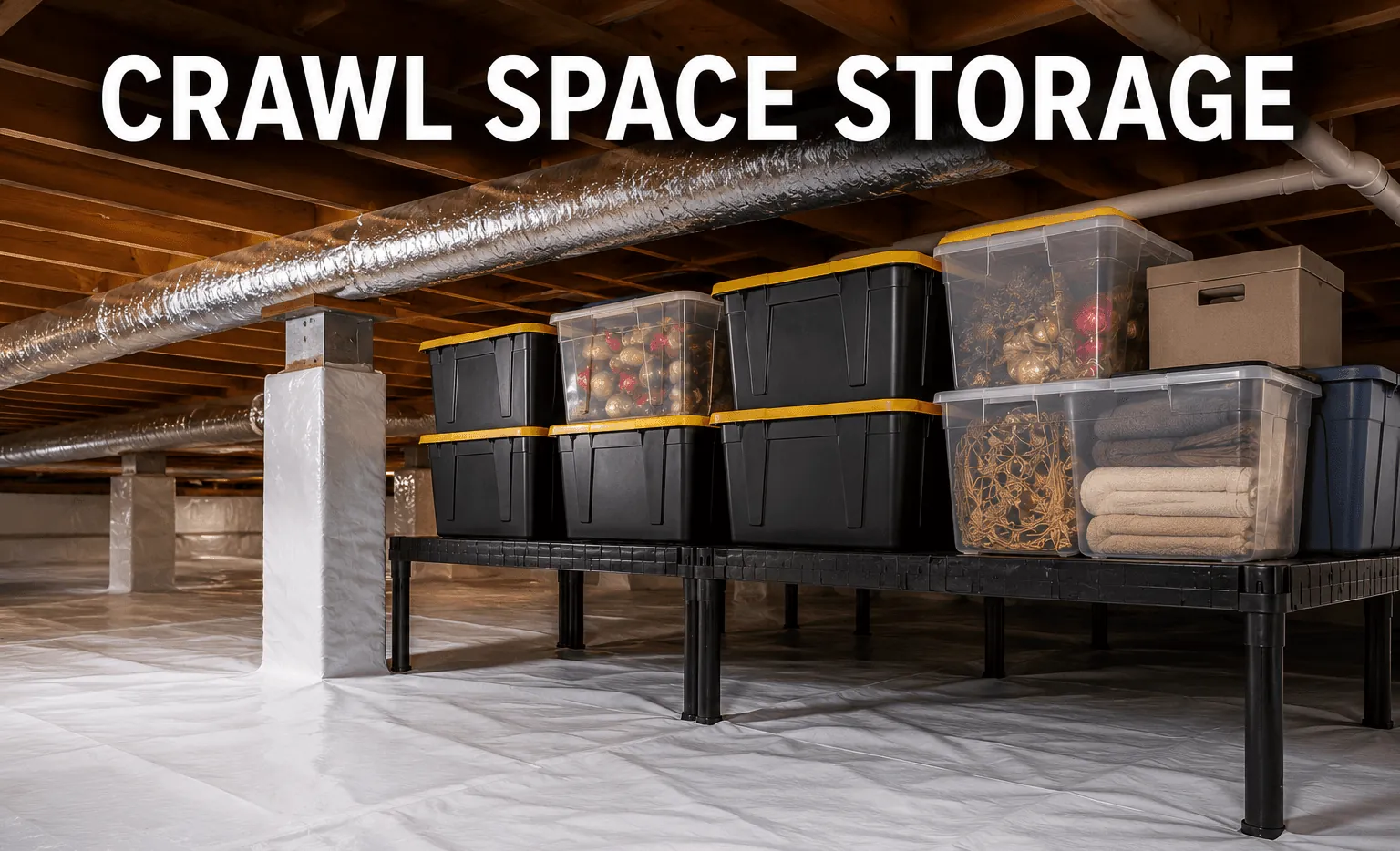
Match what you see to the likely cause, then start with the cheapest fix. If two fixes don’t help, it’s time for a pro.
| What you notice | What it usually means | What to do first |
|---|---|---|
| Damp only in the morning | Condensation from humid air | Run a dehumidifier at 50% RH |
| Damp in one corner only | Water pooling outside that wall | Check grade and downspouts there |
| White powder on the floor | Efflorescence from vapor | Dry brush and dehumidify |
| Musty smell, no visible wet | High humidity in the space | Ventilate and dehumidify |
| Paint or epoxy peeling | Vapor pushing under the coating | Stop recoating; test vapor rate |
| Damp after heavy rain only | Drainage or gutter problem | Extend downspouts, re-grade |
The rules and limits that apply
Building codes in most US states require a vapor retarder under a slab on grade, and the International Residential Code sets that requirement. Your local building department enforces it, so check with them if you’re building or renovating. An older garage may have no barrier at all, which is common and legal for its time.
If you plan to coat the floor, the coating maker sets its own vapor limit. Most epoxy and sealer brands publish a maximum vapor emission rate on the product data sheet, and they won’t honor a warranty above it. Read that sheet before you buy.
Anything structural — a cracked slab, a sinking floor, a sump system — needs a licensed contractor or a structural engineer. Don’t try to fix a foundation issue yourself. The EPA’s guide to moisture control explains how indoor dampness feeds mold growth and why fixing the water source comes first.
Keeping the floor dry long term
Once the floor is dry, keep it that way with a routine. Run the dehumidifier whenever outdoor humidity is high, and set it to 50% relative humidity. Empty or drain it on a schedule you’ll actually keep.
Check the outside grade twice a year — once in spring, once in fall. Look for soil that has settled against the wall or new low spots near the downspouts. Re-grade as needed.
Watch for the signs that tell you it’s time to act again: white powder returning, a musty smell, or rust on metal legs. Any of those means moisture is still moving. For a coating, follow the maker’s recoat or inspection interval, since it varies by product and climate.
When this approach won’t work
If the plastic test shows a heavy vapor flow and the slab has no barrier underneath, a dehumidifier and drainage won’t solve it. You’d need a pro to install a vapor barrier or an interior drainage system. That’s a real construction job.
If your garage floods every time it rains hard, the problem is drainage, not vapor. Fix the yard and gutters, or call a drainage contractor. Sealing the floor won’t help.
If the slab is cracked, sinking, or heaving, stop. That’s a structural issue. Call a structural engineer or foundation contractor before you spend a dollar on coatings or dehumidifiers.
Frequently asked questions
Can a damp garage floor make me sick?
It can contribute to mold growth, and mold can trigger allergies and asthma in sensitive people. The EPA links indoor dampness to mold problems. Fix the moisture source, and keep humidity near 50%. If you have breathing symptoms, see a doctor.
Why is my garage floor wet only in the morning?
Morning dampness usually means condensation. Overnight, the slab cools, and warm humid air hits it and releases water. Run a dehumidifier set to 50% relative humidity overnight and check the floor the next morning.
How long does it take to dry a damp garage floor?
With a dehumidifier at 50% relative humidity, a surface-damp floor dries in 24 to 48 hours. If the dampness comes from vapor under the slab, it won’t fully dry — it returns within a day or two. That’s your signal to test the slab.
Is it safe to put epoxy on a damp garage floor?
No, not without a vapor test first. Most epoxy makers set a maximum vapor emission rate, and coating above it causes blistering and peeling. Run a calcium chloride test, which takes 60 to 72 hours, before you buy any coating.
What happens if I ignore a damp garage floor?
Tools rust, boxes and drywall soften, and mold can grow. Over years, moisture can also damage the slab and anything stored on it. Fixing the source early is far cheaper than replacing stored goods and flooring later.
How often should I check my garage floor for dampness?
Check twice a year, in spring and fall, when soil moisture changes most. Also check after any heavy rain. Look for white powder, a musty smell, or rust rings — those tell you moisture is moving before you see wet concrete.
Can I just seal the floor to stop the dampness?
Only if the vapor rate is low enough for the product. A sealer traps moisture under it, and trapped vapor pushes the coating off. Test first. If the rate is high, you need a vapor barrier under the slab, which is a pro job.
Conclusion
A damp garage floor on a dry day is your slab telling you where the water is coming from. Test with plastic, fix the cheap outside drainage first, and only seal the floor once you know the vapor rate. Most owners solve it with a dehumidifier and better grading. The rest need a contractor, and now you know which one you are.
