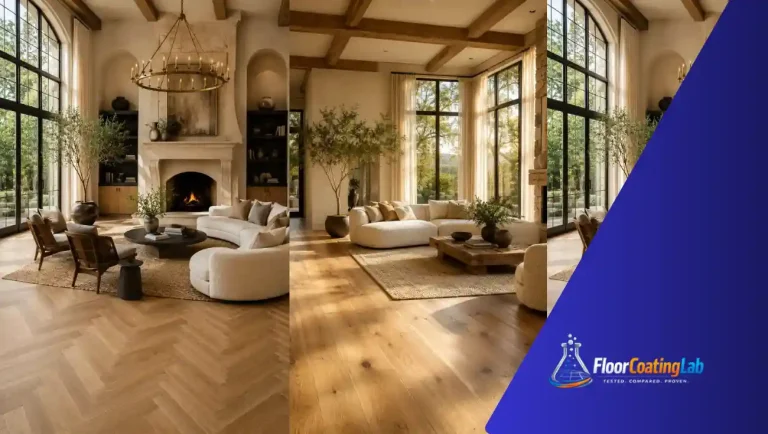
Your bedroom floor does more than cover the space beneath your feet. It quietly sets the mood for the entire room.
A warm wood floor can make a bedroom feel calm and inviting. A deep walnut finish can create a dramatic, cocooning atmosphere. Soft carpet can make the room feel instantly warmer and more comfortable.
And if you are planning a bedroom makeover, flooring is one of the choices worth getting right from the beginning.
Today, homeowners have far more options than traditional hardwood or wall-to-wall carpet. Engineered wood, luxury vinyl plank, laminate, patterned flooring, and layered rugs can all create beautiful bedroom interiors. Current design coverage is also leaning toward warmer natural tones, matte finishes, wide planks, and more personalized spaces rather than cold gray floors.
The best part? You do not have to choose a floor simply because it is practical. You can choose one that supports the feeling you want your bedroom to have.
Below are nine bedroom flooring ideas that balance style, comfort, and everyday practicality.

1. Warm White Oak Flooring for a Bright, Calm Bedroom
If you want your bedroom to feel bright, peaceful, and effortlessly modern, warm white oak is hard to beat.
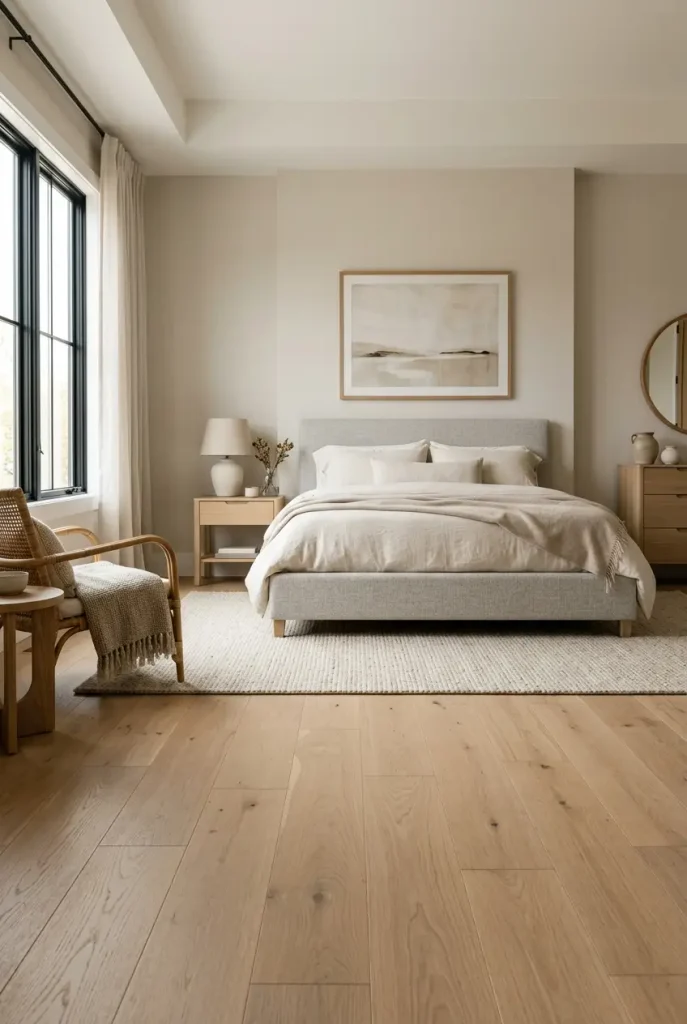
Choose wide planks in a natural oak tone rather than an overly pale or cool gray finish. The subtle variation in the wood grain adds character without making the floor visually busy.
This look works especially well with cream bedding, soft beige walls, linen curtains, woven accents, and simple wood furniture. It is equally at home in Scandinavian, modern, transitional, and relaxed minimalist bedrooms.
Why it works
Light natural wood reflects the room’s visual brightness and creates a clean foundation for the rest of the design. It also gives you plenty of freedom when you change bedding, paint colors, or furniture later.
For a small bedroom, keeping the flooring visually continuous can help the space feel more open.
Design tip
Look for a warm, matte or low-sheen finish rather than a cold gray or highly glossy surface. Warm oak tones are currently favored over cool gray wood in design discussions, while matte finishes offer a softer, more forgiving appearance.
Add a large textured rug beneath the bed if you want more softness without covering the character of the floor.
2. Dark Walnut Flooring for a Moody Luxury Bedroom
Want your bedroom to feel intimate, sophisticated, and a little dramatic?
Go darker.
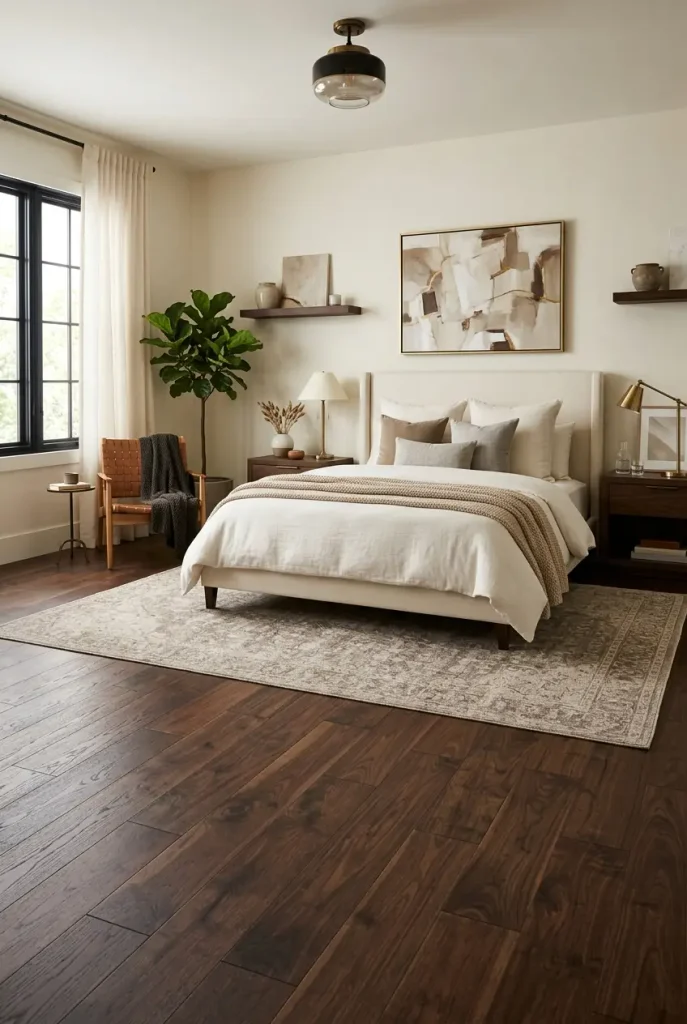
Deep walnut and other rich brown wood tones can give a bedroom a luxurious, grounded quality. Instead of making the room feel gloomy, the right dark floor can create the kind of cocooning atmosphere that works beautifully in a bedroom.
Current bedroom-flooring coverage is highlighting dark, earthy flooring as a strong direction for 2026, particularly when balanced with lighter neutral walls and furnishings.
Why it works
Dark wood creates a strong visual foundation. Pair it with warm white walls, cream bedding, natural linen, brass details, or muted green accents and the room can feel sophisticated without becoming formal.
It is also a great choice if you want your bedroom to have more contrast.
Design tip
Do not make every element dark.
Let the floor provide the drama, then balance it with lighter bedding, curtains, walls, or an area rug. This keeps the room layered rather than heavy.
If your bedroom receives limited natural light, test flooring samples in the actual room before committing. Dark surfaces can change considerably depending on the amount and direction of daylight.
3. Herringbone Flooring for a Designer Look
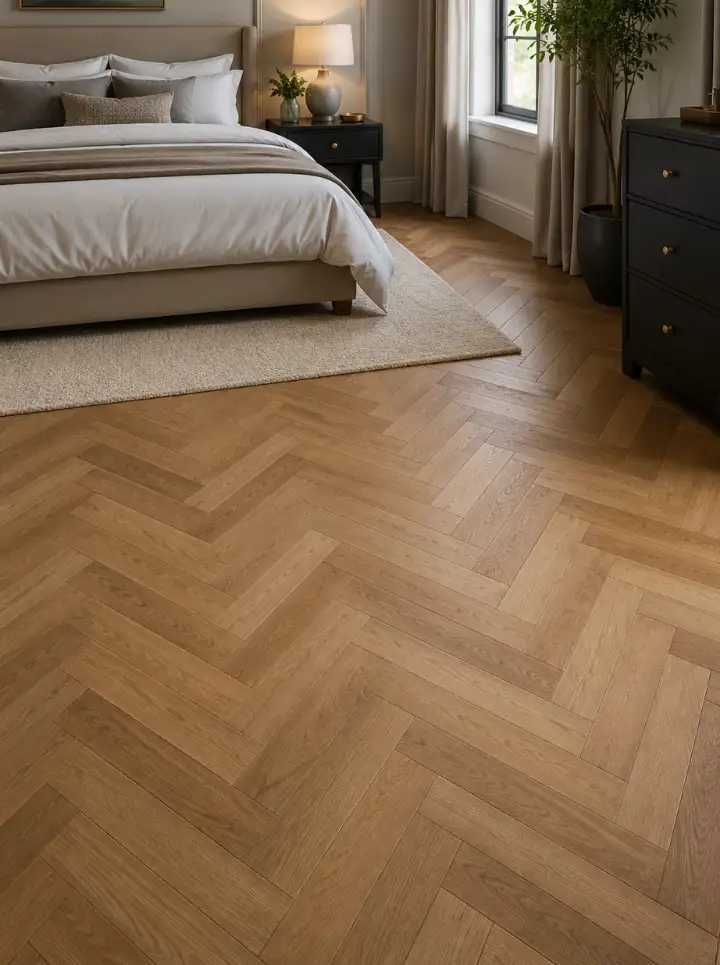
Plain planks are timeless, but sometimes the floor deserves to be the feature.
That is where herringbone comes in.
The repeating pattern adds movement and texture while still feeling refined. It can work in traditional bedrooms, contemporary spaces, modern apartments, and even relaxed Scandinavian interiors.
Herringbone remains a major bedroom-flooring inspiration theme, with current design sources showing it in both natural light woods and deeper finishes.
Why it works
A herringbone floor gives the room architectural character without requiring bold furniture or complicated decoration.
A pale oak version feels light and contemporary. A deeper brown version feels richer and more traditional.
The pattern can also influence how the room is perceived, depending on the scale and direction of the layout.
Design tip
Keep the rest of the room relatively calm.
A patterned floor already provides visual interest, so pair it with simple bedding, understated furniture, and a restrained color palette.
If you love the herringbone look but want a potentially more budget-friendly option, wood-look LVP can also recreate the pattern. Vinyl flooring guides increasingly feature herringbone installations as a way to introduce a more elevated look.
4. Soft Neutral Carpet for Cozy Bedroom
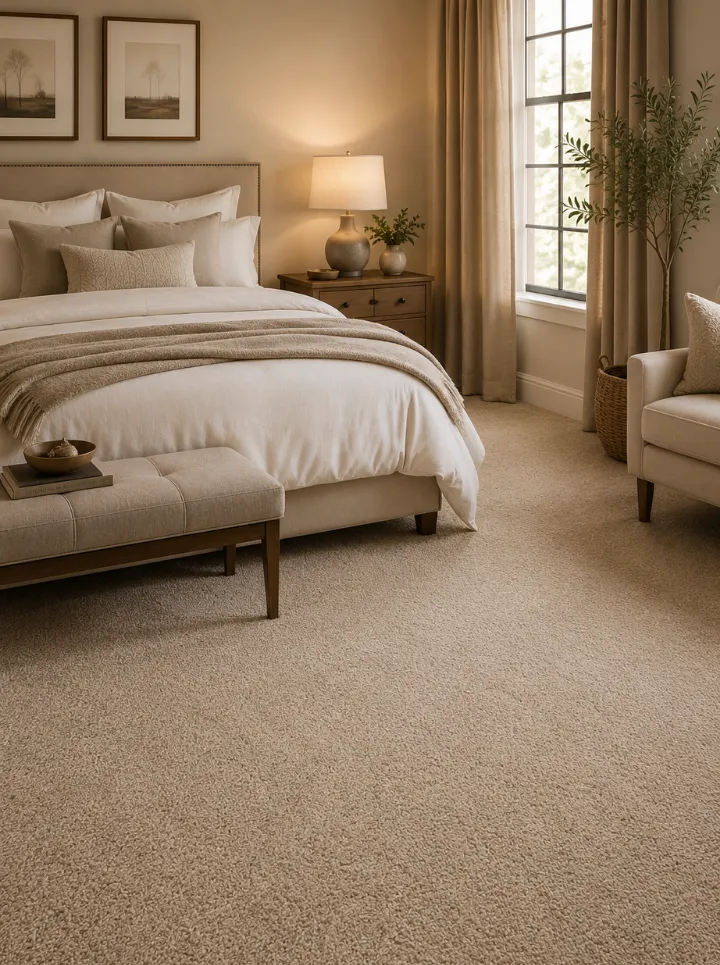
There is a reason carpet has remained a bedroom favorite.
Nothing quite matches the soft, warm feeling of stepping out of bed onto a comfortable carpet on a cold morning.
For a relaxed bedroom, choose a neutral shade such as warm beige, cream, taupe, or a soft greige.
Why it works
Carpet helps create a softer visual and physical environment. It can also contribute to a quieter-feeling room, which makes it especially appealing for bedrooms.
The key is choosing a color that works with the entire room rather than treating the carpet as an afterthought.
A warm neutral can become a quiet backdrop for layered bedding, upholstered furniture, wood nightstands, and textured curtains.
Design tip
If you want a sophisticated result, avoid making every surface the exact same beige.
Instead, combine several related shades and textures: a warm carpet, cream bedding, slightly darker curtains, and natural wood furniture.
That creates depth while keeping the bedroom calm.
More Amazing Ideas
- 9 Cheap DIY Kitchen Flooring Ideas
- Concrete Sealer vs Epoxy: Pros, Cons
- Things To Consider When Tiling A New Floor
- How Paint Acrylic Over Oil Based Paint
- 11 Inspiring Garage Floor Ideas
5. Hardwood Flooring With an Oversized Area Rug
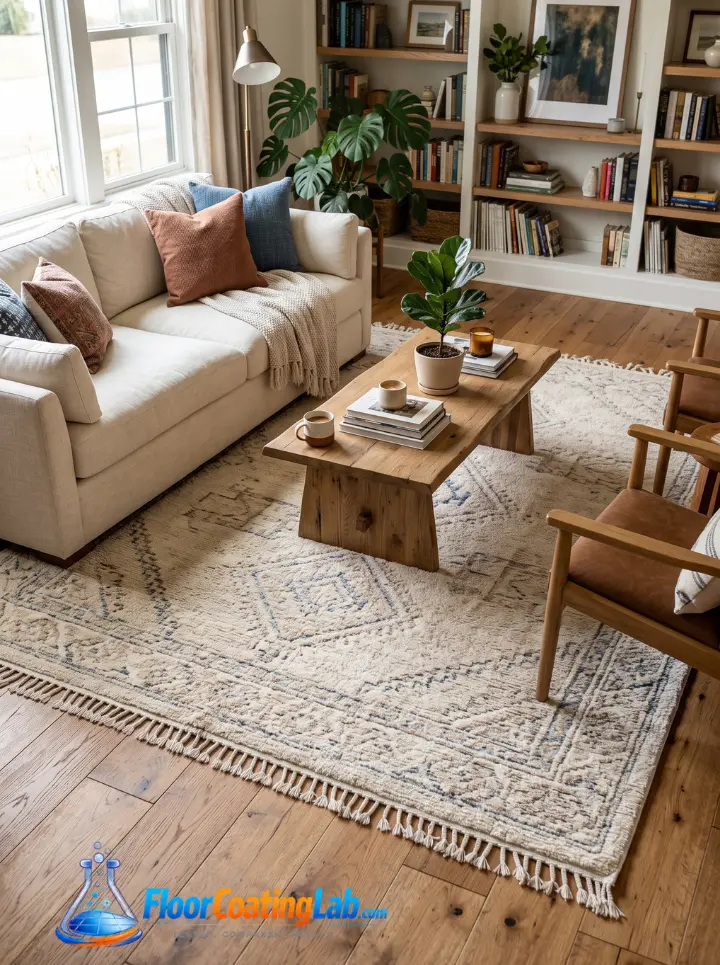
If you cannot decide between the clean look of hardwood and the softness of carpet, you do not necessarily have to choose one.
Pair a beautiful wood floor with a large area rug.
This combination gives you the visual openness and easier maintenance of a hard floor while adding softness exactly where you need it most.
Why it works
The floor remains visible around the edges of the room, while the rug creates a comfortable landing area around the bed.
It is also an easy way to change the appearance of the bedroom without replacing the flooring. Switch the rug and the room can take on an entirely different personality.
Design tip
Do not choose a rug that is too small for the bed.
A generously sized rug should extend beyond the sides of the bed far enough to create a comfortable visual frame and useful landing space.
For a particularly timeless combination, try warm oak flooring with a textured cream, beige, or muted patterned rug.
The result feels comfortable without sacrificing the character of the wood.
6. Wide-Plank Natural Wood for a Modern Bedroom
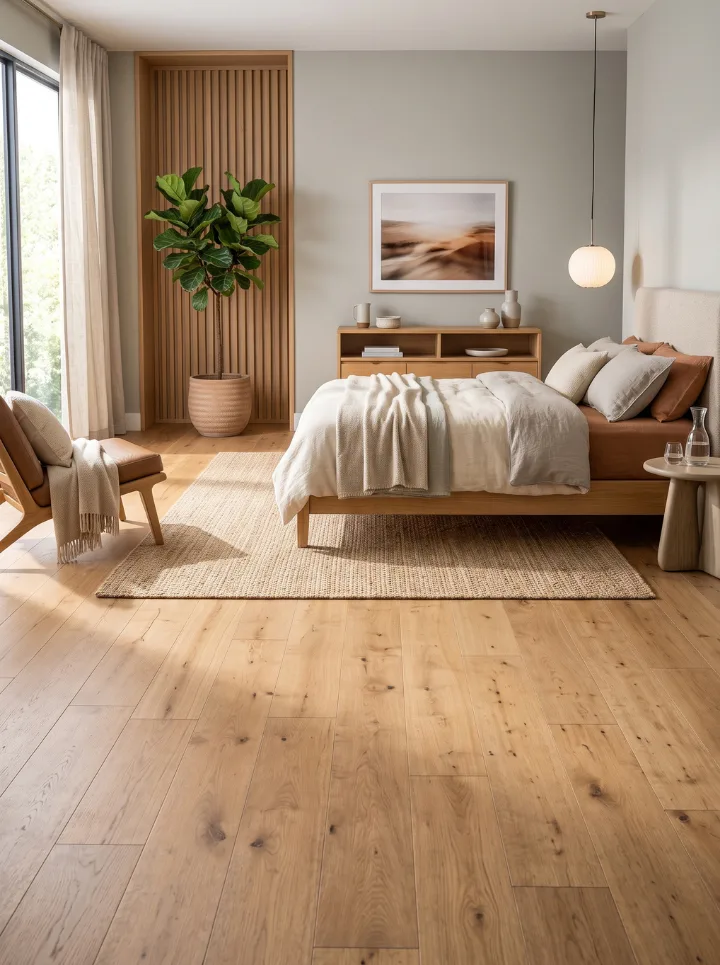
Sometimes the most impressive flooring is the simplest.
Wide-plank natural wood creates a clean, spacious appearance because there are fewer visible seams across the floor.
Choose boards with natural grain variation and a matte finish for a relaxed contemporary look.
Why it works
Wide planks allow the beauty of the material to become the main feature instead of competing with it through a complicated pattern.
They work particularly well with minimalist furniture, large upholstered beds, neutral walls, and simple lighting.
Current flooring discussions also favor wider boards and simpler layouts as homeowners move away from overly cool or visually busy flooring styles.
Design tip
Let the natural grain show.
Avoid pairing a beautiful wood floor with too many competing patterns. Soft textiles, simple furniture, and a restrained color palette allow the floor to look intentional rather than decorative.
For a modern bedroom, a warm natural oak or honey-toned finish can be especially effective.
7. Luxury Vinyl Plank for a Stylish, Practical Bedroom
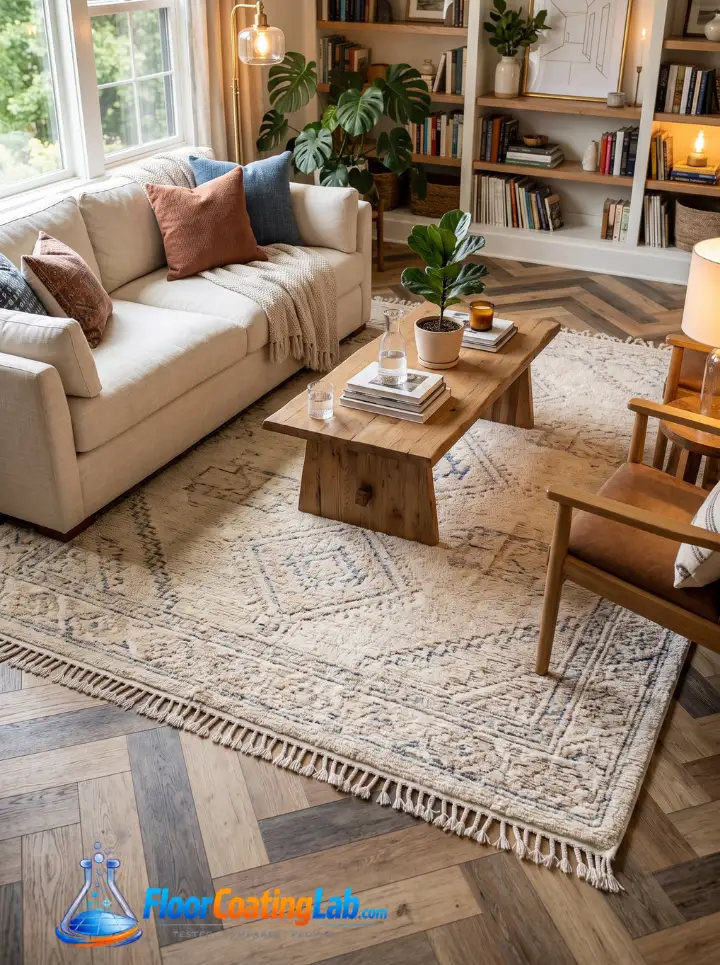
If you want the appearance of wood without choosing traditional hardwood, luxury vinyl plank is worth considering.
Today’s LVP designs can reproduce the look of oak, ash, walnut, and other wood styles with surprisingly convincing grain patterns and color variation.
Bedroom flooring collections currently show everything from pale oak and natural wood to darker tones and herringbone layouts.
Why it works
LVP is attractive for homeowners who want a practical, easy-care floor while keeping the visual warmth of wood.
It also gives you plenty of design flexibility. You can choose a traditional straight-plank appearance or select a pattern such as herringbone for more visual impact.
Design tip
Do not choose LVP based on color alone.
Look closely at the plank width, grain variation, surface texture, and overall pattern. The most convincing wood-look floors usually avoid an overly repetitive appearance.
For bedrooms, combine the flooring with a large area rug, soft textiles, and warm lighting to keep the space feeling comfortable rather than overly utilitarian.
More Amazing Ideas
- How to Apply Wet Look Concrete Sealer
- How to Get Rid of Efflorescence on Concrete
- 9 Pet Friendly Laminate Flooring Ideas
- 12 Breathtaking Garage Epoxy Floor Ideas
8. Warm Laminate Flooring for a Budget-Friendly Makeover
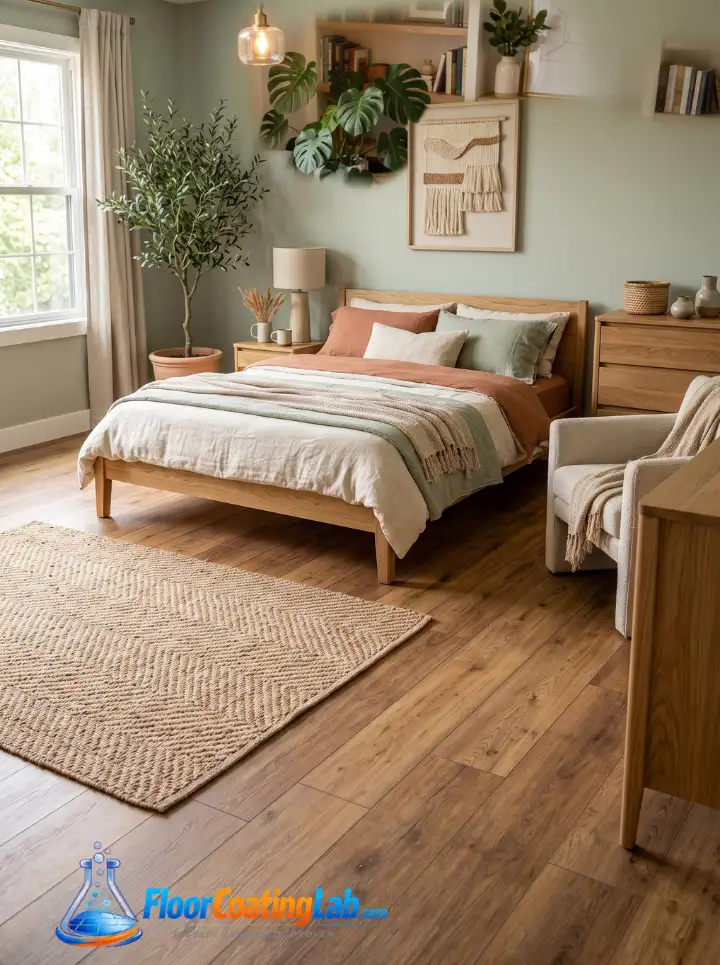
A bedroom makeover does not always require premium hardwood.
Warm-toned laminate can give you the appearance of a wood floor while keeping the project more budget-conscious.
Choose a natural-looking oak, honey, or medium-brown finish rather than a highly artificial-looking pattern.
Why it works
Laminate gives homeowners access to a wide range of wood-inspired colors and patterns. It can be especially useful when you want to refresh an older bedroom without investing in a more expensive flooring material.
The styling makes a big difference.
A good-looking floor can lose its impact if the rest of the room feels disconnected. Pair warm laminate with natural textiles, simple furniture, and a cohesive wall color.
Design tip
If your goal is an expensive-looking bedroom, avoid combining too many different faux finishes.
Instead, let the floor provide the wood effect and use real materials elsewhere where possible—such as linen bedding, a woven rug, wood furniture, or natural fiber accessories.
The result will feel more layered and intentional.
9. Japandi-Inspired Natural Wood Flooring
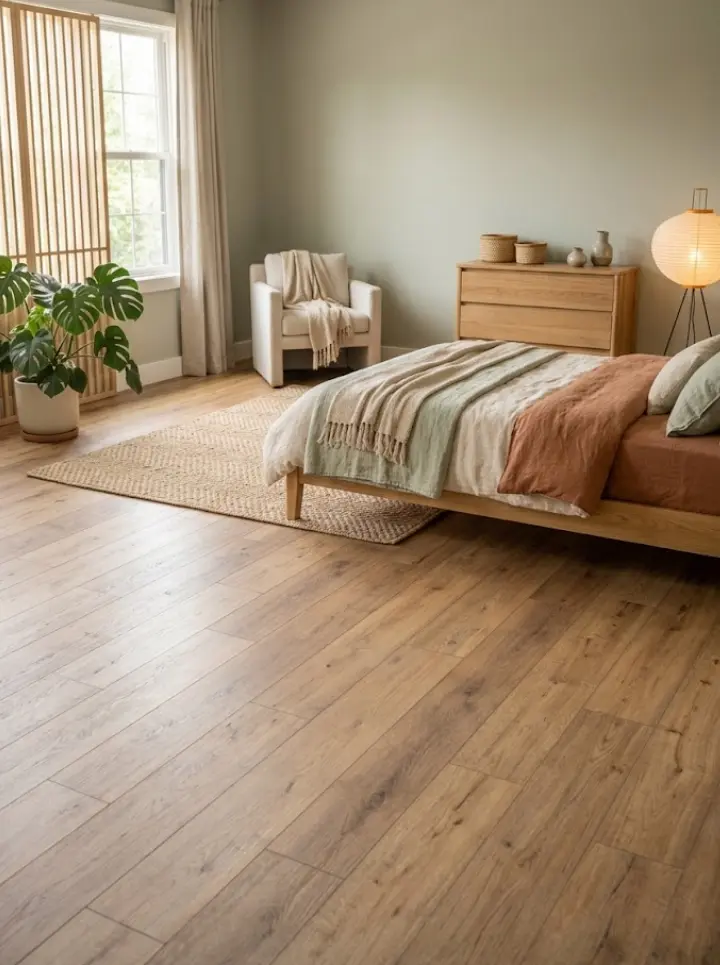
For a bedroom that feels peaceful rather than overly decorated, take inspiration from Japandi design.
The look combines the simplicity associated with Japanese interiors with the warmth and practicality of Scandinavian design.
The flooring is usually understated: natural wood, warm oak, soft brown tones, and a matte or low-sheen finish.
Why it works
A bedroom should feel restful, and Japandi-inspired flooring provides a quiet foundation for that atmosphere.
Pair natural wood with cream walls, linen bedding, low-profile furniture, woven textures, and a few carefully chosen decorative pieces.
The floor does not need to be dramatic. Its job is to make everything else feel connected.
Design tip
Choose warmth over perfection.
A floor with subtle grain variation and natural tonal differences can feel much more inviting than a completely uniform surface.
Keep the color palette restrained, but introduce different textures so the room does not feel flat.
Natural wood flooring also works beautifully with the warmer neutrals increasingly appearing in 2026 bedroom design, including sandy and greige tones.
10. Cork Flooring for a Warm, Quiet Bedroom
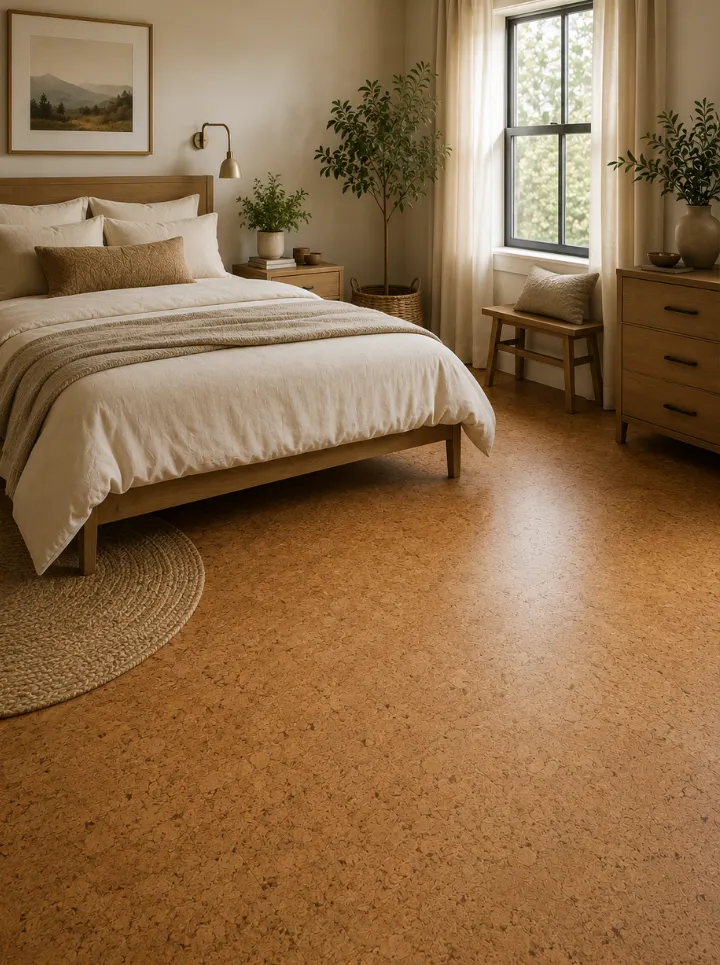
Cork gives the bedroom something that many hard floors cannot: softness without carpet.
Its naturally cushioned surface feels comfortable underfoot, while its texture adds an organic, slightly unexpected character to the room. Current 2026 flooring coverage is also highlighting cork as a renewed natural-material choice, particularly for comfort, warmth, and acoustic benefits.
Why it works
Cork is especially interesting for bedrooms because comfort matters as much as appearance. It can feel warmer and softer underfoot than conventional hard flooring, while also helping reduce impact noise. Today’s Homeowner lists cork among its recommended bedroom flooring options for its softness, sound insulation, and natural look.
Visually, cork has moved well beyond the old-school “corkboard” appearance. Modern products can feature subtle natural patterns, warm honey tones, contemporary stains, and even plank or herringbone layouts.
Design tip
Pair a warm cork floor with cream walls, linen bedding, natural wood furniture, and woven textures for an organic-modern bedroom.
If you want something different from the usual hardwood-and-carpet choices, this could make a particularly strong Pinterest image because it combines natural texture + cozy bedroom design + an unexpected flooring material.
Here’s a polished conclusion that ties the flooring ideas together without repeating the earlier sections:
Conclusion
This Bedroom Flooring Ideas is not simply about choosing the most popular material. It is about creating the right balance of comfort, style, warmth with practicality for your space. So, create it by your taste.
From timeless herringbone and natural wide-plank wood to soft neutral carpet and increasingly popular cork, each option can create a completely different atmosphere. The key is to consider how the flooring works with your furniture, wall color, lighting, and overall design style.
If you want a timeless statement, herringbone can add character. For a clean and spacious feel, wide-plank wood is hard to beat. Carpet brings softness and warmth, while cork offers a natural alternative with a comfortable, distinctive feel.
Whatever you choose, let the flooring support the bedroom rather than compete with it. A well-chosen floor can become the foundation that makes the entire room feel more comfortable, cohesive, and beautifully designed.