
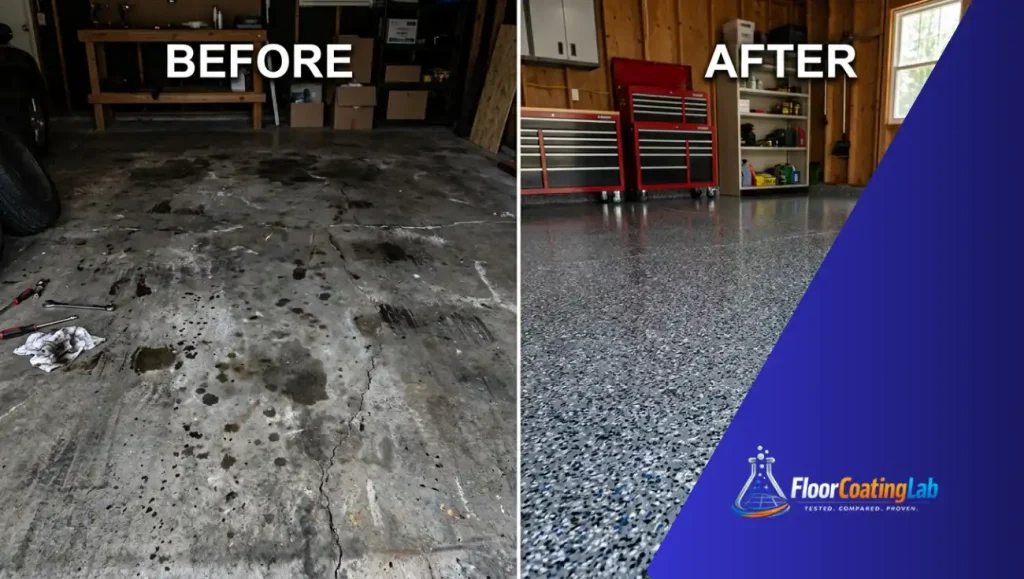
Professional epoxy floor installations average between $5 and $9 per square foot, while DIY kits average $2 to $5 per square foot.
Transforming your dusty, stained garage floor into a showroom-quality surface is one of the highest-ROI home improvements you can make. But when you start researching the cost of an epoxy garage floor, the numbers are all over the map-ranging from a $200 bucket at the hardware store to a $5,000 quote from a local contractor.
However, your final bill depends heavily on the size of your garage, the aesthetic finish you choose, and the current condition of your concrete. Here is the complete breakdown of what you can expect to pay, where the hidden costs lie, and whether going the DIY route is actually worth the savings.
The Quick Math: Cost by Garage Size
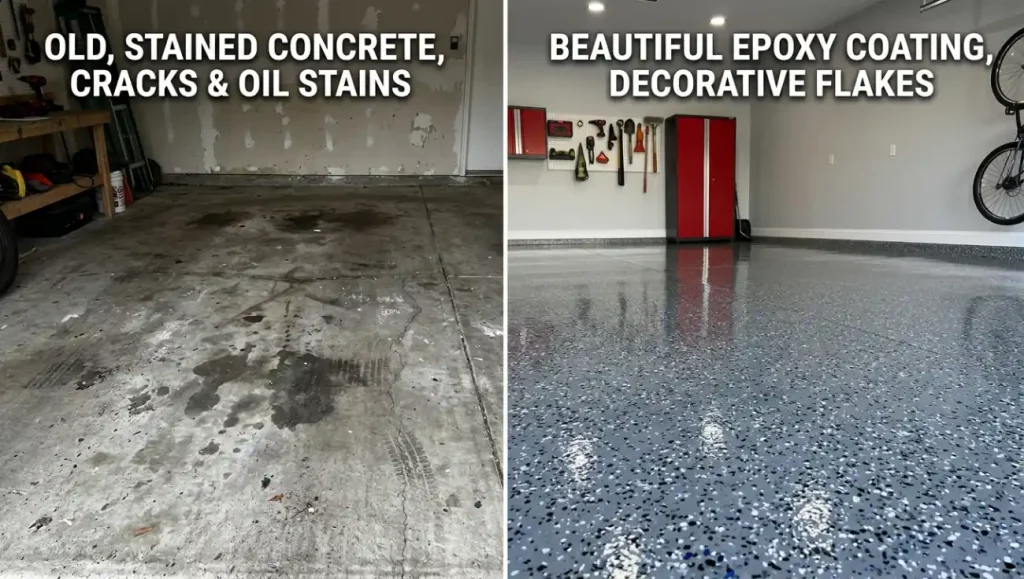
People often want to skip the square-foot math and just know the bottom line for their space. Most professional installers price their work based on the total square footage, factoring in labor, materials, and prep work.
Here is what you can expect to pay on average for a professional, commercial-grade flake floor versus a DIY application:
| Garage Size | Average Square Footage | Estimated Pro Cost | Estimated DIY Cost |
| 1-Car Garage | 250 sq. ft. | $1,250 – $2,250 | $400 – $600 |
| 2-Car Garage | 400 sq. ft. | $2,000 – $3,600 | $600 – $900 |
| 3-Car Garage | 600 sq. ft. | $3,000 – $5,400 | $800 – $1,200 |
Contractor Tip: Many professional coating companies have a “minimum project fee” of around $1,500. If you have a tiny 1-car garage, you might end up paying a slightly higher price per square foot just to cover their travel, equipment setup, and overhead.
Related Article: Can You Use Epoxy Floor Paint on Wood?
Cost to Epoxy a Garage Floor: Cost by Epoxy Finish Style
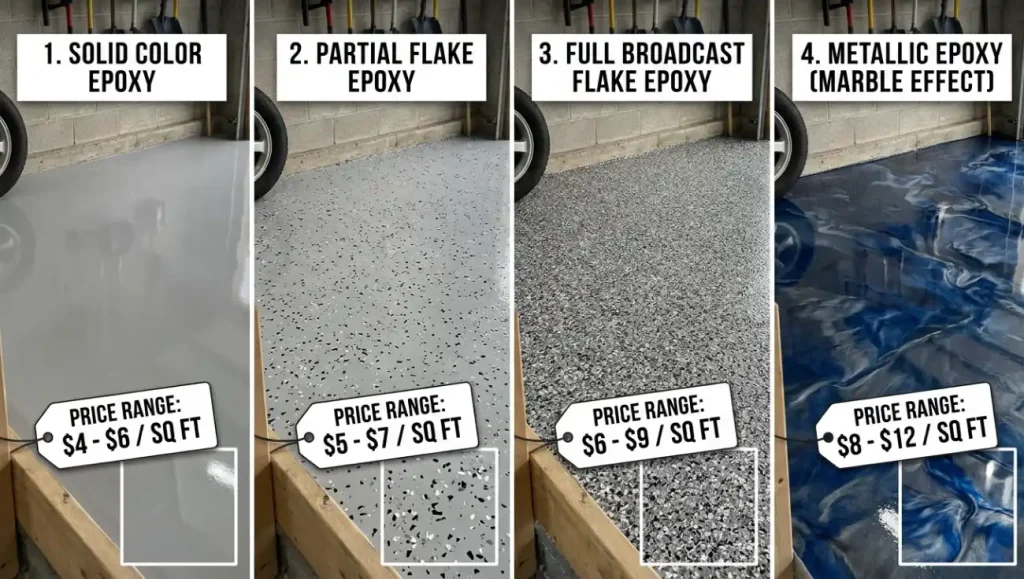
Your final bill isn’t just about the size of your garage; it is also about the look you want. Different aesthetic finishes require varying amounts of labor, materials, and topcoats.
- Solid Color Epoxy ($4 – $6 per sq. ft.): The cheapest professional option. The crew grinds the floor, lays down a solid color (like gray or tan), and puts a clear coat on top. It looks incredibly clean but will show dirt, dust, and tire marks more easily than a flaked floor.
- Partial Flake ($5 – $7 per sq. ft.): The crew throws a light, scattered dusting of vinyl color flakes across the base coat. It breaks up the solid color and adds a little texture and slip resistance.
- Full Broadcast Flake ($6 – $9 per sq. ft.): The most popular garage choice. The floor is covered 100% in vinyl chips. It requires significantly more flake material and an extra-thick clear coat (often a polyaspartic) to smooth out the texture. It hides dirt flawlessly and mimics the look of granite.
- Metallic Epoxy ($8 – $12+ per sq. ft.): The luxury option. Installers swirl metallic pigments together to create a 3D, marble-like finish. This is highly labor-intensive and requires true artistic skill to get right, driving the price up significantly.
Related Article: Fish Eyes in Epoxy: Why They Happen?
Why Do Professionals Charge So Much? (The Prep Work Factor)
When you see a DIY kit for $250 and a professional quote for $2,500, it is natural to feel sticker shock. But you are not just paying for the epoxy liquid; you are paying for concrete preparation and industrial-grade chemistry.
1. Diamond Grinding vs. Acid Washing
A DIY kit usually tells you to clean the floor with an acid wash. This barely etches the surface, which is why DIY floors often peel up under hot car tires within a year. Professionals use heavy, walk-behind diamond grinders to physically shave off the top layer of your concrete. This opens the pores of the slab so the epoxy sinks in and bonds permanently.
2. Concrete Repairs
If your garage floor has cracks, divots, or salt pitting, those have to be fixed before any coating goes down. Professionals will route out the cracks and fill them with a polyurea mender, then grind them flush. Extensive damage will increase your final cost.
3. Material Quality (Solids vs. Water-Based)
Big-box store DIY kits are typically water-based epoxies (often 50% water). As they cure, the water evaporates, leaving a microscopically thin, brittle layer. Professionals use 100% solids epoxy and polyaspartic topcoats. These do not evaporate; they cure chemically, leaving a thick, impact-resistant, and UV-stable shell that lasts for decades.
Frequently Asked Questions
Do I have to move everything out of the garage myself?
Yes. Contractors quote you for coating the floor, not for being a moving company. If your garage is packed to the ceiling, you need to factor in the hidden cost of logistics. You may need to rent a driveway storage pod (usually $150–$300 for the month) to hold your tool chests, lawnmowers, and boxes while the floor is prepped, poured, and cured.
How long does a professional epoxy floor last?
When professionally prepped and installed using high-grade solids and a polyaspartic topcoat, a garage floor coating will easily last 15 to 20 years with minimal maintenance. By contrast, most water-based DIY kits require touch-ups or complete recoating every 2 to 5 years.
Is an epoxy floor slippery?
A solid-color epoxy floor can be incredibly slick when wet. However, full broadcast flake floors provide natural texture and grip. If you live in a snowy or rainy climate, professionals can also mix a microscopic anti-slip aggregate (like aluminum oxide) into the final clear coat to ensure maximum traction.
One comment
Comments are closed.