
Spray tire marks with Simple Green degreaser or isopropyl alcohol. Let sit 3-5 mins, scrub gently with a nylon brush to lift rubber, and rinse with water.
You spent hard-earned money or grueling weekend hours rolling out a flawless, glossy epoxy finish. But fast-forward a few months: you park your car after a long drive, and there they are-ugly, stubborn black rubber tracks permanently tattooed right where your tires sit. Suddenly, your pristine showroom look feels completely ruined by a frustrating, unsightly mess.
So, how do you eliminate these aggressive scuffs without permanently scratching the underlying resin or chemically melting the glossy topcoat?
The short answer: To remove tire marks from epoxy, spray the affected area with a concentrated, epoxy-safe degreaser (like Simple Green or a D-limonene/citrus-based cleaner) or 100% isopropyl alcohol, let it dwell for 3 to 5 minutes to break down the rubber bond, and gently agitate the mark using a soft-to-semi-stiff nylon bristle brush before rinsing thoroughly with warm water.
Never use metal scrapers, wire wheels, or abrasive black pads, which will instantly degloss and scratch your floor’s finish.
Tthe Enemy: Rubber Scuffs vs. Plasticizer Migration

Before grabbing your cleaning arsenal, you need to understand exactly what you are fighting. Tire markings on an epoxy floor typically fall into two categories:
- Surface-Level Rubber Burns: These happen when tires spin, skid, or park while hot, mechanically transferring a layer of hot rubber residue onto the top of the smooth epoxy shell. These are superficial and highly responsive to proper chemical cleaning.
- Plasticizer Migration (Chemical Staining): This is the deeper, more sinister issue. Tires contain polymer softening agents called plasticizers that keep the rubber flexible. When hot tires park on a cool floor, a chemical reaction occurs where these plasticizers leach directly into the epoxy matrix, causing a yellow or dark discoloration. If the mark is physically embedded inside the resin rather than sitting on top of it, standard surface washing won’t fully erase it, and a localized topcoat touch-up may eventually be required.
The Cleaning Solution Showdown: What is Safe for Epoxy?
Epoxy is incredibly chemically resistant, but it does play by its own rules. Using the wrong solvent can chemically dull, etch, or soften the surface.
| Cleaner Type | Safe for Epoxy? | Best Use Case | Risk Factor / Notes |
| Simple Green / Concrete Degreaser | Yes | Standard rubber scuff marks and general garage oil cleanups | Extremely safe; requires a few minutes of dwell time to work efficiently. |
| 100% Isopropyl Alcohol | Yes | Stubborn, baked-on tire tracks | High evaporation rate; safely breaks down rubber without attacking cured epoxy. |
| D-Limonene / Citrus Cleaner | Yes (Spot Use) | Heavy rubber burnouts and warehouse tire streaks | Bonds directly with rubber to dissolve it; rinse immediately to prevent dulling the gloss. |
| Goof Off / Strong Solvents | Proceed with Caution | Deeply embedded, stubborn residue | Can soften lower-quality retail epoxy kits if left to soak too long; always spot-test first. |
| Vinegar / Highly Acidic Cleaners | No | Do not use | Acids will chemically etch the epoxy surface and permanently strip the glossy shine. |
Step-by-Step: The Ultimate Tire Mark Removal Process
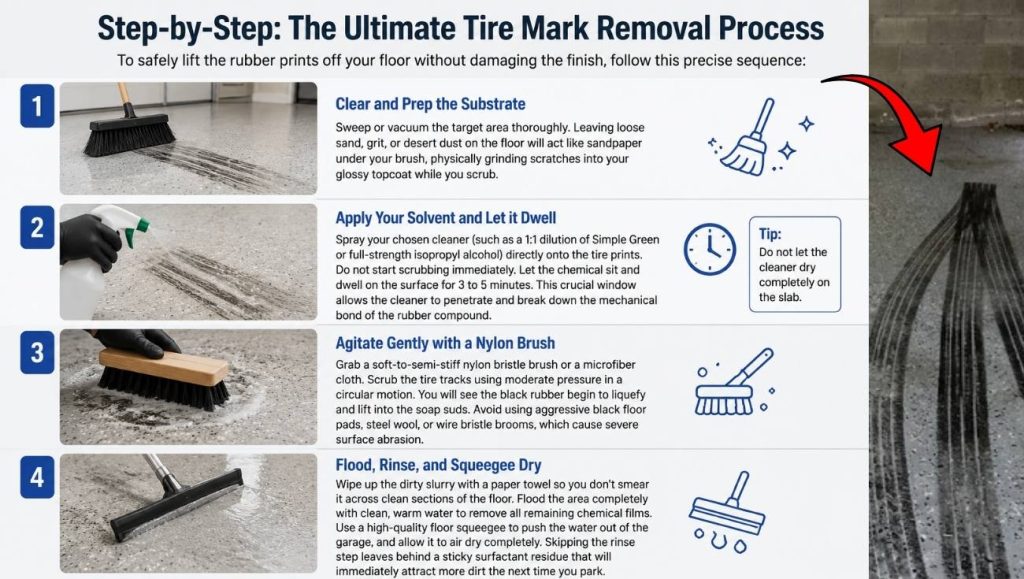
To safely lift the rubber prints off your floor without damaging the finish, follow this precise sequence:
1. Clear and Prep the Substrate
Sweep or vacuum the target area thoroughly. Leaving loose sand, grit, or desert dust on the floor will act like sandpaper under your brush, physically grinding scratches into your glossy topcoat while you scrub.
2. Apply Your Solvent and Let it Dwell
Spray your chosen cleaner (such as a 1:1 dilution of Simple Green or full-strength isopropyl alcohol) directly onto the tire prints. Do not start scrubbing immediately. Let the chemical sit and dwell on the surface for 3 to 5 minutes. This crucial window allows the cleaner to penetrate and break down the mechanical bond of the rubber compound.
Tip: Do not let the cleaner dry completely on the slab.
3. Agitate Gently with a Nylon Brush
Grab a soft-to-semi-stiff nylon bristle brush or a microfiber cloth. Scrub the tire tracks using moderate pressure in a circular motion. You will see the black rubber begin to liquefy and lift into the soap suds. Avoid using aggressive black floor pads, steel wool, or wire bristle brooms, which cause severe surface abrasion.
4. Flood, Rinse, and Squeegee Dry
Wipe up the dirty slurry with a paper towel so you don’t smear it across clean sections of the floor. Flood the area completely with clean, warm water to remove all remaining chemical films. Use a high-quality floor squeegee to push the water out of the garage, and allow it to air dry completely. Skipping the rinse step leaves behind a sticky surfactant residue that will immediately attract more dirt the next time you park.
Related Article: How to Remove Polyurethane from Concrete
Proactive Care: How to Prevent Future Tire Marks
If you want to permanently break the cycle of cleaning your garage floor every single weekend, implement these field-tested prevention strategies:
- Let Your Tires Cool Down: After driving in extreme summer heat or completing long highway commutes, leave your car in the driveway for 20 minutes to let the tires cool off before rolling them onto the cool epoxy slab.
- Deploy Tire Parking Mats: Place low-profile rubber-backed carpet mats, parking pads, or specialized vinyl strips exactly where your vehicle’s tires rest. This creates a physical barrier that completely halts plasticizer migration.
- Upgrade to a Polyaspartic Topcoat: If you are planning a new floor system or applying a fresh wear layer, opt for a hybrid system featuring a 100% solids epoxy base coat shielded by a polyaspartic topcoat. Polyaspartic coatings possess vastly superior thermal resistance and effortlessly repel hot tire pickup compared to standard retail epoxies.
Frequently Asked Questions
Can I use a steam mop to remove tire marks from epoxy?
No, using high heat or steam cleaners on residential epoxy floor coatings is highly discouraged. The intense concentrated heat can soften or weaken the resin matrix, leading to localized blistering, delamination, or permanent loss of gloss. Stick to warm water and low-pressure cleaning protocols.
Why won’t my tire marks come off even after heavy scrubbing?
If a mark refuses to budge after utilizing an approved degreaser or isopropyl alcohol, you are likely dealing with plasticizer migration rather than a surface rubber scuff. The softening chemicals from the tire have permanently discolored the underlying resin. To fix this, you will need to lightly sand the stained zone and roll out a fresh, clear, chemical-resistant polyurethane or polyaspartic topcoat.
Will a Magic Eraser clear up tire tracks on my garage floor?
Absolutely not. While a Magic Eraser seems soft, it is actually composed of melamine foam, which acts like an ultra-fine abrasive sandpaper. Using it on an epoxy floor will micro-scratch the resin, leaving you with a permanently dull, foggy spot right in the middle of your glossy floor.


2 Comments
Comments are closed.