

Let’s face it: scrubbing stained grout lines is exhausting. Homeowners are increasingly looking for flooring that offers heavy-duty durability without sacrificing high-end aesthetics.
Enter the seamless culinary canvas. It is time to stop viewing epoxy as just a garage or industrial coating, and start treating it as a premium architectural element for the heart of your home.
We will show you how a groutless floor can beautifully mimic expensive materials like marble, concrete, or terrazzo while perfectly complementing your modern cabinetry, kitchen island, and interior lighting. If you are struggling to visualize the perfect pairing, be sure to check out our guide on the best epoxy colors to pair with white kitchen cabinets.

1. Faux White Marble (Seamless Elegance)
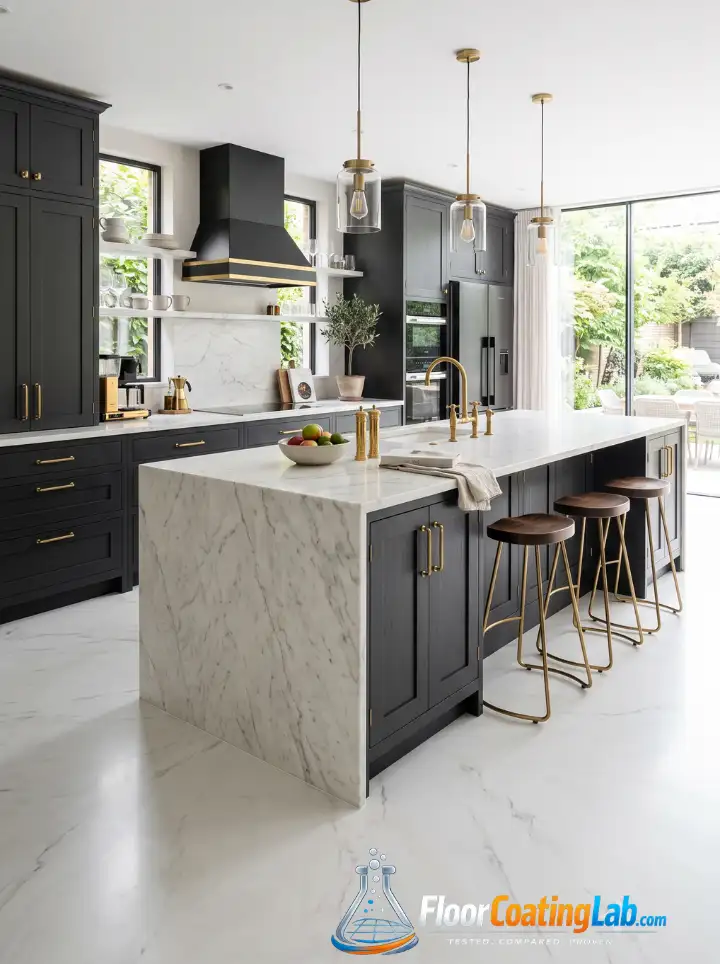
Real marble is stunning, but it is notoriously porous and requires constant sealing to prevent wine or oil stains. You can achieve the exact same aesthetic by pouring crisp white resin with subtle gray veining to mimic massive Carrara marble slabs.
The result is breathtaking. You get the opulent, high-end look of natural stone without the seams, grout lines, or high-maintenance upkeep. It pairs flawlessly with brass fixtures and deep navy or charcoal kitchen islands.
2. Warm Matte Concrete-Look (Industrial Zen)

Polished concrete floors are highly sought after in modern architecture, but pouring fresh concrete inside an existing kitchen is often structurally impossible. A warm, concrete-look epoxy is the perfect solution.
Using a muted, solid gray or taupe epoxy with a low-gloss matte topcoat gives you that organic, industrial zen vibe. Pairing this understated floor with warm walnut flat-panel cabinets softens the space, keeping it from feeling too cold or commercial.
3. Terrazzo-Inspired Resin (Mid-Century Modern)
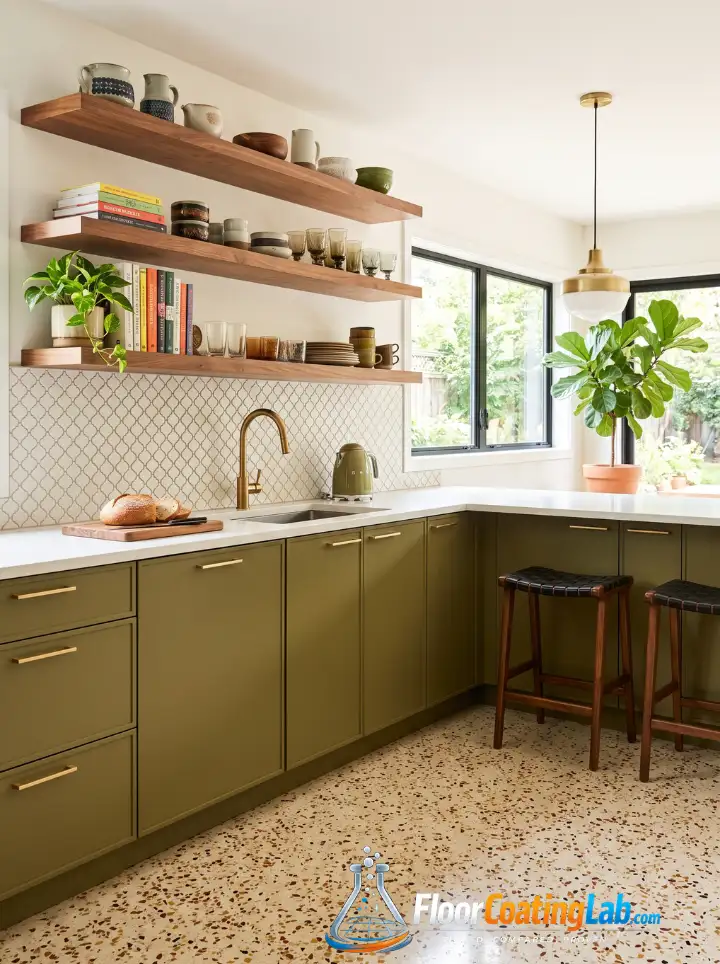
Terrazzo is back in a massive way, especially for mid-century modern and colorful kitchen layouts. By embedding crushed quartz or subtle colored flakes into a clear or white resin base, you can perfectly mimic the look of high-end terrazzo tile.
Unlike traditional tile, this resin floor has zero grout lines to clean. It adds a beautiful, subtle pop of texture and color that grounds the room, allowing you to play with vibrant cabinet colors or retro-inspired appliances.
4. Soft Pearl Metallic Under the Kitchen Island
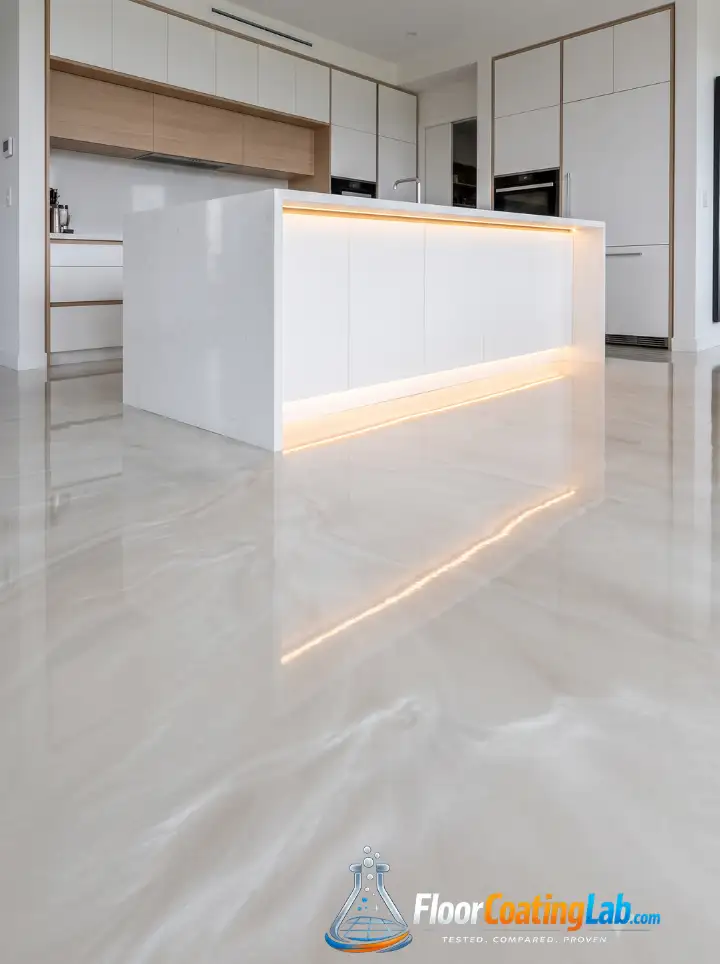
When most people hear “metallic epoxy,” they picture chaotic, bowling-alley swirls. We are taking a much more refined approach. A soft pearl or champagne metallic epoxy utilizes a single, subtle color to create a gentle, pearlescent glow.
This finish looks absolutely incredible under modern lighting. When paired with under-cabinet LED strips around your kitchen island, the floor gently reflects the light, making the island look as if it is floating.
More Amazing Ideas
- 12 Best 3D Epoxy Floor Design Ideas
- Why Is My Epoxy Cracking?
- Drylok Concrete Floor Paint vs Epoxy
- 15 Stunning Flooring Ideas for Living Rooms
- 11 Inspiring Garage Floor Ideas
5. The “Matte Black” Stealth Kitchen Floor

For homeowners who want to make a massive, dramatic statement, a deep charcoal or pure black resin floor grounds an ultra-modern kitchen like nothing else.
The secret to pulling off a stealth kitchen floor is balance. You must pair the dark floor with bright white oak cabinetry, light countertops, and abundant natural light so the room does not feel like a cave. A matte topcoat is essential here to hide dust and keep the look sophisticated.
6. High-Gloss Pure White (The Pristine Culinary Space)

If you love a pristine, hospital-clean aesthetic, a high-gloss pure white epoxy floor is unmatched. This design provides a sleek, futuristic backdrop that feels like a professional culinary studio.
A pure white floor acts as a massive reflector. It bounces natural and artificial light into every corner of the room, making small, cramped, or dark kitchens feel twice as large and incredibly inviting.
7. Subtle Earth-Tone Quartz (Warm & Grounding)

Moving away from industrial grays, the interior design world is currently obsessed with warm beige, sand, and taupe tones. A subtle earth-tone quartz epoxy floor is perfect for coastal modern or organic modern kitchen layouts.
By broadcasting very fine, sand-colored quartz into the resin, you create a dense, highly durable surface that provides excellent slip resistance without feeling rough on bare feet.
8. Copper-Infused Resin for Moody Kitchens
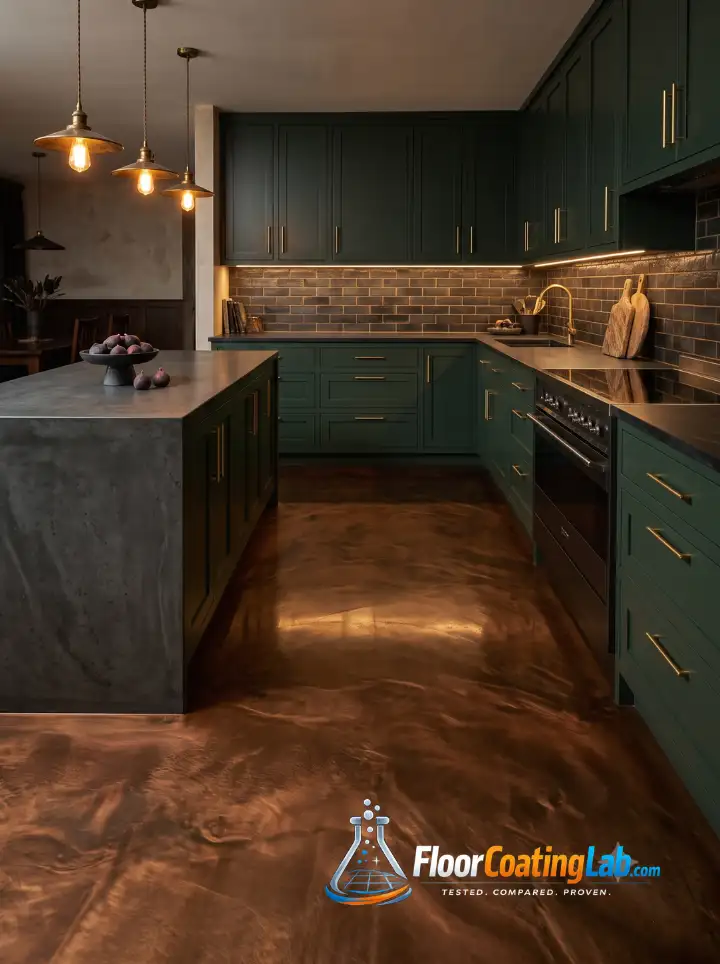
If your design style leans heavily toward moody elegance, a copper-infused resin floor adds an incredible layer of richness to your kitchen.
Utilizing warm bronze and copper undertones, this floor glows beautifully under warm ambient lighting. It is the ultimate pairing for deep navy, plum, or forest green cabinetry, creating a space that feels like an exclusive private chef’s kitchen.
9. The Seamless Transition (Kitchen to Mudroom)

One of the greatest architectural advantages of epoxy is its ability to create a completely seamless flow. Hardwood and tile often require transition strips or threshold breaks when moving from one room to another, which breaks the visual continuity of the home.
You can pour an elegant epoxy floor in the kitchen and carry it straight into high-traffic, spill-prone zones like mudrooms, pantries, or laundry rooms. This unbroken visual plane makes your entire floor plan feel more cohesive and expansive.
Check out 2026’s Craziest Epoxy Floor Designs to see some of the most innovative and luxurious resin flooring styles currently transforming modern spaces.
Kitchen Epoxy vs. Traditional Flooring
When planning a kitchen remodel, how does a poured resin floor stack up against classic choices like tile or hardwood? If you want to know exactly how to protect your investment, read our guide on How to Clean and Maintain Your Epoxy Kitchen Floor.
Here is how the materials break down:
| Flooring Type | Spill & Stain Resistance | Grout Maintenance | Visual Flow |
| Epoxy Resin | 100% Waterproof (Stains wipe away) | None (Completely seamless) | Excellent (Expands the room) |
| Tile | Water Resistant (Grout absorbs stains) | High (Requires scrubbing & sealing) | Broken by grout lines |
| Hardwood | Low (Prone to warping and water damage) | None | Good |
Expert Tips for Indoor Epoxy Success
Pouring resin inside your home requires a slightly different approach than a standard garage installation. If you are comparing chemical profiles, check out our breakdown on Epoxy vs. Polyaspartic: Which is Better for Indoor Use?.
To ensure a flawless culinary space, keep these critical details in mind:
- Slip-Resistant Additives: Kitchen floors get wet. Always ask your installer to include a fine, clear slip-resistant aggregate (like aluminum oxide) near the sink and dishwasher zones to prevent falls without ruining the glossy aesthetic.
- Low-VOC Formulas: Because your kitchen is central to your home’s HVAC system, insist on 100% solids, low-VOC (Volatile Organic Compounds) epoxy to maintain safe indoor air quality during and after the cure.
- UV-Stable Topcoats: If your kitchen features large sliding glass doors or massive picture windows, sunlight will eventually cause standard epoxy to amber or yellow. A UV-stable aliphatic polyurethane or polyaspartic topcoat is absolutely mandatory to keep whites looking crisp.
Conclusion
Your kitchen is the heart of your home. You should not have to spend your weekends scrubbing wine or grease stains out of stubborn grout lines.
By embracing the seamless culinary canvas of epoxy, you can elevate your space into a modern, magazine-worthy masterpiece that is as tough as it is beautiful. Whether you choose the opulent look of faux white marble or the cozy warmth of earth-tone quartz, a grout-free lifestyle is the ultimate luxury.