
So, you’ve coated your garage floor in epoxy, or maybe you have an older epoxy floor that is starting to look dull and scratched. You want to lock in that finish, protect it from hot tires, and restore that high-gloss mirror shine. You need a sealer.
But if you run down to your local big-box hardware store and grab a standard concrete sealer, you are setting yourself up for an expensive, peeling disaster.
The short answer: You cannot use regular concrete sealers on epoxy. Because epoxy is non-porous, you need a clear resinous topcoat that chemically or mechanically bonds to the surface. The best sealers for an epoxy garage floor are Clear High-Solids Polyurethane or Polyaspartic coatings.
Epoxy is incredibly strong against heavy impacts, but it has two major weaknesses: it scratches easily under abrasive dirt, and it yellows when exposed to UV sunlight. A premium clear topcoat acts like a bulletproof shield over your floor. In this guide, we will break down the only sealers that actually work and how to avoid the common traps that lead to peeling.
The Great Sealer Lie: Why Concrete Sealers Fail on Epoxy
To understand what to buy, you have to understand why the cheap hardware store sealers will ruin your floor.
Standard driveway sealers are penetrating sealers (like silane/siloxane) or cheap acrylic water-based formulas. They work by soaking deep into the microscopic pores of raw, bare concrete.
But cured epoxy is entirely non-porous. It is completely sealed. If you pour a penetrating concrete sealer over it, the liquid has nowhere to go. It will sit on top, refuse to dry properly, and turn into a sticky, cloudy mess that you will have to scrape off by hand.
To seal epoxy, you must use a film-forming topical coating that bonds to the resin.
The Top 3 Sealers for Epoxy Garage Floors
When it comes to real-world performance, you have three choices for your clear sealer coat. Notice that acrylic is not on this list. Acrylic sealers will melt under hot car tires and rip right off your floor. Stick to these three industrial-grade options.
1. High-Solids Polyurethane (The Best All-Around Choice)
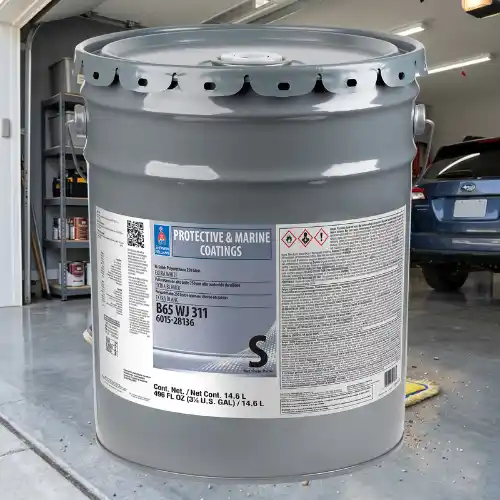
Polyurethane is the gold standard for sealing epoxy. It forms an incredibly tight chemical matrix that is far more scratch-resistant than epoxy itself. It acts like a “sacrificial wear layer” that takes the abuse so your colored epoxy doesn’t have to.
- Pros: Outstanding scratch resistance, highly resistant to chemical spills (oil, brake fluid), and 100% UV stable (it will not turn yellow).
- Cons: Solvent-based versions emit strong odors during application; requires a longer cure time (usually 3 to 4 days before driving on it).
2. Polyaspartic Topcoats (The Premium Upgrade)
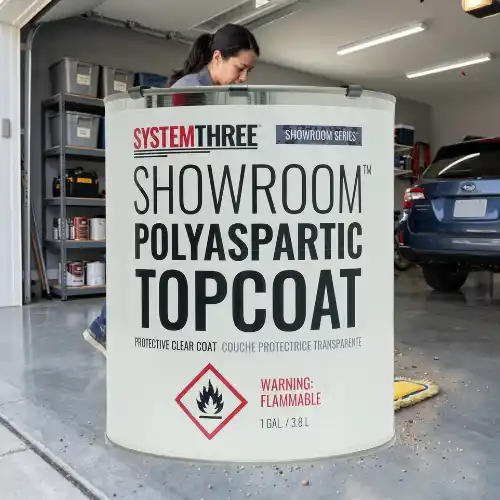
If you want the ultimate, commercial-grade protection, polyaspartic is the undisputed king. It is a variant of aliphatic polyurea that cures incredibly fast and offers unmatched resistance to hot tire pickup.
- Pros: Bulletproof durability, zero UV yellowing, and cures in 24 hours.
- Cons: Expensive. It dries so fast (often within 30 minutes) that it can be very stressful for a DIYer to roll out smoothly without a professional team.
3. Clear Epoxy Topcoat (The Budget Route)
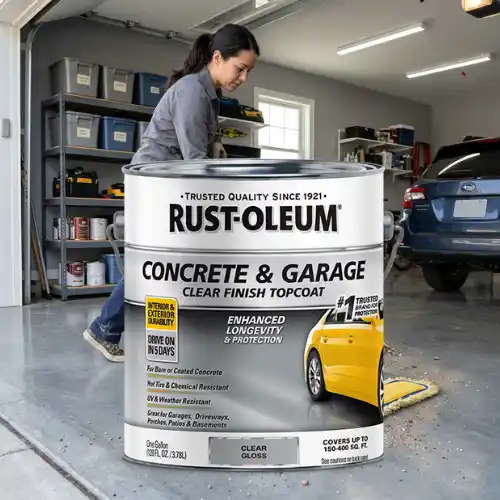
You can technically seal epoxy with a layer of clear epoxy! Applying a clear coat of standard epoxy over your colored base adds depth and thickness to the floor.
- Pros: Easy to apply, excellent self-leveling properties, relatively inexpensive.
- Cons: Not UV stable. If your garage has windows or the door is left open, the sun’s UV rays will turn a clear epoxy topcoat an ugly amber-yellow color within a few years. It also scratches easier than polyurethane.
Sealer Performance Comparison
| Feature | Clear Epoxy | Polyurethane | Polyaspartic |
| UV Resistance (Yellowing) | Poor (Will turn yellow) | Excellent | Outstanding |
| Scratch Resistance | Moderate | High | Extremely High |
| Hot Tire Resistance | Good | Excellent | Bulletproof |
| DIY Friendly? | Yes | Yes (Use ventilation) | No (Dries too fast) |
The Golden Rule: You MUST Scuff the Floor First!
Whether your epoxy garage floor is brand new or 5 years old, you cannot simply open a can of polyurethane and roll it on.
Because the old epoxy is glossy and non-porous, the new clear sealer has nothing to grab onto. If you skip the prep work, your expensive sealer will lift and peel right off the floor the first time you park your car.
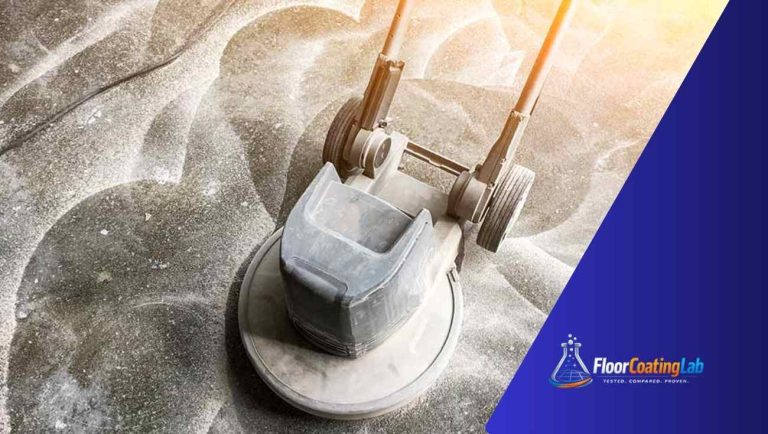
You must create a mechanical profile by lightly sanding the entire floor using a floor buffer or an orbital sander with 100-grit or 120-grit sandpaper. You aren’t trying to grind the epoxy away; you just want to “de-gloss” it. Sand it until the entire floor looks dull, hazy, and covered in micro-scratches. Once vacuumed completely clean of dust, your new sealer will flow into those scratches and lock on tight.
What Does it Cost to Seal an Epoxy Floor?
The cost to apply a clear sealer coat over an existing epoxy floor will depend heavily on whether you tackle the project yourself or hire a professional coating contractor.
- DIY Cost: Purchasing a premium 2-part clear polyurethane kit usually costs between $0.40 to $0.80 per square foot. For a standard two-car garage (400 sq. ft.), expect to spend $150 to $350 on materials, plus the rental cost of a floor sander.
- Professional Cost: Hiring a contractor to prep the floor and lay down a commercial polyaspartic clear coat generally ranges from $2.00 to $4.00 per square foot, bringing a two-car garage total to $800–$1,600.
Related Article: Fish Eyes in Epoxy
FAQs About Sealing Epoxy Garage Floors
Can I use a clear water-based acrylic sealer?
Absolutely not. Acrylic sealers (like the ones used for stamped concrete patios) are far too weak to handle heavy vehicles. The heat from your car’s tires will soften the thin acrylic layer, causing it to glue itself to the tire tread and peel off in large strips.
How do I prevent my clear sealer from becoming slippery?
High-gloss clear sealers can become as slick as ice when wet from rain or melting snow. To fix this, always mix a slip-resistant additive—like an aluminum oxide grit or polymer aggregate—into your liquid sealer container right before rolling it onto the floor. This adds an invisible texture that provides excellent traction.
Should I reseal my garage floor?
Yes, clear topcoats are “sacrificial” layers. Over time, the clear coat will take the brunt of the foot traffic, dragging tools, and gritty tires. You should plan to lightly sand and reseal the floor every 5 to 7 years to restore the gloss and keep the underlying colored epoxy fully protected.
Can I apply a sealer over peeling epoxy?
No. A clear sealer is not a glue. If your underlying epoxy is currently bubbling, flaking, or peeling away from the concrete slab, putting a clear coat on top will not stop it. You must scrape away any failing epoxy and patch those areas before sealing the floor.
You may find this video helpful
Conclusion: Protect Your Investment
When asking what kind of sealer to use on an epoxy garage floor, the answer comes down to chemistry. Skip the cheap penetrating concrete sealers and weak acrylics.
By investing in a clear polyurethane or polyaspartic topcoat, and taking the time to properly sand and prep the existing surface, you will lock in your floor’s beautiful finish, prevent UV yellowing, and create a highly durable surface that can handle anything your tires throw at it.

One Comment
Comments are closed.