
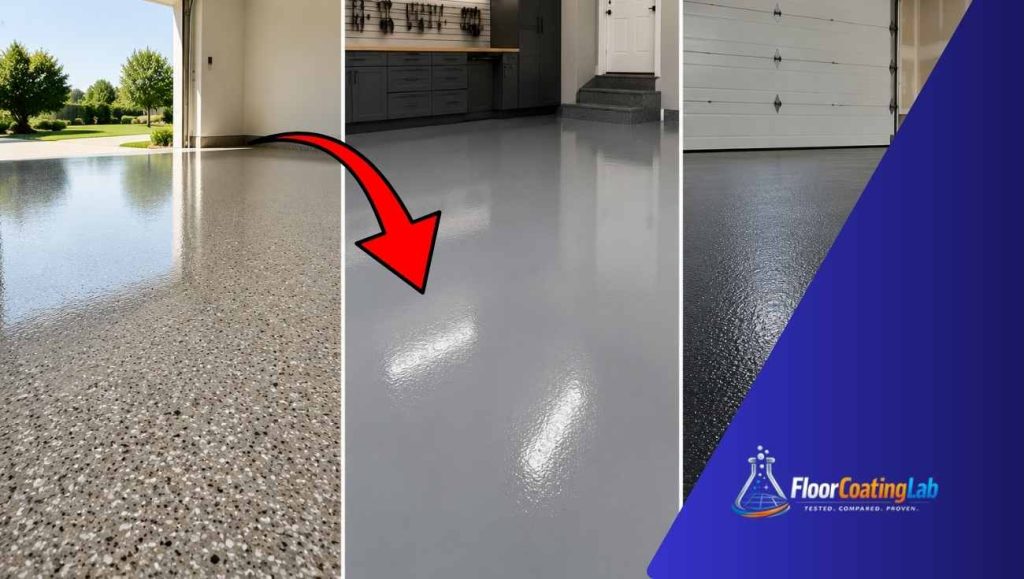
Are you staring at your plain, dusty garage floor and wondering how to make it look great? Concrete takes a beating every single day. Cars drip oil on it, tools drop on it, and moisture sneaks up from underneath. Choosing the right garage floor coating can feel confusing when every company claims their product is the best.
When you start looking at options, you will quickly find yourself comparing polyaspartic vs epoxy vs polyurea to see which one actually holds up over time.
According to market research by Fortune Business Insights, the global market for concrete floor coatings is expected to grow past $9 billion over the next decade as more homeowners upgrade their spaces. But which one should you pick for your home? Let’s break down the chemistry, performance, and real-world differences so you can make the smartest choice.
Quick Comparison at a Glance
If you are in a rush, here is a fast look at how these three popular materials stack up against each other:
| Feature | Epoxy | Pure Polyurea | Polyaspartic |
| Cure Time | 24 to 72 hours | Seconds to minutes | 1 to 2 hours (Walkable) |
| UV Stability | Poor (Yellows in sun) | Moderate to Poor | Excellent (100% UV stable) |
| Flexibility | Rigid (Can chip easily) | Very High | High (Moves with concrete) |
| Scratch Resistance | Average | Moderate | Superior (3x harder than epoxy) |
| Installation Window | Above 50°F (10°C) | Wide temperature range | Down to 0°F (-18°C) |
The Core Science and Chemistry Behind Floor Coatings
To really understand how these materials perform, we have to peek under the hood. Don’t worry, we will keep the science simple! The way these coatings bond with concrete comes down to their molecular structure.
- Forms a thick surface shell
- High Compressive Strength
- Penetrates deep into pores
- Flexible Elastomeric Bond
1. Epoxy Chemistry (The Rigid Workhorse)
Epoxy is a classic two-part system. You mix a resin with a hardener, and a chemical reaction creates a hard plastic shell on top of your floor.
- How it bonds: It sits right on top of the concrete and forms a thick, dense layer.
- Main Strength: It offers high compressive strength. It fills deep cracks and smooths out rough surfaces easily.
- Main Weakness: It is quite rigid. When concrete expands or shrinks during season changes, rigid epoxy can crack or peel over time.
2. Polyurea Chemistry (The Fast-Curing Elastomer)
Polyurea was created to cure almost instantly. It forms when an isocyanate mixes with a synthetic resin blend.
- How it bonds: Instead of sitting on top, it sinks deep into the tiny pores of the concrete slab.
- Main Strength: Incredible flexibility and high tensile strength. It stretches without breaking when the ground shifts beneath it.
- Main Weakness: Pure polyurea sets in seconds. That short pot life means installers must use specialized spray guns, leaving zero room for mistakes.
3. Polyaspartic Chemistry (The Modern Hybrid)
Polyaspartic is actually a specialized type of aliphatic polyurea. Scientists modified the molecular chain to slow down the cure speed just enough so painters could roll it onto floors.
- How it bonds: It soaks deep into the concrete just like polyurea, creating a root-like lock inside the slab.
- Main Strength: Outstanding durability and total protection against sunlight.
- Main Weakness: It costs more upfront than basic epoxy systems.
Head-to-Head Performance Comparison

How do these coatings handle real daily abuse in a home or business? Let’s test them across five key areas.
1. UV Stability and Discoloration: Will It Yellow?
Have you ever seen an old garage floor that turned an ugly shade of mustard yellow near the door? That is caused by ultraviolet (UV) light breakdown.
Standard epoxy uses aromatic chemical bonds. Sunlight breaks those bonds apart, causing noticeable yellowing and surface chalking within months. Pure polyurea can also discolor if exposed to direct sun.
In contrast, polyaspartic features an aliphatic structure. It provides complete UV stability. Sunlight will not yellow it, even after years of direct exposure on a driveway or sunlit patio.
2. Flex and Impact: What Happens When You Drop a Tool?
If you drop a heavy steel wrench on your garage floor, will the coating chip?
- Epoxy: Because epoxy is brittle, direct impacts can cause small chips or star-cracks in the surface layer.
- Polyurea & Polyaspartic: Both of these materials act like hard rubber membranes. They offer high elongation properties. They absorb the shock of impact and bounce back without chipping.
In my opinion, if you work on heavy car parts or drop tools often, the added flexibility of polyaspartic makes a massive difference over time.
3. Cure Time, Pot Life, and Work Temperature
Time is money when you want your garage back!
Key Term: Cure time is how long a floor takes to fully harden, while pot life is how long you have to apply the liquid product before it hardens in the bucket.
Standard epoxy has a long pot life (about 30 to 45 minutes), but its cure time is very slow. You often have to wait 3 to 7 days before driving your car back inside. Epoxy also needs temperatures above 50°F (10°C) to dry properly.
Polyaspartic cures fast! It gives installers roughly 20 minutes of working time, dries for foot traffic in 2 to 4 hours, and lets you drive on it within 24 hours. Best of all, it can be applied in freezing winter temperatures as low as 0°F (-18°C) without issues.
4. Abrasion Resistance and Hot Tire Pickup
Do you park hot vehicles in your garage right after driving on the highway?
When hot tires sit on a cold floor, the rubber cools and contracts, gripping the floor surface tightly. Low-grade floor paints and cheap epoxies soften under that heat and peel off when you pull the car out. This annoying problem is called hot tire pickup.
In standardized lab wear tests like the ASTM D4060 Taber Abrasion Test, polyaspartic lost only 20 to 30 mg of material over 1,000 wear cycles, compared to 60 to 80 mg lost by standard epoxy. That means polyaspartic offers roughly three times better abrasion resistance and complete immunity to hot tire damage.
5. Moisture Vapor Transmission: The Hidden Concrete Killer
Here is a dirty secret that many quick-install contractors fail to mention: water is constantly migrating up through your concrete foundation from the soil underneath. This movement is called moisture vapor transmission.
If hydrostatic pressure builds up underneath a non-porous floor coating, it will blow the coating right off the concrete slab.
While polyaspartic makes an incredible topcoat, it cures so quickly that it sometimes cannot penetrate deeply enough on high-moisture slabs. That is why top professional contractors use a specialized, deep-penetrating epoxy primer layer as a moisture barrier before applying a polyaspartic topcoat!
Related Article: What Is Skim Coat Floor Prep? Homeowners Should Know
What Comes Next?
Understanding the core chemistry is just the first step in making the right choice for your project. In the next section, we will reveal The Hybrid Secret—why top professional installers combine these materials into a multi-layer system—along with a complete cost and ROI breakdown!
The Contractor’s Secret: Why Professionals Use Hybrid Systems
If you ask two different coating companies about polyaspartic vs epoxy vs polyurea, one might tell you epoxy is king, while the other insists 1-day polyurea is the only way to go.
Here is what most single-product companies won’t tell you: the absolute best concrete coating isn’t just one product. It is a hybrid multi-layer system.
The Ultimate 3-Layer Build
Why choose between materials when you can combine their greatest strengths? High-end industrial contractors routinely build a multi-layer system that solves every major weakness of individual coatings:
- Base Layer (100% Solids Epoxy Primer): Epoxy cures slowly, which allows it to sink deep into the concrete’s pores. It creates a massive mechanical bond and acts as a moisture mitigation base coat against hydrostatic pressure coming from beneath the slab.
- Middle Layer (Decorative Flake or Color Broadcast): Vinyl color chips or quartz granules are scattered until the floor is completely covered. This adds texture, hides minor floor imperfections, and builds extra thickness.
- Top Layer (Clear Polyaspartic Finish): A clear polyaspartic topcoat locks everything in place. It provides maximum impact resistance, stops UV yellowing, and seals out harsh chemicals.
By using an epoxy base and a polyaspartic topcoat, you get the deep adhesion of epoxy with the chemical strength and color retention of polyaspartic.
Cost, Lifetime ROI, and Value Breakdown
How much does a professional floor coating actually cost? While cheap DIY roll-on paints might catch your eye at the hardware store, professional-grade systems give you far more value over time.
According to home improvement pricing data from HomeAdvisor, professional concrete coating projects usually fall between $5 and $12 per square foot depending on the material and preparation required.
| Coating Option | Average Installed Cost (per Sq. Ft.) | Expected Lifespan | Estimated Cost per Year |
| DIY Water-Based Epoxy Kit | $1.50 – $3.00 | 1 – 3 Years | ~$1.00 / sq ft |
| 100% Solids Professional Epoxy | $5.00 – $7.00 | 5 – 10 Years | ~$0.70 / sq ft |
| Full Polyaspartic System | $7.00 – $10.00 | 15 – 20+ Years | ~$0.45 / sq ft |
| Hybrid System (Epoxy + Polyaspartic) | $6.50 – $9.50 | 15 – 20+ Years | ~$0.40 / sq ft |
While a polyaspartic hybrid system costs more on day one, it actually ends up being the cheapest option over 15 years because you won’t have to scrape, grind, and re-apply it every few seasons.
Application Matrix: Which Coating Fits Your Space?
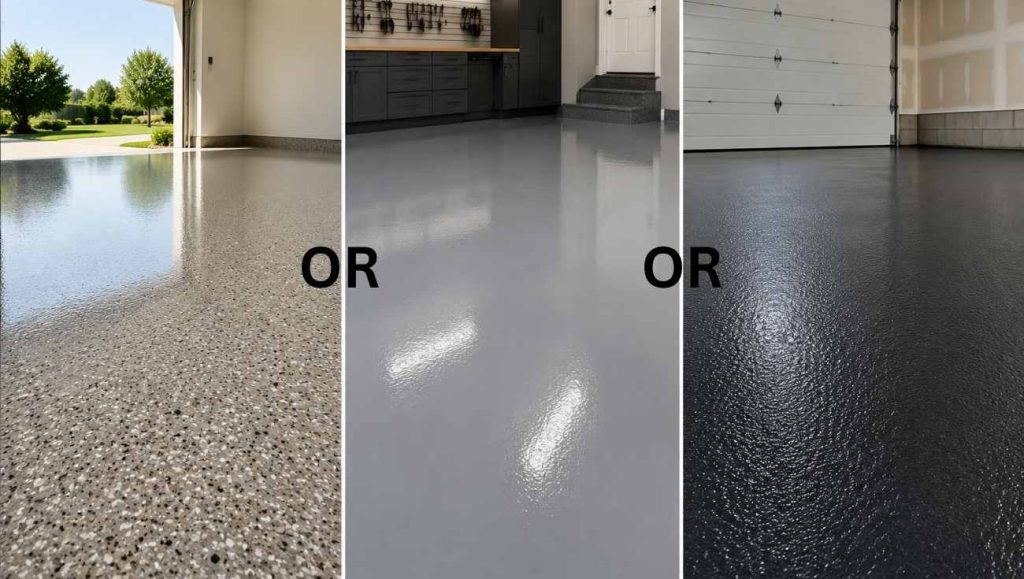
Every room in your home or facility has different needs. Here is a handy guide to matching the right coating to your specific space:
- Residential Garages: Go with a hybrid system. You need epoxy’s moisture protection underneath and polyaspartic’s hot tire pickup resistance on top.
- Basements & Interior Rooms: A 100% solids epoxy is often ideal here. Basements don’t get direct sunlight, so UV yellowing isn’t a threat. Plus, high-solids epoxies help smooth out uneven subfloors.
- Outdoor Patios, Driveways & Pool Decks: Stick strictly with polyaspartic. Direct sunlight will ruin standard epoxy, but polyaspartic handles heat, cold, and intense UV rays without fading.
- Commercial & High-Traffic Bays: Heavy warehouses need high chemical resistance and fast return-to-service timelines. A thick polyurea or polyaspartic setup gets business operations back up and running within 24 hours.
Common Installation Pitfalls to Avoid
Even the best materials will fail if the prep work is done poorly. Here are the biggest traps homeowners and inexperienced installers fall into:
1. Relying on Acid Etching Instead of Mechanical Grinding
Many cheap DIY kits come with a small tub of citric or muriatic acid. They tell you to scrub the floor and rinse it off. In my opinion, acid etching is a recipe for disaster.
Acid etching opens pores unevenly and leaves moisture behind in the concrete. Professional contractors always use heavy diamond grinding equipment to rough up the surface to a precise concrete surface profile (CSP 2 or 3). This opens up the slab so the basecoat can lock in tight.
2. Ignoring Substrate Moisture Testing
Never coat a concrete floor without testing it for hidden moisture first! If you seal wet concrete, moisture vapor will push upward, creating tiny bubbles that eventually pop and cause full-scale peeling. Always ask your installer to run a calcium chloride test or use a electronic moisture meter before laying down any product.
3. Misjudging Pot Life and Temperature Limits
Polyaspartic dries fast—sometimes too fast if you aren’t prepared. Trying to roll polyaspartic on a hot summer afternoon can cause it to flash-cure right on your roller. Always keep an eye on humidity and the ambient installation temperature window before mixing your batches.
Frequently Asked Questions (FAQ)
What is the primary difference in a polyaspartic vs epoxy vs polyurea comparison?
The main differences boil down to cure speed, flexibility, and sunlight protection:
- Epoxy: Very slow curing (3 to 7 days for vehicles), rigid, and prone to yellowing in sunlight, but offers a thick, highly economical base coat.
- Polyurea: Cures almost instantly (seconds to minutes), highly flexible, but can be difficult to apply smoothly and may still turn yellow under UV light.
- Polyaspartic: A refined, aliphatic form of polyurea. It dries in 1 to 2 hours, offers 100% UV stability, resists hot tire pickup, and handles heavy impacts, but carries a higher upfront material cost.
Can I apply a polyaspartic topcoat over an existing epoxy floor coating?
Yes, you can! However, proper surface preparation is non-negotiable. You must thoroughly mechanical-sand or diamond-grind the cured epoxy surface to scuff up the glossy finish. This creates a mechanical “profile” that allows the fresh polyaspartic layer to bite in and bond securely.
Is polyaspartic floor coating slippery when wet?
Because polyaspartic cures into a non-porous, hard-as-glass surface, it can become slick when wet. To fix this, professional installers always broadcast vinyl color flakes or blend a fine anti-slip additive (such as aluminum oxide or quartz sand) into the final clear coat. This creates a textured, slip-resistant surface.
Why did my old epoxy floor turn yellow near the garage door?
Standard epoxies are made with aromatic resin compounds. When exposed to ultraviolet (UV) radiation from sunlight coming through open garage doors or windows, those chemical bonds break down. This causes visible amber yellowing, chalking, and brittleness over time.
Which concrete floor coating handles extreme freeze-thaw cycles best?
Polyurea and polyaspartic coatings handle freeze-thaw cycles significantly better than epoxy. Their elastomeric properties allow them to expand and contract naturally alongside the concrete slab as winter temperatures swing wildly, preventing the cracking and peeling common with rigid epoxies.
Conclusion
Choosing the right concrete coating doesn’t have to be overwhelming once you understand the underlying chemistry. While standard epoxy remains a budget-friendly staple for interior rooms, it simply lacks the UV stability and flexibility needed for tough garage or outdoor environments. Pure polyurea offers rapid installation speeds and extreme stretch, but its lightning-fast cure times leave no margin for error.
For most homeowners and business managers, polyaspartic—especially when paired with an epoxy base in a multi-layer hybrid build—delivers the absolute best balance of beauty, fast turnaround times, and decades-long durability.
Investing in proper mechanical surface preparation (like diamond grinding) and picking the right multi-layer stack will keep your concrete protected, clean, and looking fantastic for years to come!
For a practical look at how these chemical coatings are applied side by side in real-world garage projects, check out this Epoxy, Polyurea or Polyaspartic floor coating video guide.
This video provides an expert breakdown showing how professional installers prepare concrete substrates and lay down base and topcoats across different resin systems.