
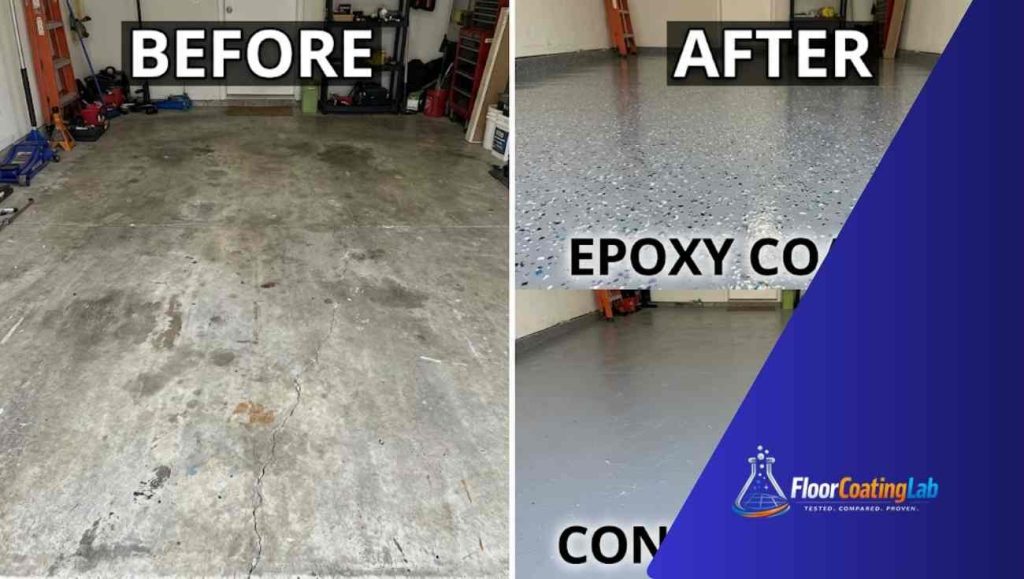
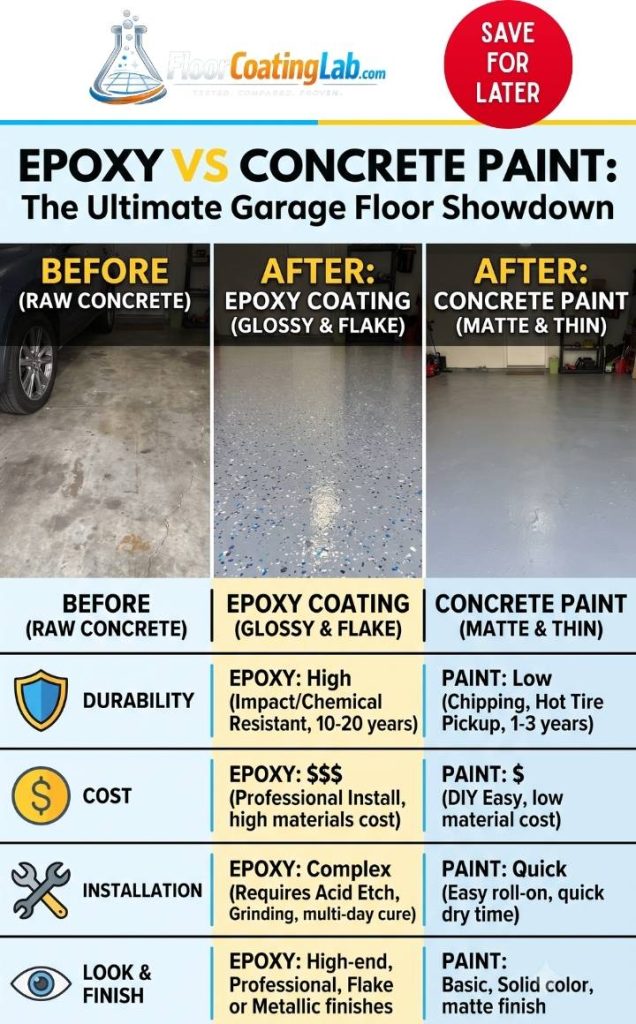
Concrete paint is cheap and easy, perfect for low-traffic spots. Epoxy costs more and requires heavy prep, but its unmatched durability is best for garages.
Ever wonder why that cheap paint job on your neighbor’s driveway peeled off after just one summer? It usually comes down to using the wrong product.
According to recent data highlighted by Statista, the global home improvement market is expected to hit a massive $1 trillion by 2027. People are spending serious money fixing up their homes! But when it comes to upgrading a dull, gray garage floor or basement, a lot of folks get stuck.
The biggest debate? Epoxy vs concrete paint
At first glance, they might look similar in a bucket. But in reality, they are completely different. Paint dries, while epoxy cures. It’s a tough choice, right? Because nobody wants to spend their whole weekend working on a floor, just to watch it peel a few months later.
I always tell people that choosing the right coating comes down to your budget, how much work you want to do, and how you actually use the room. Let’s break down the basics so you can figure out which one is best for your space.
What is Concrete Paint? (The Basics)
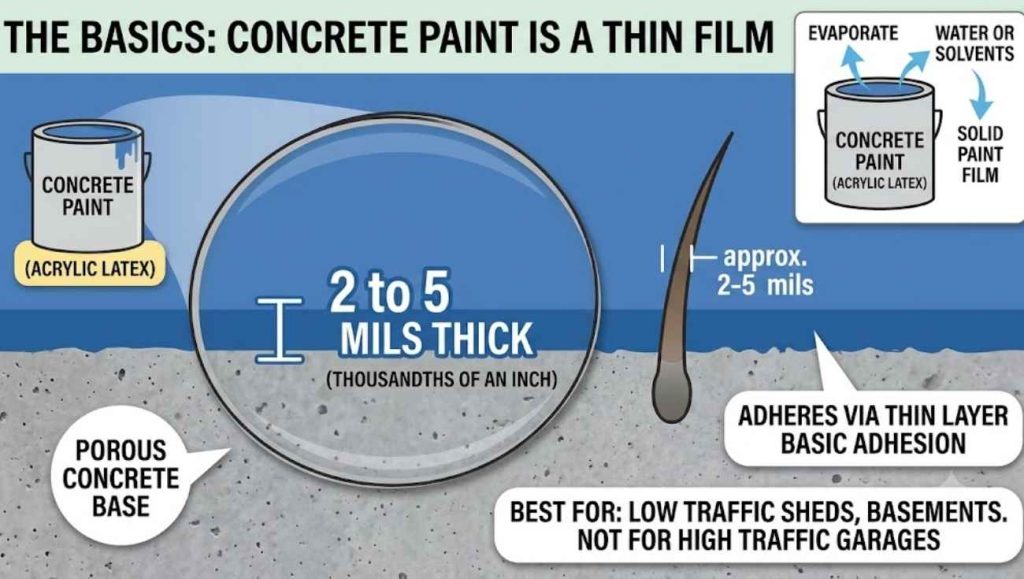
When you walk into a hardware store and buy a gallon of “concrete paint,” you are usually buying acrylic latex paint. Sometimes it has a tiny bit of epoxy mixed in to make it a little tougher. But at the end of the day, it is still just paint.
Concrete paint works by spreading a thin layer of color over the top of your floor. Once the water or solvents inside the paint evaporate, the paint dries into a solid film.
Here is the thing about paint-it is very, very thin. We measure floor coatings in “mils” (one mil is one-thousandth of an inch). Standard concrete paint goes on at about 2 to 5 mils thick.
Because it is so thin, it relies entirely on basic adhesion to stick to the somewhat porous surface of the concrete. Personally, I think paint is perfectly fine for a dusty old storage shed or a quiet corner of a basement. But I would never put it in a high-traffic garage.
Pros and Cons of Concrete Paint
Before you grab a roller, here is what you need to know:
The Pros:
- Super easy to apply: If you can paint a wall, you can paint a floor.
- Very cheap: You can buy a gallon for $30 to $50.
- Quick updates: It is a fast way to make an ugly floor look clean.
The Cons:
- Extremely fragile: It scratches, chips, and fades very easily.
- Vulnerable to chemicals: Oil spills or heavy cleaners will ruin it.
- Suffers from saponification: This is a big fancy word for a common problem. Saponification happens when the natural salts and high pH in the concrete mix with moisture. It basically eats the paint from underneath!
What is Epoxy Floor Coating? (The Basics)
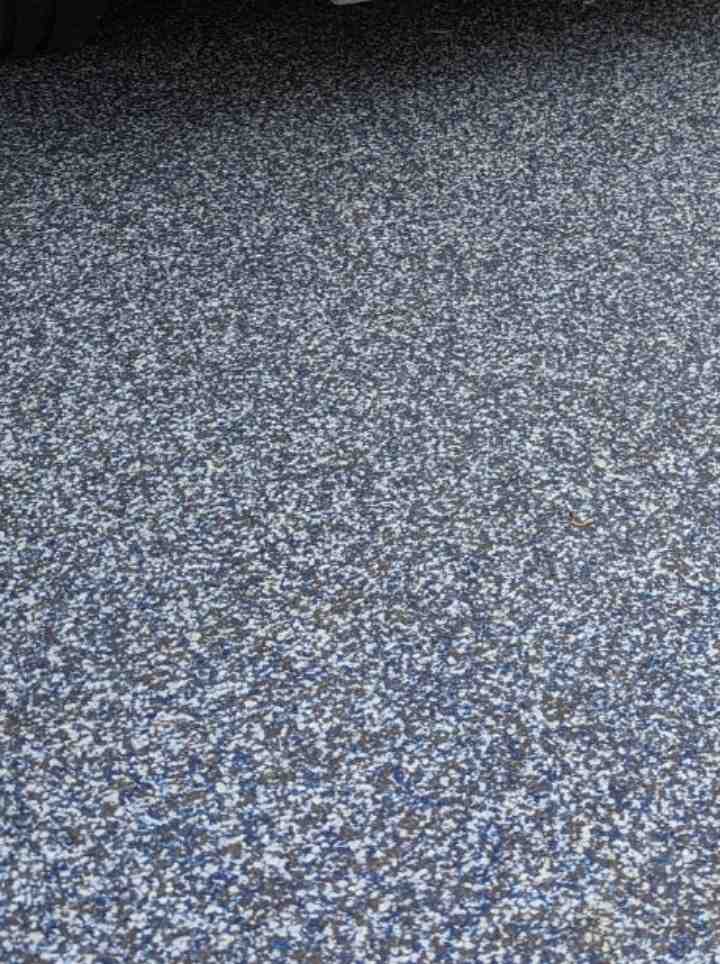
Epoxy is a totally different beast. True epoxy is not paint at all. It is a two-part resin system. When you buy an epoxy kit, you get two separate parts: a colored resin and a polyamine hardener.
When you mix these two parts together, a chemical reaction starts. This reaction causes the liquid to cure and harden into a thick, plastic-like surface. It doesn’t just dry on top of the concrete; it bonds closely with it.
Because of this chemical reaction, epoxy is applied much thicker than paint. A good epoxy coating goes on at 10 to 20 mils thick, which is five to ten times thicker than paint! This thickness gives it serious strength. But here is a warning: you have to work fast. Once you mix the two parts, you only have a short time to spread it before it turns rock hard in the bucket.
Pros and Cons of Epoxy Floor Coatings
Epoxy is the heavy-duty choice, but it is not for everybody.
The Pros:
- Incredible toughness: It handles dropped tools, heavy boxes, and dragging boots.
- Fights hot tire pickup: Hot tire pickup happens when hot car tires melt cheap paint and peel it right off the floor. Epoxy is tough enough to resist this heat.
- Seals the floor: It is totally waterproof and stops oil stains in their tracks.
The Cons:
- Needs intense prep work: You can’t just wash the floor. You have to grind the concrete to get the right concrete surface profile (a rough texture like sandpaper). If you skip this, you risk delamination, which is when the epoxy peels up in huge chunks.
- Costs more: Good kits cost hundreds of dollars, and the tools to prep the floor add up too.
- Harder to apply: It takes careful mixing and fast hands to get it right.
Head-to-Head Comparison: Epoxy vs Concrete Paint
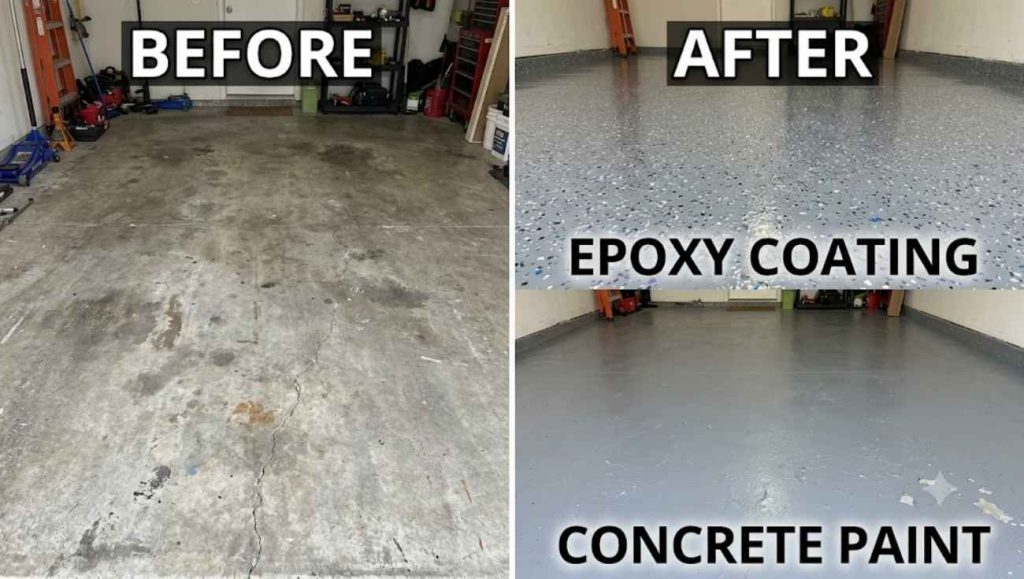
So, how do these two coatings actually hold up in the real world? Let’s put them in the ring and see who wins.
Durability and Hot Tire Pickup Resistance
Have you ever noticed those ugly black tire marks on a painted driveway? That is called hot tire pickup. When you drive your car, the tires get very hot. When you park on a painted floor, the heat actually melts the paint. As the tires cool down, they grab the paint. When you back out the next day, the paint rips right off the concrete!
Paint simply cannot handle this thermal shock. Epoxy, on the other hand, is built like a tank. Because it cures chemically, it resists the heat from your tires. If you want to park cars in your garage, epoxy is the clear winner. I hate seeing peeled tire marks on a brand-new floor, don’t you?
Surface Preparation Requirements
Prep work is the secret to a great floor. But the rules are different for both.
With paint, you can usually just wash the floor well. Sometimes, you might do a light acid etch to clean out the pores. It takes a few hours, and you are ready to paint.
Epoxy demands a lot more sweat. You really need to rent a diamond grinder from a hardware store. You have to grind off the top layer of smooth concrete. This creates the perfect concrete surface profile, which feels like rough sandpaper. The epoxy needs those deep scratches to hold on tight. Honestly, I think renting a grinder is kind of fun, but it is definitely hard, dusty work!
Upfront Cost vs. Long-Term Value
Let’s talk about money. At the cash register, paint wins easily. You might spend $100 to paint your whole basement. But you will probably have to repaint it in two years.
A good epoxy kit might cost $400 or more. But here is the trick: you have to look at the cost per square foot lifespan. If epoxy lasts 15 years, and paint only lasts 2 years, epoxy is actually cheaper in the long run. You save money because you do not have to buy more paint or spend your weekends fixing it.
Here is a quick look at how the costs compare over time:
| Coating Type | Upfront Cost (2-Car Garage) | Lifespan | Long-Term Value |
| Concrete Paint | $100 – $150 | 1 to 3 Years | Poor (Needs constant fixing) |
| Epoxy Coating | $400 – $800+ | 10 to 20+ Years | Excellent (Do it once and done) |
Safety: VOC Levels and Off-Gassing
Smell is a big deal, especially if you are working inside a basement. Many cheap paints and coatings have high volatile organic compounds (VOCs). These chemicals cause a terrible smell known as off-gassing. Breathing that stuff is not good for you or your family.
If you want to stay safe indoors, look for a 100%-solids epoxy. This means there are no solvents in the mix that will evaporate into the air. It has very low odor and is much safer for indoor air quality.
Related Article: What Is Skim Coat Floor Prep?
The Hidden Killers of Floor Coatings
Why do floors fail? Even if you do everything right, nature can still ruin your hard work. Let’s look at the two silent killers that destroy floors.
Moisture Vapor Transmission (MVT)
Did you know water can travel straight through solid concrete? It is true! Ground water pushes up from the dirt under your house. This upward push is called hydrostatic pressure.
When the water vapor reaches the top of the concrete, it gets trapped under your floor coating. This is known as moisture vapor transmission. The trapped water forms giant bubbles and pops the coating right off the floor. Before you put any coating down, you must tape a square of clear plastic to your floor for 24 hours. If there is water under the plastic the next day, you have a moisture problem!
The Concrete Alkalinity Factor
Concrete is naturally full of salts and has a very high pH level. When the concrete gets even slightly damp, those harsh salts rise to the top. This high alkalinity literally eats thin acrylic paint alive from the bottom up. Epoxy is naturally resistant to these high pH levels, which is another reason it outlasts paint by decades.
Maintenance, Cleaning, and Repairs
Once your floor is done and looking awesome, how do you take care of it?
Paint is a little annoying to keep clean because dirt sticks to it. But here is the good news: touch-ups are super easy. If you scratch a painted floor, you just take a small brush and dab some extra paint on it. It blends right in.
Epoxy is the opposite. Because it is totally smooth, sweeping and mopping are a breeze. Spilled oil just wipes right up. But if you manage to drop something heavy enough to chip the epoxy? Good luck. Patching epoxy is really hard to do without making it look like an ugly scar on your floor.
The Professional Difference: Why DIY Often Fails
Have you ever seen an epoxy floor that turned a nasty, yellow color? That happens because standard DIY epoxy hates the sun. The ultraviolet rays actually cook the resin.
This is where the pros do things differently. Professional installers almost always cover the epoxy with polyaspartic topcoats. A polyaspartic coating gives the floor perfect UV stability. That means it will never turn yellow, even if the sun beats down on your open garage all day. It also adds a layer of scratch resistance that standard kits just don’t have.
More Amazing Ideas
- 12 Breathtaking Garage Epoxy Floor Ideas
- Concrete Sealer vs Epoxy: Pros, Cons
- Why Is My Concrete Dusting?
- How to Clean Epoxy Coated Garage Floors?
- Can You Use Epoxy Floor Paint on Wood?
Frequently Asked Questions (FAQs)
Can you put epoxy over concrete paint?
No, definitely not! Epoxy needs to bond directly with bare, rough concrete. If you put epoxy over paint, the epoxy will just pull the paint right off the floor as it cures. You must grind the old paint away first.
How long does concrete paint last compared to epoxy?
Concrete paint usually lasts about 1 to 3 years before it starts peeling, especially in a garage. A properly installed epoxy floor can easily last 10 to 20 years or more.
Do I have to grind my floor for concrete paint?
No, grinding is usually overkill for paint. You just need to wash the floor really well and maybe use a chemical etcher to open up the pores.
Is professional floor coating worth the cost?
If you want a floor that looks perfect and lasts forever, yes. Pros have huge heavy grinders to prep the concrete properly, and they use commercial-grade resins that you cannot buy at a regular hardware store.
Final Verdict: Which Should You Choose?
So, there you have it—the great epoxy vs concrete paint debate finally answered.
If you are just trying to quickly freshen up a quiet basement corner or a dusty garden shed on a super tight budget, go grab some concrete paint. It is cheap, fast, and very easy to roll on.
But, if you are tackling a garage where cars will park, or a workshop where you drop tools, do not waste your time with paint. Save up your money, rent the grinder, and invest in a true epoxy floor coating. It is a lot of hard work upfront, but you will love how tough and shiny it looks for years to come.
Ready to transform your dirty concrete into a beautiful, tough-as-nails surface? Explore our expert guides, product reviews, and pro tips right here at Floor Coating Lab to make sure your next project is a total success!